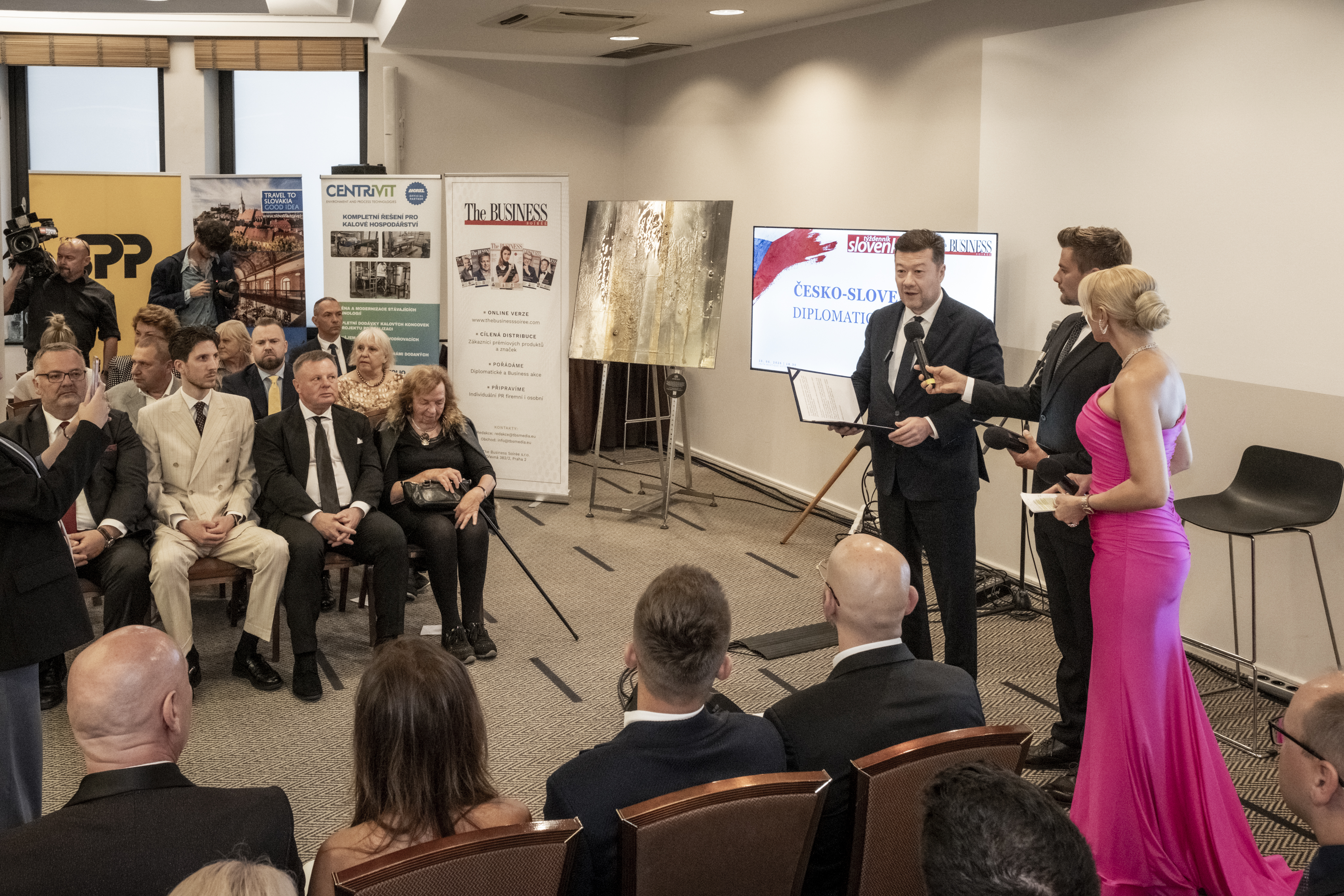
Speaker of the National Council of the Slovak Republic Richard Raši (HLAS-SD) is among those senior Slovak politicians who place strong emphasis on Czech–Slovak relations. “I deeply value the historical closeness and exceptional nature of Slovak–Czech relations, and in my position I strive to develop them over the long term. That is why I was particularly pleased that the first official foreign visit of the top representatives of the Chamber of Deputies of the Parliament of the Czech Republic, led by its Speaker Mr. Tomio Okamura, traditionally headed to Slovakia,” he says.
In which key areas this year should Czechia and Slovakia stand together?
Relations between the Slovak Republic and the Czech Republic are not merely a matter of diplomacy, but a unique bond tested by time. Recent developments have placed Europe and the world in a new position in which no country – and this applies especially to Central Europe – can solve anything in isolation. If we want the voice of our nations to be heard in Brussels and globally, we must act in unity. In 2026, it will be crucial for both countries to focus on ensuring stable energy prices and advancing nuclear energy. Czechia and Slovakia are industrial nations, and nuclear power is a guarantor of clean and affordable energy for us. We also see that the security situation in the region and globally remains fragile. Cooperation in the defense industry and the protection of our shared borders must therefore remain a priority. This includes coordinated action against illegal migration and strengthening our societies’ resilience to disinformation. I also consider it important to accelerate joint transport projects, particularly the modernization of railway connections and high-speed lines between Bratislava and Prague. I am not speaking only about travel comfort, but also about ensuring labor mobility and thus supporting the economic strength of the Central European region.
One of the most contentious issues is the controversial emissions trading system. How and when should it be set up, in your view?
From my perspective, the entire emissions trading system as designed by the European Commission needs to be fundamentally reassessed and redesigned. As a result of this system, some of the most modern and strategic industrial capacities are being shut down in Slovakia and across the EU – as was the case with our aluminum plant Slovalco, which accounted for up to twenty percent of EU aluminum production. Industrial production is thus shifting to countries that do not comply with any emissions limits. We are effectively dismantling our own manufacturing, jobs, revenues, competitiveness, and strategic industrial security. The system is unsustainable and poorly designed, leading to sharp increases in energy prices and growing economic and social burdens on our citizens. For this reason, our parliament, through resolutions of the Committee on European Affairs, has addressed the European Commission, and the government of the Slovak Republic is also preparing legal steps.
Slovakia faces local elections this year. What would you wish for the regions in this context?
Local elections are not merely a political contest for me; they are also a personal matter. I myself served as mayor of Slovakia’s second-largest city, Košice. I went through elections at this level, held countless public debates, speeches, and even verbal duels with opponents. These are very specific elections, because local politics affects people most directly. I wish every city, municipality, and region experienced, courageous, and prudent candidates who, once elected, will become true local leaders. Regions do not need political loudmouths of the kind we see in our parliament, but experienced stewards who understand that local government is politics in its most immediate form. I wish them candidates who bring real projects instead of empty promises and who can unite communities – and who understand that by entering local politics, they are taking on a service to the people.

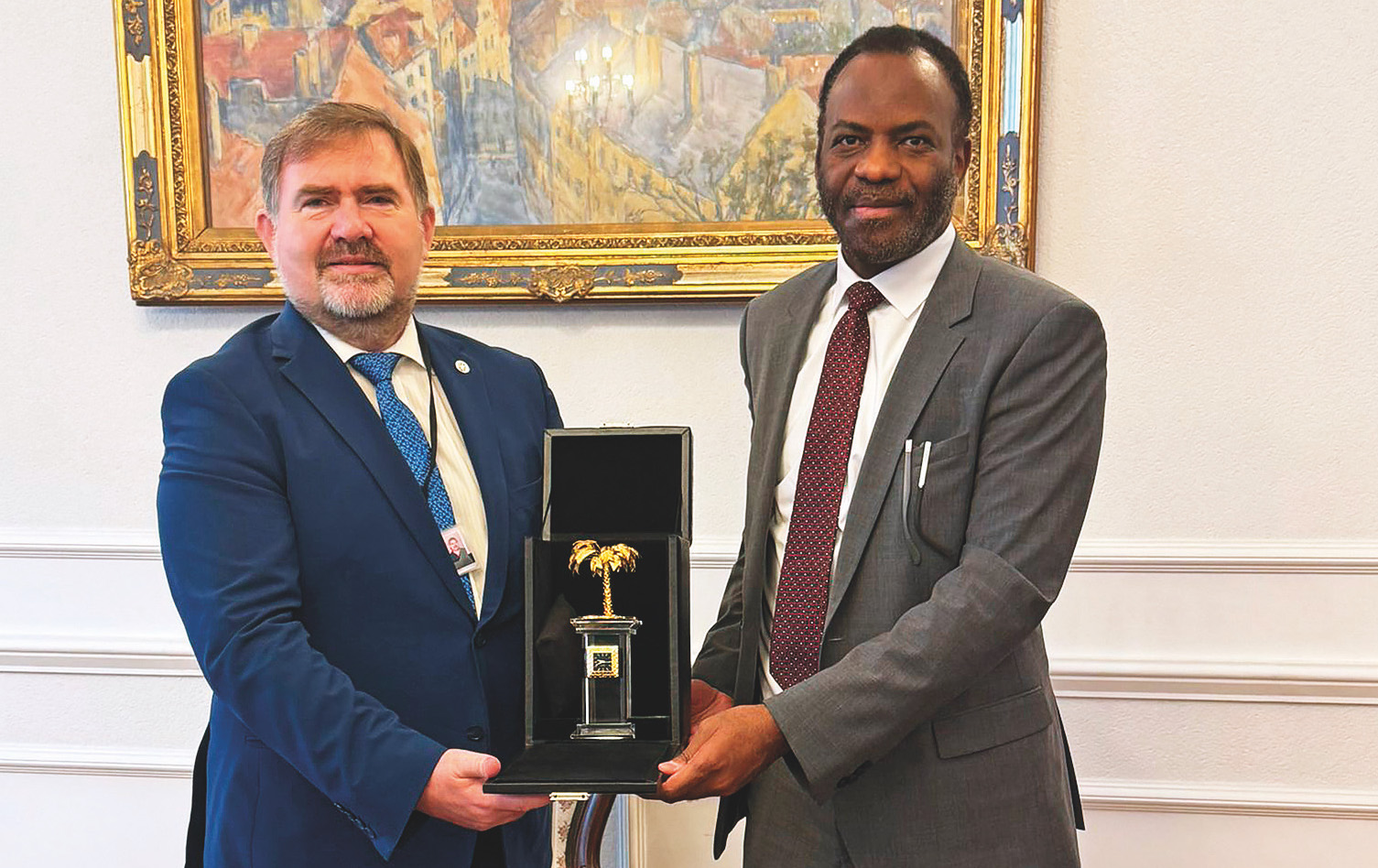
With the Vice President of the Italian Senate, Mariolina Castellone.
The uncompromising – and often unpredictable – steps of Donald Trump have shown how unprepared and divided the European Union can be. Does it have a chance for renewal, or should European states consider a different form of close partnership?
Unfortunately, we are living in one of the most complicated periods in our modern history. The world is full of crises and conflicts, and many certainties we once relied on are fading amid today’s chaos. In recent years, Europe and the wider world have faced numerous challenges – conflicts, economic tensions, global shifts, and widening social disparities that have tested the strength of our partnerships and the resilience of our institutions. In this context, Slovakia increasingly recognizes the importance of a universal global system based on international law, as well as its responsibility as a member of the European Union and the international community. That is why Slovakia is running for a seat on the UN Security Council for 2028–2029. In an ever more dynamic – and, let us admit, increasingly complicated – geopolitical world, Slovakia wants to be seen as a reliable partner, while also deeply respecting its national sovereignty. Within interparliamentary diplomacy, we therefore emphasize pragmatic and concrete cooperation that benefits Slovak citizens and contributes to broader international stability. Since taking office, I have visited and held talks with my counterparts – speakers of parliament – in Prague, Paris, London, Rome, Brussels, Budapest, as well as Beijing and Tokyo.
And what about transatlantic relations?
We of course perceive a certain dynamic that goes beyond our previous experience. But here too, the foundation must be dialogue based on pragmatism and concrete cooperation rather than ideological slogans. Relations between Europe and the United States have been tested over decades and have no alternative. That is precisely why we must avoid simplistic interpretations on either side and pursue open and constructive dialogue with our partners in Brussels and Washington.
As a politician, do you consider it an advantage that you are a former trauma surgeon? Does it help in dealing with people or in decision-making?
My colleagues in medicine would confirm that being a doctor – and especially a trauma surgeon – marks you for life, and I regard that “mark” as a significant asset in politics. Surgery taught me several fundamental lessons that I apply daily in the National Council and in my work in the regions. The first is the ability to make decisions under pressure. In the operating room, there is no time for endless debates or hesitation. You must decide immediately, because a patient’s health or life depends on it. In politics, I follow a “surgical” approach – identify the problem, propose a solution, and act. I also learned the importance of listening, something sorely lacking in politics today. I meet people patiently, listen to their problems and needs, and try to find solutions. And thirdly…
Teamwork?
Yes. I learned humility, which goes hand in hand with teamwork. Just as in an operating room, in politics an individual can achieve nothing alone. Success rests on a team of experts united by a single common goal. If more of us thought this way, Slovakia would be doing better. There is one more lesson medicine taught me: how to deliver even the hardest news to a patient in a humane and empathetic way. I speak to people directly and without empty phrases. I believe citizens appreciate that in our meetings.
The author is a staff writer for Deník

CV BOX
Richard Raši (born April 2, 1971, in Košice) has been the Speaker of the National Council of the Slovak Republic and Vice-Chair of the HLAS-SD party since the end of March 2025.
In 1995, he finished his studies in general medicine at the Faculty of Medicine of Pavel Jozef Šafárik University in Košice and later also completed a first-degree surgery certification and a special exam in trauma surgery. He earned a Master of Public Health degree from the Slovak Medical University in Bratislava in 2004. In 2010, he finished his PhD studies at the Technical University of Košice.
Since 1995, he has worked at the Trauma Surgery Clinic at the L. Pasteur University Hospital in Košice, where he served as Deputy Director of preventive and therapeutic care from 2004. In March 2007, he was appointed Director of the University Hospital Bratislava.
From 2007 to 2020, he was a member of the SMER-SD party but then moved to HLAS-SD. From 2010, he served as Mayor of Košice for eight years and served as Minister of Health for two years starting in 2008. He also served twice as Minister for Investment, Regional Development, and Informatization (2018–2020 and 2023–March 2025).
Raši is married and has three daughters.
reklama