
The European Union is still vehemently pushing its idea of "green Europe" despite numerous objections from many member state citizens. We were interested in finding out how MEP Tomáš Zdechovský feels about this policy.
The European Parliament passed the Fit for 55 package, intended to strengthen efforts against global climate change, as well as the establishment of a social fund. How did you vote?
I voted in favor. The Fit for 55 package was initially very ambitious and nearly impossible to implement in some of its points. I'm glad that we managed to reach a meaningful compromise. The EU will provide financial aid to the "poorest" of member states that will help them transform energy-intensive industries into ones that are more environmentally friendly.
Are you certain that the Union can manage the impact of the Russian aggression against Ukraine as well as its own climate goals? Wouldn't it be better to "slow down" a little?
We managed to wean ourselves off Russian gas in the span of a single year and in so doing take away the Kremlin's primary means of extorting us. The climate crisis isn't going to just magically disappear and the member states have pledged to pass our planet on to future generations in the best possible state. Europe has been in a difficult situation due to the war and we need to be mindful of those who are most vulnerable to make sure they don't descend into poverty. And that's something that all states are aware of.
Is the concession that allows cars with synthetic fuel engines to be manufactured even after 2035 a win for our automotive industry?
I do consider it a win. Together with Germany and others we advocated for this option given that cars will run on the so-called e-fuels. Synthetic fuels are energy-intensive at the moment but they could play a major role in the future. They would provide an alternative to vehicles powered by electricity or hydrogen for those who love combustion engine cars. I'm glad that we managed to negotiate this compromise. Numerous car manufacturers appreciated it as well.
Czechia is fighting in the European Council for the option to manufacture hydrogen in its nuclear power plants. What is the Union's overall view on nuclear energy and what is it like in the European Parliament?
I feel that nuclear is losing its supporters in the EU and the European Parliament. Sadly. Germany's recent move has certainly not helped. I agree with the Bavarian Minister-President Markus Söder in this sense who criticized the recent shutdowns of German nuclear power plants. "While the world around us is trying to find new energy sources amid the energy crisis, we are doing the exact opposite. The government depends on coal instead, which is an ecological sin," he said. Even the majority of Germans think it's a bad idea. They want to replace nuclear energy with hydrogen but that's too ambitious a plan right now.
How is the situation in Ukraine developing in your view? Are the European Union and European NATO members doing enough to help Ukraine win the war and reclaim its territories occupied by Russia?
Things could always be better. I currently see the joint purchase of ammunition for Ukraine as a point of contention. Member states are arguing whether they should only buy from Union factories or also those from other countries. I feel that there's no time for such speculations; we need to close the deal quickly to facilitate Ukraine's effective defense. The equation is rather simple, in fact – if we as the West don't provide military support to Ukraine, Russia will march onward, which is something that nobody wants. And it won't stop at Kyiv but rather at the border with Slovakia. The Ukrainians are fighting for our freedom and safety as much as their own.
Are affairs such as Čapí Hnízdo still alive in the European Parliament or is Andrej Babiš a figure of the past?
Nobody cares about Mr. Babiš anymore now. His affairs have become a bit of a symbol, however, reminding us that we still need to be on the lookout for oligarchs who get into politics to grow their wealth and power. When he lost in the parliamentary election and forfeited the post of PM, the European Parliament quickly lost interest. He was generally not viewed in a very favorable light, though. The way he presented himself on European soil was very different from that at home. I remember two of my fellow European People's Party members asking me how so many Czech people could believe what he was saying. Nobody asked again after the presidential election.
Will you run again in the European Parliament election next May? If so, could you imagine being on the same ticket as Jan Zahradil?
Yes, I have decided to run again. In these nearly nine years I've gained a lot of experience, built valuable connections with politicians from countries within as well as without the Union, and worked on topics that I see as important not only for the EU but for Czechia as well. The topic of security and illegal migration is key and will remain so due to the current geopolitical situation. As for a joint ticket, we're in talks about that at the moment. No decision has been made yet. I have said previously, however, that I honestly can't quite imagine being on the same ticket as Honza Zahradil.
Why is it Jan Zahradil specifically who poses such an obstacle for you when considering a joint ticket with the ODS?
Primarily because of his long-term anti-Union thinking. Just look at how differently we vote in the European Parliament. And it's not just me saying that but even colleagues from other Spolu Coalition parties. Of course, it will be up to him how he decides and whether the ODS supports him. The European election is a year from now, which is a sufficient amount of time.
President Petr Pavel has returned from his first trip to Brussels where he emphasized NATO while also supporting mail-in voting and the adoption of the Istanbul Convention by the Czech Republic. How do you feel about his first "European" steps?
President Petr Pavel's active approach to international politics is a welcome change compared to his predecessor. I'm glad to see him act after taking office instead of idling away. His experience and expertise in matters of security are invaluable right now and it's clear that global politicians are listening to what he has to say. Although I may not see eye to eye with the president on everything, I feel positive about his actions so far.
The author is a European editor of Deník
CV BOX
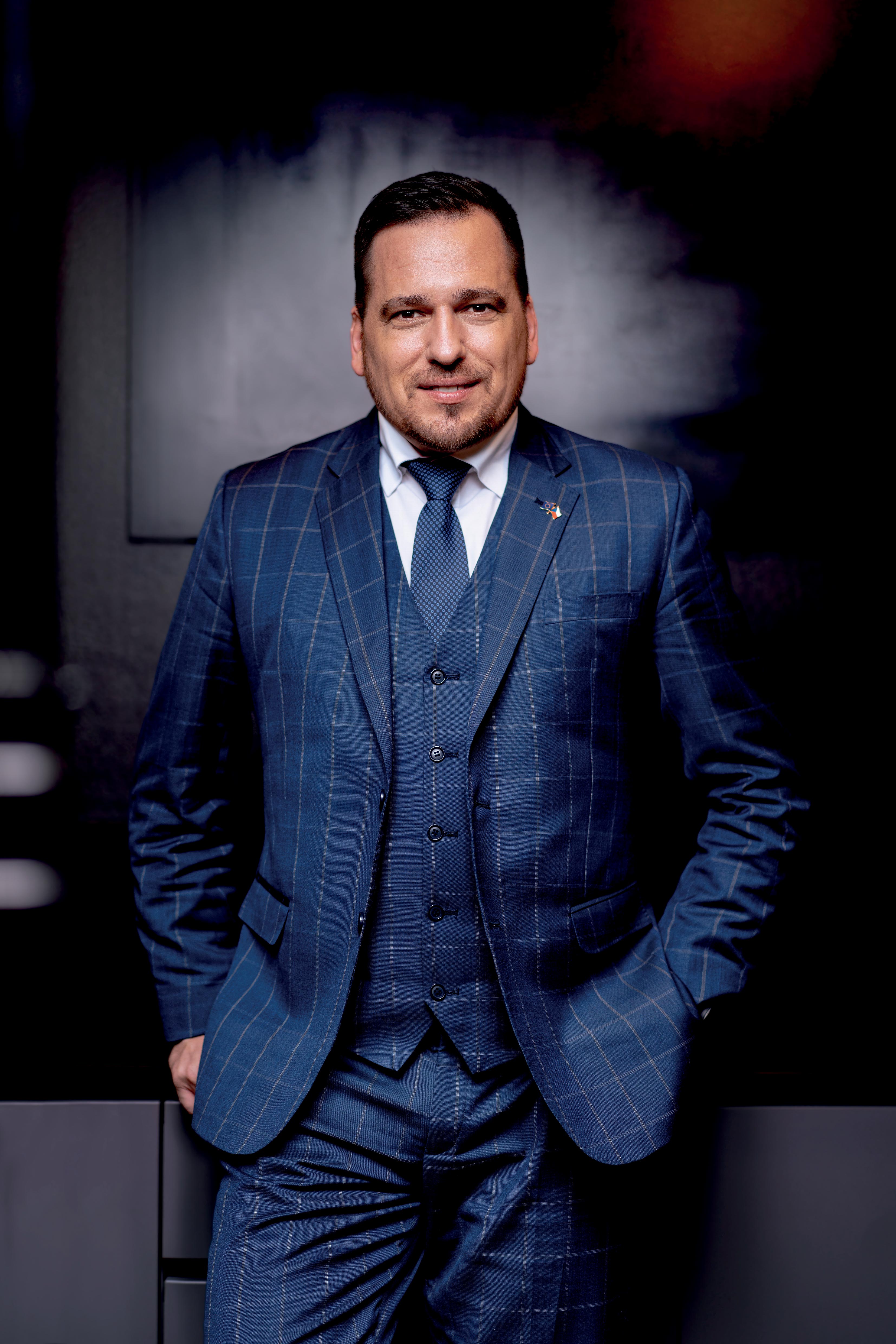
Tomáš Zdechovský (born November 2, 1979, in Havlíčkův Brod) is a Member of the European Parliament and former vice-chair of the KDU-ČSL.
In 2003, he got a bachelor's degree in political communications from the Salesian Pontifical University in Rome and a year later a master's degree in social care and leisure education from the South Bohemia University in České Budějovice, topping it off in 2008 with a master's in media studies and journalism from MUNI in Brno. In 2021, he earned an MBA in marketing. He is currently engaged in his PhD studies.
Zdechovský founded the Commservis.com communications and PR firm in 2004; seven years later, he was appointed director of the WIFI Czech Republic and Brain2win companies. As an MEP, he first became an EPP coordinator in the Budgetary Control Committee (CONT) and later its vice-chair. At the same time, he was also the vice-chair of the Committee on Employment and Social Affairs (EMPL).
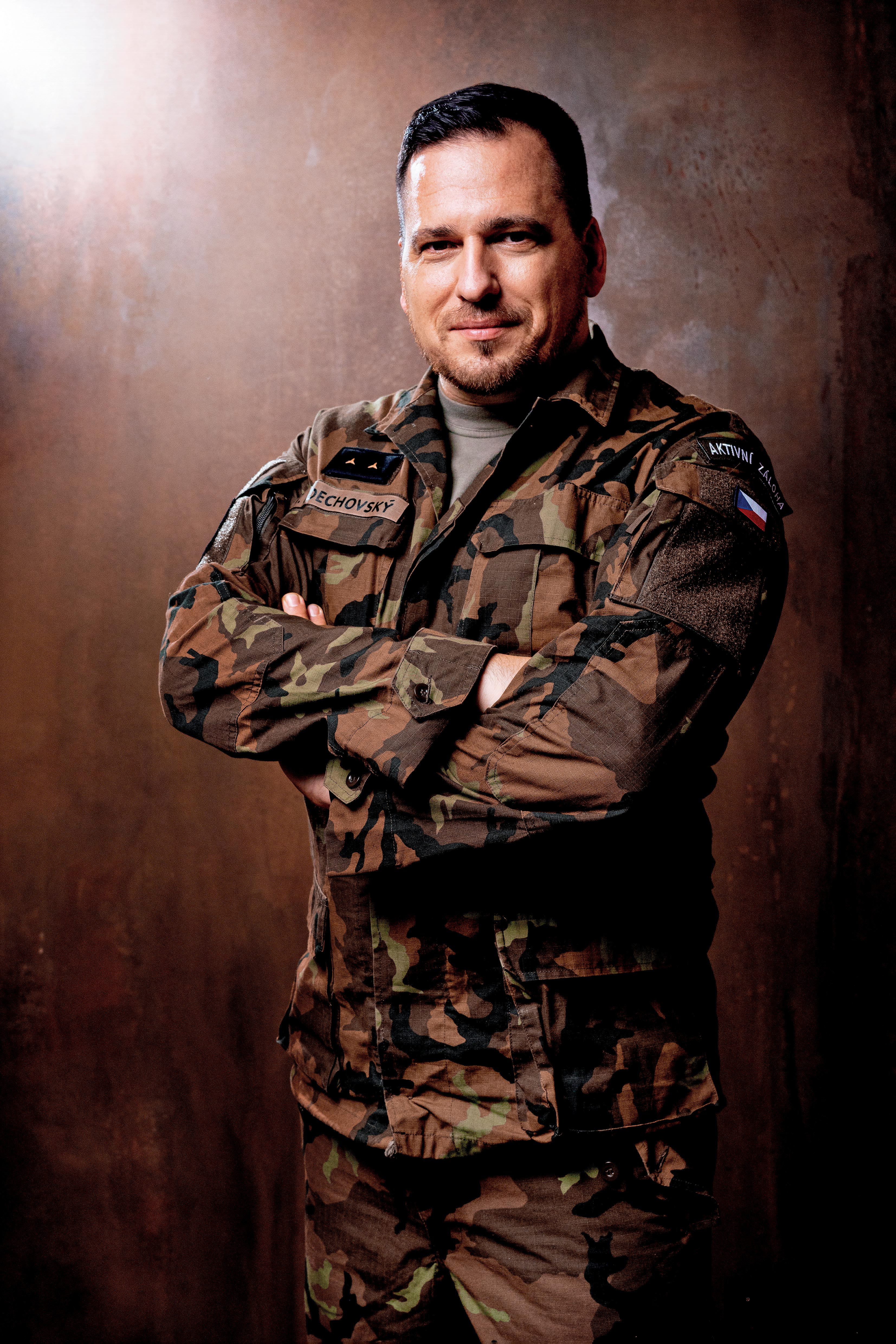
In 2020, he enlisted in the Active Reserves of the Czech Army where he holds the rank of lieutenant. He has authored six poetry collections and one work of prose, he is interested in history, heraldry, and the topic of child safety. Zdechovský is married and has four children.
reklama


