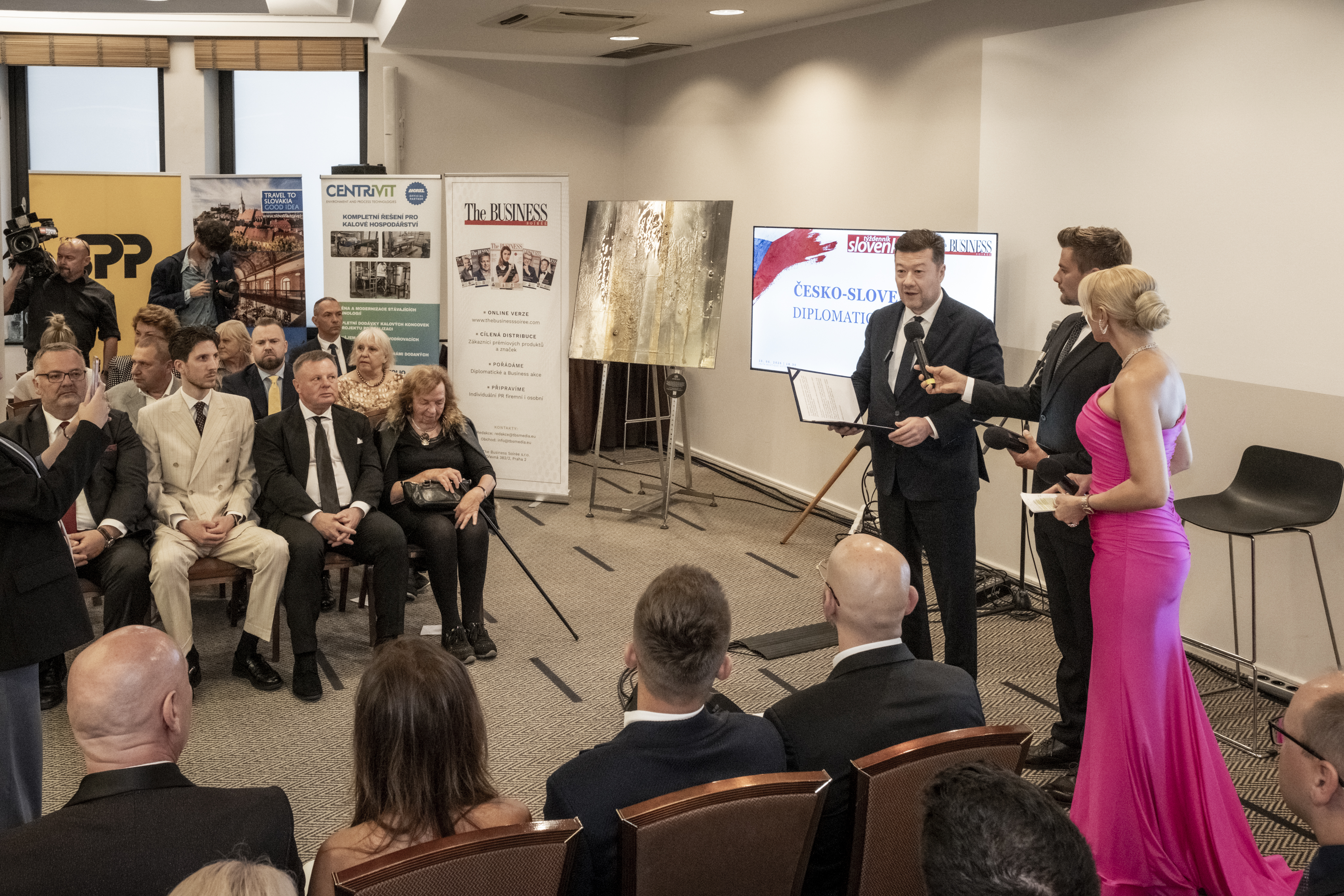
The Folklore Festival Poľana in Detva radiates humanity and a great love of folklore and folk art. This is thanks in no small part to Roman Malatinec, a member of the National Council of the Slovak Republic for NK/NEKA, who helps ensure that Slovakia’s beautiful folk traditions are preserved for generations to come.
What brought you to the program board of the Detva festival?
In my case, it began in the family – my father danced for many years in the Detva ensemble. My brother and I would perform, he on the accordion, me on the flute, and I loved to sing. When I was about 16 or 17, my homeroom teacher needed a student for a stage program and asked who owned a fujara. I volunteered. She wasn’t just looking for someone who had one, but someone who could play, so my father taught me a song. That’s how it started. When I was 17, I organized my first festival, the Central Slovak Festival of Fujara Players in Korytárky, and afterward I became more and more interested in folklore and folklorism. My ambition was always the Detva Folklore Festival, and I told myself that one day I wanted to be the author of its program.
The first festival in Detva was held in 1966. What were the beginnings like?
At the start, they were just celebrations at the swimming pool in Detva – it was called Štrand – later the town of Detva began organizing them. In the early days of the festival, local residents joined forces with specialists, and the event gradually expanded. Detva was blessed with a beautiful amphitheater, which we now want to have listed as a national cultural monument.
Do you have a favorite memory from the festival?
The most powerful moment for me was a program for Professor Kríž’s 90th birthday. At the end, he came on stage and said he wanted to sing with the best and most beautiful choir. The audience understood – he began to sing and all 7,000 people joined in. I was sitting at the sound booth among them, and I still get goosebumps just thinking about it.
How many days does the festival last today, and what can visitors see?
The festival lasts four days and features 1,700–1,800 performers. In addition to the main programs, there are always side events: exhibitions, museum displays, craft fairs, children’s workshops, puppet shows, accordionists, and folk dances where visitors can sing and dance themselves. We have two stages – the official one in the amphitheater and another in the dining area. The festival also includes an annual reception for Slovaks from abroad at the mayor’s office and a spiritual program in the church. The program takes on a fresh thematic direction each year.

Podpoľanec Folk Ensemble.
How many visitors come each year? Do they come from abroad as well?
About 50,000 people attend annually. It is one of the largest folklore festivals in Slovakia. Tourists and emigrants also come, treating the festival as a homecoming celebration. Accommodation in the area always sells out.
How are the ensembles selected, and who creates the program structure?
The selection is stricter than at smaller festivals, which apply more lenient criteria. We care about the quality of the artists creating stage productions. Ensembles must gain experience and go through competitions in order to be truly at home in the folklore scene. We also shape the direction of Slovak folklorism. If we included a group that did not fit with our vision, it would harm the festival. We aim for a certain ethnographic purity. The authors themselves, as members of the program board, also participate in the selection. So far we haven’t collaborated with international organizations on the program, but we are open to it.
How are program themes, such as the theme “Love,” created?
Choosing the theme is the authors’ work – it depends on their creativity. Each author ensures the structure is diverse and interesting for the audience. I evaluate it afterward. The theme of love, for example, was created by Jaroslav Hazlinger, a folk music bandleader, and presented through love songs that spoke of women, their hardships, and disappointments in love.
How do you handle the balance between tradition and innovation?
I am conservative and I want to safeguard tradition. I welcome shifts, but they must be done sensibly. We do not resist innovations in technology – they are part of a modern festival. In art there are no boundaries, but the author must be aware of them. If you overstep certain boundaries, the audience will notice.
Where do you see the festival in the future?
We want to add a relaxation zone, expand side activities, and continue with the Instrumentum Excellens project, dedicated to Slovak folk instruments. For the 60th anniversary, we are preparing new elements, but I don’t want to reveal them yet.
How does the religious and cultural dimension complement the festival?
Religion and faith are deeply rooted in our region. The people of Detva are tied to church traditions, and the festival’s entire context flows from this. For example, on Corpus Christi Day, Detva’s believers dress in folk costumes and the procession is beautiful. The Christmas midnight mass is also extraordinary. I play the fujara before the mass, and it is one of the most beautiful midnight services – the church is full, and people sing traditional hymns with great feeling.
You are also a choreographer and artistic director of the Podpoľanec folk ensemble, which is celebrating its 50th anniversary. What are you preparing?
We are preparing the dance theatre production Shepherd of the People of Detva with 140 performers. The premiere will take place on October 17, 2025 in Detva’s sports hall, with a reprise on November 9, 2025 at the STARS Auditorium in Bratislava.
CV BOX
Roman Malatinec (born July 22, 1981) is a member of the National Council of the Slovak Republic.
He studied ethnology and theatre directing at Constantine the Philosopher University in Nitra. Since 2002, he has served in the municipal assembly in Korytárky, going on to become deputy mayor. He was also a professional dancer and manager of the Military Folklore Ensemble Jánošík.
From 2009–2013 he was a councillor and vice-chairman of the culture committee of the Banská Bystrica self-governing region, later director of the regional crafts center ÚĽUV and chairman of the regional culture committee. Since 2017 he has been a folklore methodologist at the Novohrad Cultural Centre.
From 2018–2025 he served as deputy governor of the Banská Bystrica self-governing region, and since 2023 he has been a member of the National Council.
He is chairman of the program board of the Detva folklore festival, a member and chairman of the program boards of several other festivals, founder of national showcases, and chairman of civic associations.
He is married and has two children.
reklama