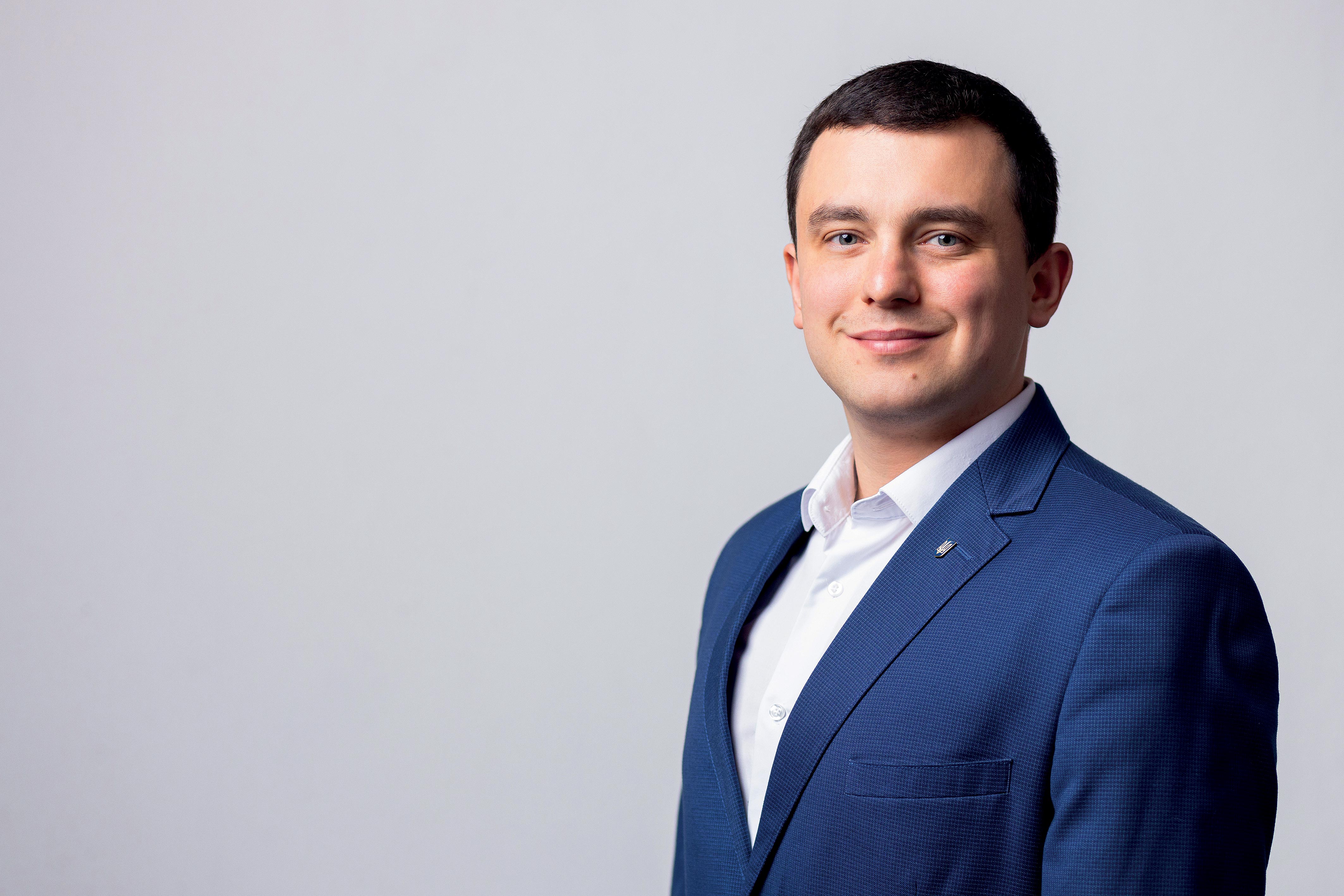
When you think of Ukraine, the first name that immediately comes to mind is Volodymyr Zelenskyy. Others might also recall the recently appointed Minister of Defense Rustem Umerov or the Speaker of the Parliament Ruslan Stefanchuk. However, there are other, lesser-known names who have a lot to say about the situation in Ukraine. One such name is Roland Tseber, advisor to the Ukrainian Parliament Commissioner for Human Rights.
Could the war between Russia and Ukraine be considered a war between totalitarianism and democracy?
Many American and European politicians use the democracy versus totalitarianism discourse as a way to raise the stakes of the war, and to gain the political and moral support of their people. However, considering the war in Ukraine as a battle between democracy and totalitarianism is wrong. The “democracy versus totalitarianism” thesis suppresses the fundamental reason why this war is unacceptable. It is unacceptable not because Ukraine is a democracy and Russia is a totalitarian state. Even if Ukraine were not a democracy and Russia were an ideal democracy, this war would be unacceptable. This is a flagrant violation of international law, particularly the UN Charter, and Russia is believed to have committed numerous war crimes. This is a war started by a strong country against a weak neighbor. Therefore, it is fundamentally important how the international community responds to this attempt to change the status quo by force, regardless of the state of democracy in either country.
Is it a war of Ukrainians against Russians? How many Ukrainian Russians are there on the Kiev side and how many are there on the side of Russia?
This is not merely a war of Ukrainians against Russians. Many volunteers from all over the world, including those from Russia, are taking part in the war on the side of Ukraine. Look at the list of foreign volunteers who died during the Russian invasion of Ukraine. It doesn’t matter what nationality you are if you feel that one country is trying to annihilate another and you stand in its defense. No one will give you exact data on the number of Russians fighting on the Ukrainian side. However, several military units consisting exclusively of Russian nationals were formed in Ukraine: the RVK (Russian Volunteer Corps), the Russian Freedom Legion, and the Siberia Battalion as well. Estimating the number of Ukrainians fighting under the banner of the Russian Federation army is more difficult. Many Ukrainians from temporarily occupied territories were forcibly conscripted into the armies of the so-called DPR and LPR illegal terrorist formations. According to data from the Main Intelligence Directorate, the Russian Federation has illegally conscripted about 60 thousand men from the temporarily occupied territories of Ukraine since the beginning of 2022. This constitutes a war crime according to the 1949 Geneva Convention. There is a crucial difference between Russians joining the Ukrainian Armed Forces voluntarily and the civilian population from temporarily occupied territories being forcibly conscripted into the occupying army by Russian Federation forces.
What support has been achieved for Ukraine in Crimea, which has now been occupied for nearly ten years?
After the Crimean Peninsula occupation in 2014, the Russian Federation began resettling people from other regions in order to reduce the percentage of the population who consider themselves Ukrainians. These were mainly military men for whom new military bases were built and abandoned ones were restored. From 2014 to 2020, the number of Russian military personnel on the peninsula increased 2.5 times. In addition, Russian passports were issued, the property of Ukrainian citizens who left occupied Crimea was expropriated, and everything Ukrainian was banned. Despite that, many people are still waiting for Crimea to be returned to Ukraine. The Yellow Ribbon resistance movement operates on the peninsula as well as in other temporarily occupied territories – its members are engaged in partisan activities: opposing propaganda, hanging Ukrainian flags in the streets, painting patriotic graffiti, and distributing leaflets with calls to resist the army.
The current President Volodymyr Zelenskyy was considered to be a puppet of the oligarchs before the war. Was this view correct or has it changed since the start of the war?
Yes, it's true. Zelenskyy was often associated with oligarch Igor Kolomoisky who was believed to have helped bring the current president to power. However, if we look at what is happening to Mr. Kolomoisky now, a certain dissonance with the previous hypothesis is obvious. This example is evidence that could begin the irreversible and complex processes of eliminating state government oligarchic models.
Ukraine should start talks on accession to the EU. Is it a fully legal and democratic state today? What reforms have succeeded lately?
The Head of the European Commission Ursula von der Leyen had noted at a briefing in Brussels that Ukraine has implemented more than 90% of the recommendations put forward by the EU. Not even 5 years ago, talking about expanding the European Union was essentially impossible. However, since the beginning of the war, Ukraine's position has shifted from that of an outsider whom the Union wanted to mollify with the so-called associated semi-membership into a catalyst for the global transformation of the EU itself. Despite all these insights, the procedure for Ukraine’s accession to the EU is complex, and it may take many years from the official initiation of negotiations until actual membership. By the end of this year, Ukraine must fulfill several candidate criteria, including, in particular, bolstering its efforts to fight corruption and enhancing the rights of minority groups. There is a requirement to implement the June and October 2023 recommendations of the Venice Commission on the law on minorities. The laws on the state language, media, and education were also part of these recommendations. Questions naturally arise as to how Ukraine can actually accomplish all of this under wartime conditions. Furthermore, the issue regarding minorities is probably on the docket because of pressure from Hungary, which we will be facing constantly going forward. It is their bargaining tool; they are in a position that allows them to dictate their terms. Solving issues related to the continued fight against corruption, increasing NABU staff numbers, and certain NACP procedural difficulties will be a long-winded process. We also need to pass a law regulating lobbying according to European standards, which will serve as a tool to combat the influence of oligarchs. However, there's a problem – individual EU member states have laws on lobbying but there is no overarching law or regulation for all countries. The next step is the formation of both our negotiating position and a negotiation team. And finally, bringing our legislation closer to the European one in 35 different areas. We are talking about thousands of new laws and, in fact, a complete restructuring of a post-Soviet system into a European one. As regards the time horizon, the best-case scenario is that we will manage to implement all of this sometime around 2030.
The author is a European editor for Deník
CV BOX
Roland Tesber (born October 18, 1988, in Uzhhorod) is an advisor to the Ukrainian Parliament Commissioner for Human Rights.
He earned a law degree in Kyiv and later graduated from the Uzhhorod National University Faculty of International Economic Relations in 2014.
He started his career as a civil servant, was later elected a deputy of the Uzhhorod District Council in 2015, and then worked as a consulting assistant to the People's Deputy of Ukraine in the Verkhovna Rada between 2018 and 2020. Subsequently, he spent a year as an advisor to the chairman of the Zakarpattia Oblast Council and has now been in his current position since August 2022.
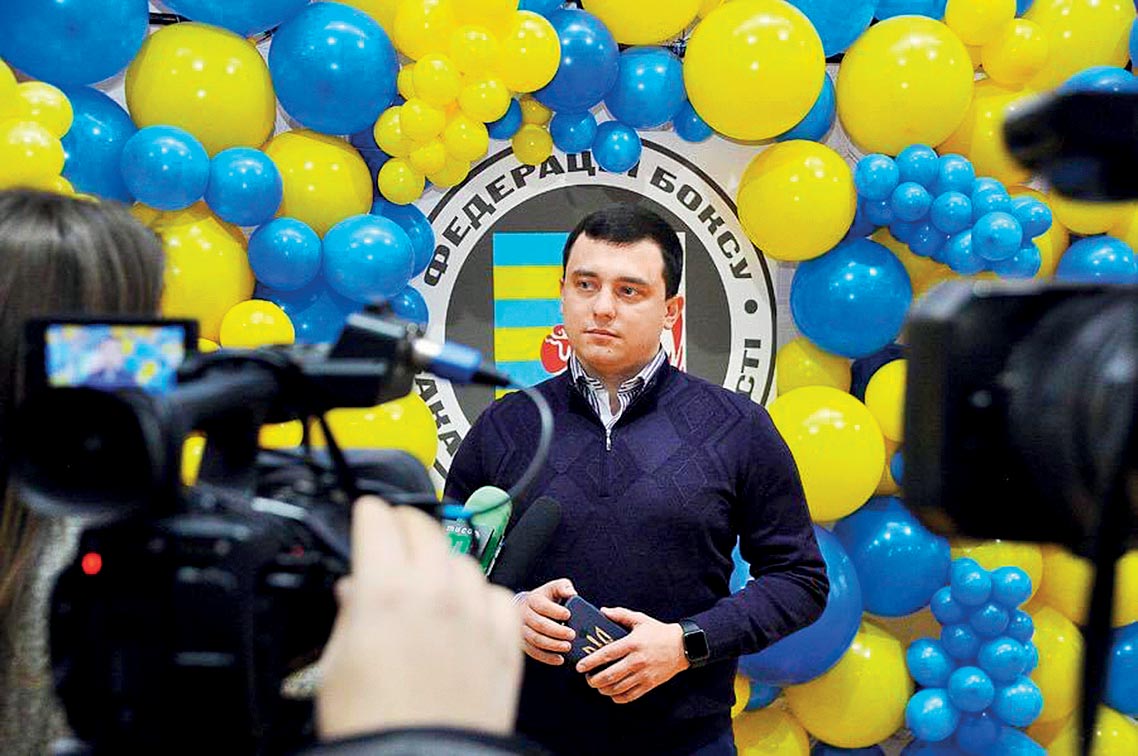
Tseber is very active in public life. He founded a youth football school and the Uzhhorod Regional Boxing Federation and actively participated in the creation of the most economically developed and solvent regional territorial communities in western Ukraine. He established a long-term cooperation with associations and public organizations of national minorities in the region, and even engaged in charity.
Tseber is married and has one son.
reklama


