Speaker of the National Council of the Slovak Republic Richard Raši hopes that 2026 will bring a renewal of strong ties and close cooperation between the Czech Republic and Slovakia, as well as cooperation within the V4. And he hopes for all citizens to feel a sense of trust – both in the state and in one another.
Did you follow the Czech parliamentary elections? What is your view of the government now taking shape?
I did follow your elections, and allow me once again to congratulate Andrej Babiš on his victory. It looks as though his win, together with the new government, may open the door to restoring the close relations between our two countries. Those relations were strained when Prime Minister Fiala’s government stopped engaging with ours without good reason – supposedly because of differing positions on the war in Ukraine. Yet we meet regularly with Ukrainian representatives. So I wish the Czech government pragmatism in its decision-making and mutual respect within the coalition. In Slovakia, we have seen firsthand how instability arises when one coalition partner begins ignoring agreements.
Slovak President Peter Pellegrini visited the Czech Republic in November and met with President Petr Pavel, Andrej Babiš, and coalition representatives. It seems that renewed cooperation is on the right track. How are regular meetings beneficial in your view?
Regular meetings allowed us to coordinate our positions and work together more effectively, which strengthened our voice at the European level. I must say, though, that even though Mr. Fiala refuses joint meetings, relations between Czechs and Slovaks remain excellent. And I believe that in the coming months, this goodwill will be reflected politically as well. This effort is also supported by a resolution adopted by the Slovak parliament, which instructs the government to resume joint sessions as soon as circumstances allow.
There is talk about restoring V4 cooperation. Some politicians say it is unrealistic, others that it would be the right step. How do you feel about it?
Cooperation among V4 countries is essential to our successful development within Europe. I’ve heard opinions claiming the V4 format is outdated, but we also clearly see issues that unite our four countries. So why should we abandon a platform that amplifies our voice in Europe? One of the strongest shared issues right now is the ETS2 emissions system, which represents a severe social burden for households across the EU – essentially an unpredictable new levy on home heating and everyday driving. It can cost a family up to 3,000 euros a year.

With Sir Lindsay Hoyle, Speaker of the UK House of Commons.
Let’s turn to Slovakia. What topics are most on people’s minds at the moment?
A great deal is happening at once. Parliament recently approved the largest education reform in our history, so one of the major tasks ahead is helping schools, municipalities, and individuals implement the changes. Economically, we are addressing rising energy prices. We made a commitment that we would take care of people in Slovakia. That is why targeted energy assistance is ready – to shield households from sudden and unjustified increases in heating and electricity costs. ETS2 allowances remain a major challenge, as they pose serious risks for households and businesses. The European Parliament’s decision to postpone their implementation gives us some extra time to negotiate and find a way to abolish the system entirely. If it is not abolished, the burden on households and businesses will only grow in the years ahead, because allowance prices would have to rise even further within a short period to meet Green Deal targets. That is why we say ETS2 must be scrapped altogether – and I believe we will find support for this in the Czech government as well.
As a doctor, could you imagine leaving politics to open your own clinic or private practice?
Honestly, I haven’t thought about that in recent years. I’m originally a trauma surgeon, so that field will always feel closest to me, but I’m not considering a change. I see it this way: as a politician, I can also help heal society and bring genuine improvements.
What is your take on the worsening mental health of young people and adults?
As a trauma surgeon, I’m struck by the difference: when something hurts physically, people don’t hesitate to seek help. But when something weighs on their mind, they often delay seeing a specialist. There can be many reasons – upbringing, cultural norms, or the belief that we must deal with everything on our own. Today’s world puts enormous pressure on us: performance demands, uncertainty, fast pace, social media creating illusions of perfection. Add the lack of time to rest or simply talk honestly with friends, and it’s no surprise that people feel exhausted, anxious, or sad. Another problem is that many seek help only when the situation becomes serious. When you’re in physical pain, you wouldn’t postpone going to the doctor. But when their soul hurts, people hesitate, feel ashamed, or believe they should cope alone. That is one of the biggest issues – the stigma surrounding mental-health struggles. As one possible solution, Minister of Health Kamil Šaško has set up an interdepartmental working group tasked with addressing mental health comprehensively, especially among children.

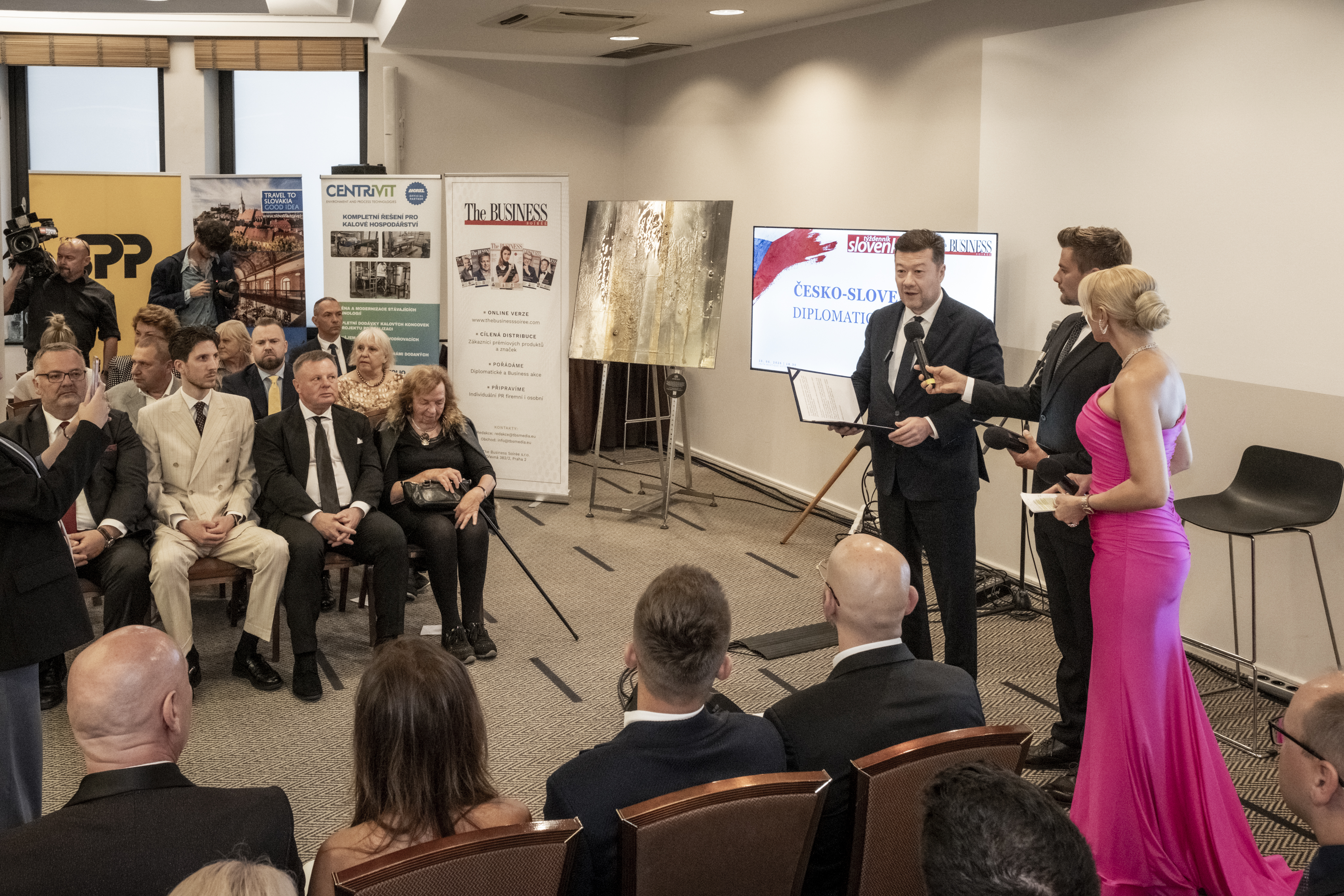
Left to right Róbert Puci, Dominik Frajkor, Richard Raši, Igor Šimko.
Artificial intelligence has rapidly become a part of our lives, and some people interact with it daily. Could AI one day replace ordinary human relationships?
This ties back to mental health. I’ve encountered cases where people used AI as a substitute for a therapist. That tells me we may not be on the right path – though I don’t want to sound overly dramatic. For me, AI is a good servant but a bad master. I would never recommend using it for medical advice – whether mental or physical. Beyond the risk of incorrect advice, I also see the issue of people voluntarily giving up their privacy by sharing deeply personal information, without knowing when or how it might be misused. As I said, AI can be a helpful tool in many professions – but it’s up to us to set boundaries on how we use it and how much influence we allow it to have in our lives.
Mental wellbeing also means rest and relaxation. Will you get a chance to rest over Christmas?
Christmas is always devoted to family. The usual holiday rituals – festive movie classics, Christmas pastries, walks in nature. I especially look forward to spending time with my loved ones, because during the year I’m in Bratislava throughout the work week, and even on weekends at home in Košice, I usually spend part of the time among people in the regions.
What would you wish for Slovakia – and perhaps also for the Czech Republic – in 2026?
For 2026, I would hope to see more calm and mutual understanding in both Slovakia and the Czech Republic. That we are able to hold fact-based discussions without unnecessary conflict, look for solutions instead of problems, and reinforce the things that unite us – not only within each nation, but also between them. The late Cardinal Duka expressed this beautifully when, during a sermon in Nitra, he apologized to Slovaks for Czechs who “lecture them on freedom and democracy.” I also hope for economic stability and stability in our values. I want people to feel that their country stands by them, offers them opportunities to grow, and allows them to live dignified lives. And above all, I hope for more trust – in the state, and in one another. Only a society that trusts itself and stands united can be successful, stable, and ready to meet the challenges that 2026 will bring.

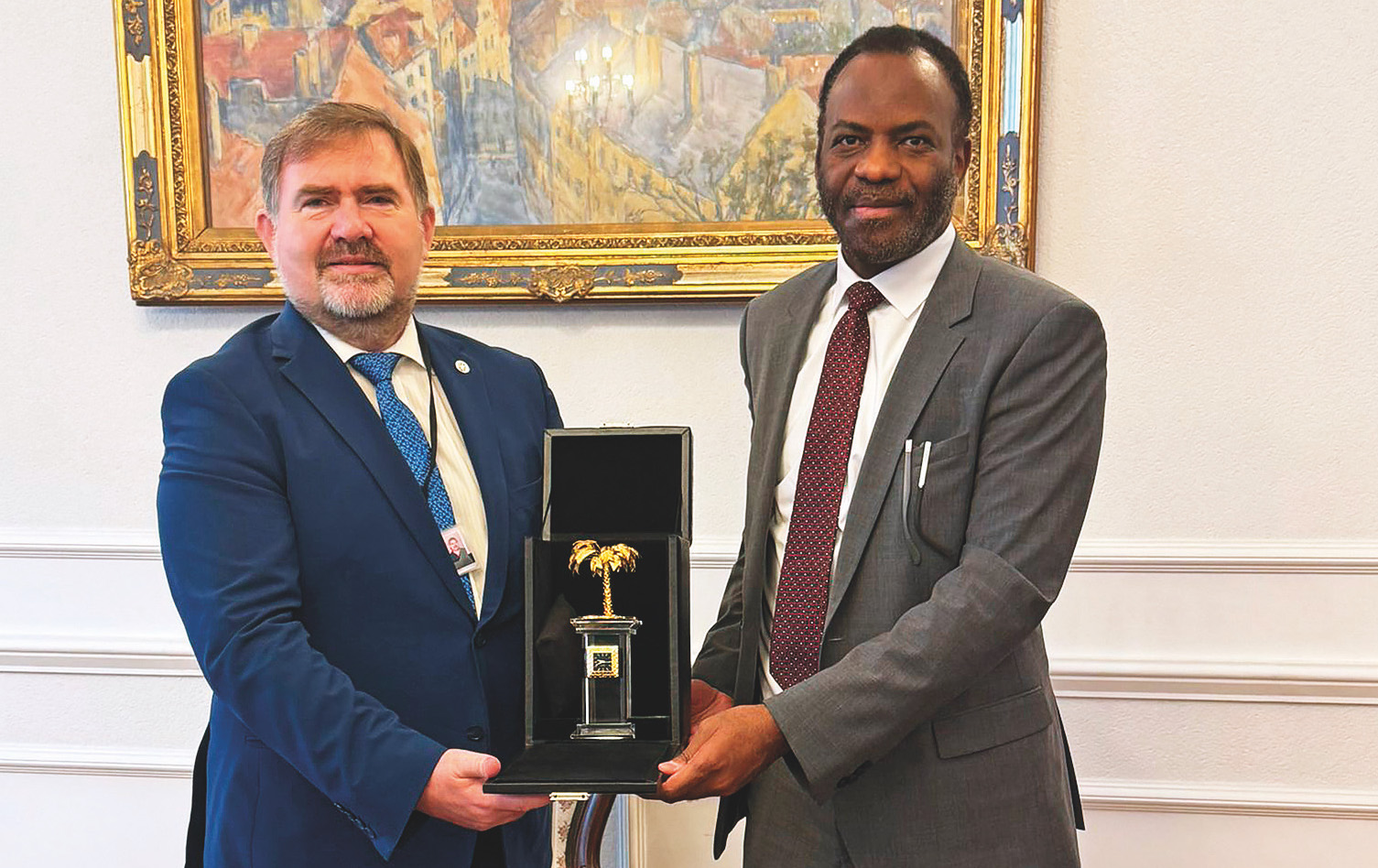
With European Commission Vice-President Maroš Šefčovič.
CV BOX
Richard Raši (born April 2, 1971, in Košice) has been the Speaker of the National Council of the Slovak Republic and vice-chair of the HLAS-SD party since the end of March 2025.
In 1995, he finished his studies in general medicine at the Faculty of Medicine of Pavel Jozef Šafárik University in Košice and later also completed a first-degree surgery certification and a special exam in trauma surgery. He earned a Master of Public Health degree from the Slovak Medical University in Bratislava in 2004. In 2010, he finished his PhD studies at the Technical University of Košice.
Since 1995, he has worked at the Trauma Surgery Clinic at the L. Pasteur University Hospital in Košice, where he served as deputy director of preventive and therapeutic care from 2004. In March 2007, he was appointed director of the University Hospital Bratislava.
From 2007 to 2020, he was a member of the SMER-SD party but then moved to HLAS-SD. From 2010, he was the mayor of Košice for eight years and served as minister of health for two years starting in 2008. He also served twice as minister for investment, regional development, and informatization (2018–2020 and 2023–March 2025).
Raši is married and has three daughters.
reklama