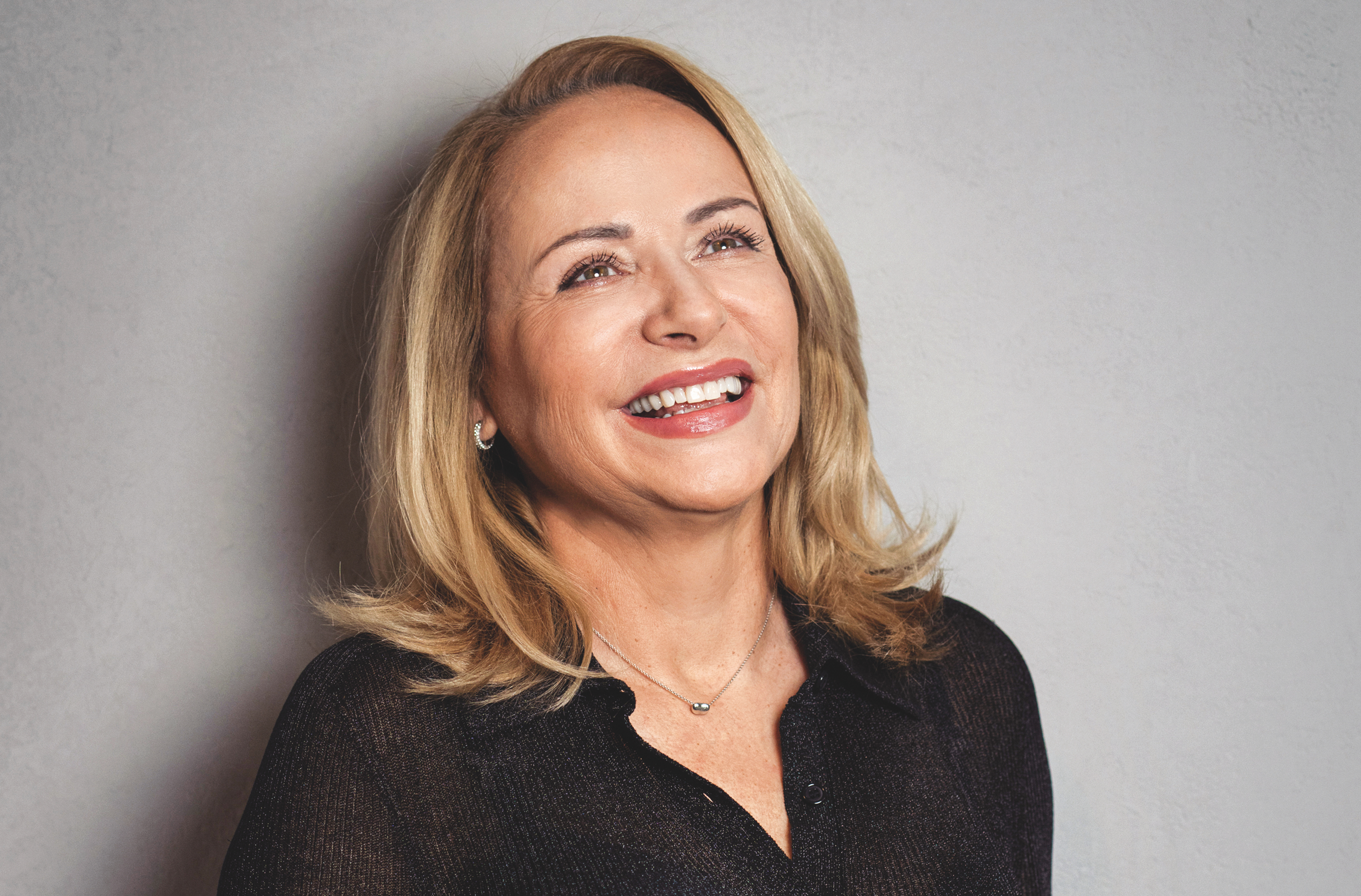
Renata Vesecká first joined the Motorists as the party’s policy lead for justice. By autumn she had become its top candidate in the Hradec Králové Region. She succeeded in the election and entered a new chapter of her professional life – this time as a Member of Parliament.
Congratulations on your election to the Chamber of Deputies. What does this new role mean to you, and how will it affect your other work?
Thank you. I view my election to the Chamber of Deputies of the Parliament of the Czech Republic as a service to the public, and I approach it with great respect. I want to focus on advancing the key justice priorities from the Motorists’ platform, which I championed as the party’s guarantor for law and justice and which are now part of the coalition agreement. As for how the role will affect my other professional activities – yes, serving in Parliament will take up time. But I will continue practicing law. I believe every MP should maintain a separate profession so they don’t lose touch with the field voters chose them to represent, and which gives them the experience needed to serve the public in a meaningful way. For lawyers, I think that is doubly true.
You ran for the Motorists as a non-partisan candidate. Are you considering joining the party?
I have never been a member of any political party. I ran on a platform that reflects my values, but I didn’t consider party membership essential to advancing that program. Still, I have always lived by the rule “never say never.”
You were elected chair of the Constitutional and Legal Affairs Committee, which has a very broad agenda. What will be your focus?
I want to focus on excessive repression and the weak enforceability of the law. The erosion of public trust in the legal system is a dangerous trend, and we need to address it. Strengthening trust in the justice system will be one of my core priorities, and that includes many related issues, such as the accountability of public prosecutors. I also want to place greater emphasis on protecting vulnerable groups – seniors, children, and animals.

What drives public distrust in the legal system, and what tools are available to alleviate it?
The judiciary is in a difficult position: in disputes, one side is almost always dissatisfied – the petitioner versus the respondent, the defendant versus the victim. But incorrect rulings, repeated back-and-forth between first-instance and appellate courts, damage claims stemming from errors, or proceedings that take far too long all create a system that people find hard to trust. We need a far more consistent approach to personal accountability. Current legislation allows for it to some degree, but it is not fully applied in practice.
What is your view on the opening of a satellite office of the Prosecutor General’s Office in Prague?
I do not believe establishing a satellite office of the Prosecutor General’s Office was necessary, and I disagree with the decision. In reality, it resembles a branch office rather than a satellite one – and the law does not allow the Prosecutor General’s Office to have branches. Other institutions headquartered in Brno, such as the Supreme Administrative Court, the Supreme Court, or even the Constitutional Court, handle nationwide cases as well and do not have such offices. I see no reason why the Prosecutor General’s Office should be an exception. To me, this step looks more like wasteful spending of taxpayers’ money.
The new government’s policy statement, in section 6 “Law and Justice,” mentions the possibility of lowering the age of criminal liability…
In the campaign, Motorists were the only party advocating for a lower age of criminal liability. I’m pleased we succeeded in getting this into the coalition agreement. It is a response to the long-term rise in crime among minors and youth. At the same time, I believe we should raise the upper sentencing limits for juveniles in the most serious crimes, such as murder. The current maximum of ten years is, in my view, too low.
Digitalization in the justice system is widely discussed today. How do you view this trend?
I support digitalization as a tool to speed up and streamline the work of the justice system. But I caution against using it uncritically, especially in criminal proceedings. Video calls cannot fully replace personal contact. Criminal proceedings also carry an important moral and educational dimension, and that is weakened when talking to the defendant through a screen. The dignity of the court and the weight of the proceedings, in my view, lie in personal presence in the courtroom, face to face with the judge.
You’re going through an exceptionally demanding period. Do you still manage to find time for yourself?
I always try to make time for myself. I like to relax by walking in nature or reading a good book. I’m not a particularly demanding reader – for relaxation, I enjoy historical novels or detective stories. The last book I read was a detective novel by a young English author often described as a modern-day Agatha Christie. It’s titled The Guest List, and it’s excellent – I can wholeheartedly recommend it.
CV BOX
Renata Vesecká (born March 27, 1960, in Prague) is a Member of Parliament, attorney, and former Prosecutor General.
She graduated from the Faculty of Law at Charles University in Prague and began working for the prosecution service in 1984. After completing her exams, she served as an investigator at the District Prosecutor’s Office in Pardubice and, beginning in 1988, as deputy district prosecutor (later district prosecutor) in Havlíčkův Brod.
In 2000, she became the regional public prosecutor in Hradec Králové. On September 30, 2005, she was appointed acting head of the Prosecutor General’s Office, and on November 9 was officially appointed Prosecutor General. She resigned on February 28, 2011, and has been practicing law independently since April of that year, except for 2014–2015, when she served as vice-chair of the Energy Regulatory Office.
She has also worked as a lecturer at the Judicial Academy in Kroměříž, served on the academic council of the Masaryk University Faculty of Law, and taught at the University of Finance and Administration in Prague in the Department of Public and European Law.
In the 2025 parliamentary elections, she was elected as a non-partisan candidate on the Motorists’ ticket in the Hradec Králové Region.
reklama