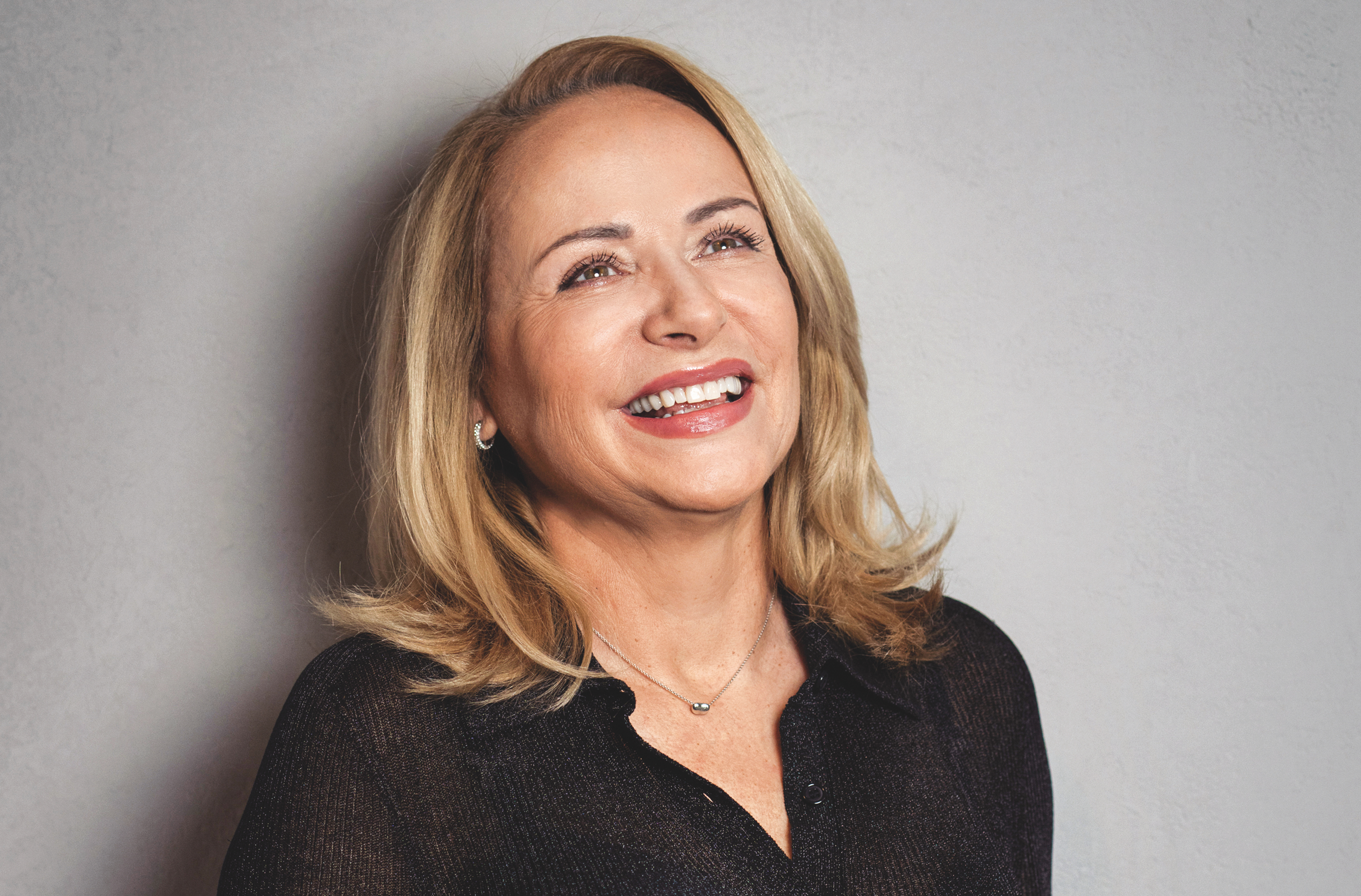
Family, education, social policy, and reform – all of this shapes the work of Paula Puškárová, a member of the National Council for HLAS-SD and chair of the Committee on Education, Science, Youth, Sport, and Tourism. She has long worked on supporting single parents and on reforms in education and research. “Education should not be about memorizing facts, but about developing critical thinking,” she says.
You have long worked in the social, educational, and research fields. This fall, you introduced a project to support single parents – not only mothers but fathers as well. Can you describe it more closely?
There are about 360,000 single-parent households in Slovakia today, representing 500,000 children. That is an enormous figure, and for us in Hlas – Social Democracy, it is a clear call to action. Supporting single mothers and fathers is essential for us. That is why the national project “Support for Single Parents” was created by the Ministry of Labor, Social Affairs and Family together with the nonprofit organization Jeden rodič. Its aim is to provide single parents not only with financial help, but also with professional guidance, counseling, and support – to help them manage daily life, find work, and provide for their children. A participating parent completes a year-long support program and receives a temporary motivational allowance of 100–200 EUR, depending on financial circumstances and number of children. Active participation is required – the parent must be making an effort to improve their situation. The project also includes legislative changes, such as establishing a legal definition of a single-parent household, increasing the minimum child support payment to 125 EUR, and extending the allowed days for accompanying a child on doctor's visits from seven to fourteen. Thanks to cooperation with organizations like Jeden rodič, Centrum Slniečko, and My mamy – and their practical experience – I believe this assistance will not remain “on paper,” but will genuinely change the lives of many parents and children.
What do you consider the biggest weaknesses of Slovakia’s education system and research sector?
The weak connection between school and practice. Young people may earn a degree, but they often lack the practical skills the labor market expects. That is why, in the new Higher Education Act, we completely redesigned this connection. Students can replace a thesis with a report from an internship describing how they contributed to practice in an innovative way. The new law also allows students to earn some of their credits through practical experience and to count one year of study at a secondary technical school toward a bachelor’s degree. In addition, for university graduates finishing under the old rules, we launched the program “Right to a First Job,” which subsidizes 5,100 positions for young people – especially graduates of secondary schools and universities. The state reimburses employers for 80 percent of labor costs for nine months. Nearly two thousand young people have already been hired in the first phase. We have also begun strongly promoting Slovak higher education at international education fairs – from Australia to the United States. This is part of a broader push to modernize our education system. The reform we prepared has a clear goal – for education to move away from memorization and toward developing critical thinking, digital skills, and creativity.

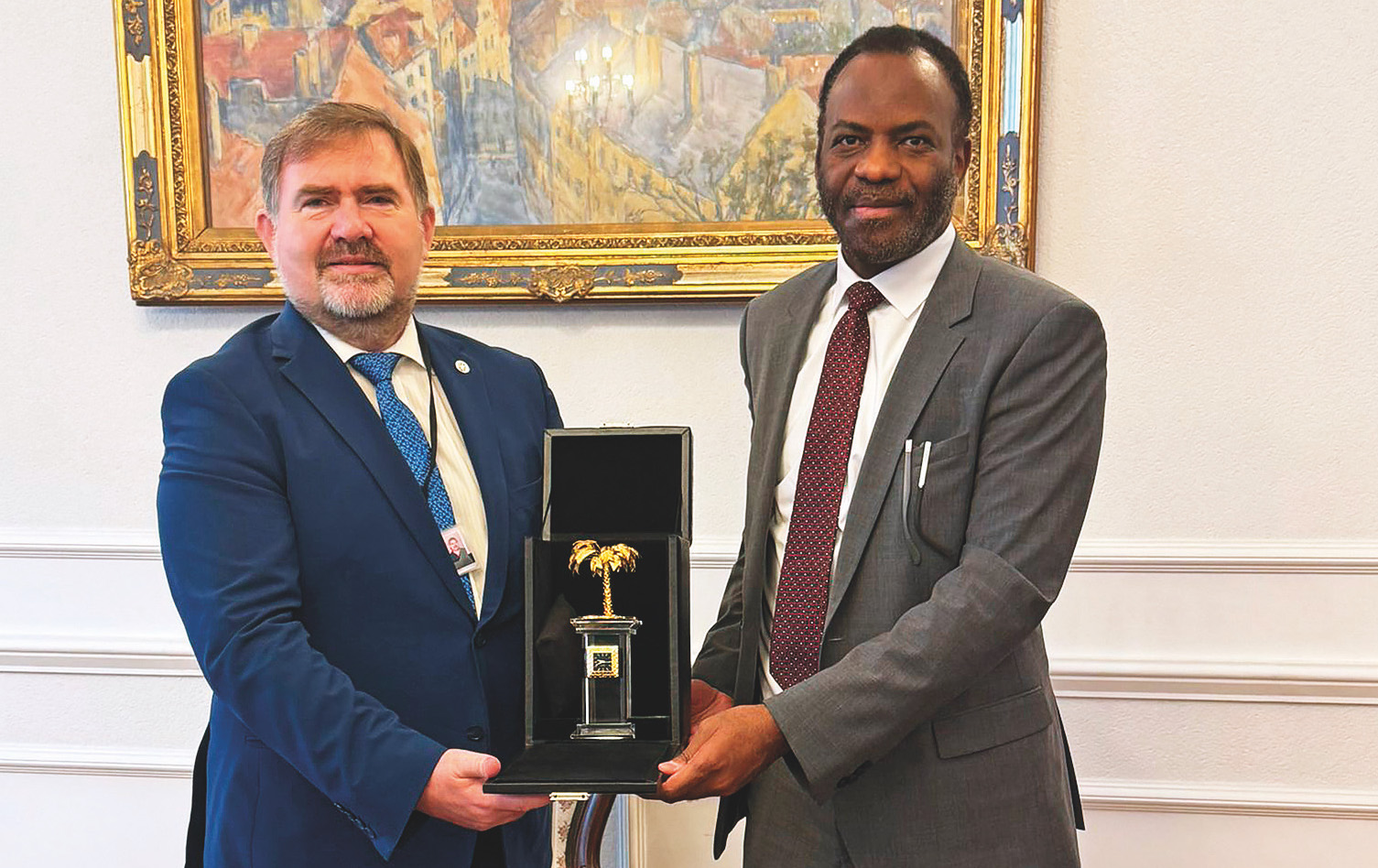
In the Czech Parliament with David Kasal and Robert Plaga.
And research?
Slovakia has long invested only around 0.9 percent of GDP in research and development – half the EU average. Funding is fragmented across short-term projects and obtaining it carries an administrative burden, taking time away from actual scientific work. We lack stability and a clear vision, and cooperation between universities, the Slovak Academy of Sciences, and the private sector remains insufficient. The setup for drawing on the Recovery and Resilience Plan was disastrous. While EU structural funds can operate through a single IT system for submitting and administering projects, the previous government (2000–2023) launched two completely separate systems – one for submissions and one for payment requests – and they do not communicate at all. Unfortunately, drawing on the Recovery and Resilience Plan is nowhere near the level we would like, and that is very disappointing.
What about young researchers? Are you able to motivate them to stay in Slovakia, or are they leaving for opportunities abroad?
The situation has stabilized in recent years, and we are working hard on this, but we still face strong competition from abroad. Young researchers have excellent education, language skills, and natural ambition – they are in high demand outside Slovakia. The key is to ensure they have an environment at home where they can grow, feel valued, and know that their work matters. That means stable grant programs, better research conditions, and above all, trust in their abilities. If a young person feels that their efforts bring results at home, they have no reason to leave. It is also important to remember that the results of many measures show only after several years. We are currently making up for the poor decisions of the previous minister of education, who was not very supportive of universities or research. The opposition is often critical and sees value only in establishing new universities. I believe we need to finally give Slovak universities the respect they deserve and focus on supporting quality teams. It is superficial to think that foreign experts alone are the key to the future of Slovak science. What Slovak research needs is stable funding, mobility opportunities, and international cooperation – while also supporting domestic researchers. Foreign “imported” professors are an artificially created bubble of support for Slovak science. They can accelerate change, but without supporting local researchers and giving them opportunities to learn and travel abroad, it will not work.
You have been active in politics for some time. Do your colleagues still see you as something of an exception in a male-dominated environment, or are women becoming more visible in politics?
Politics still operates with entrenched patterns that often reflect a male perspective, but the situation is changing. Women now enter politics with greater confidence and bring a different way of thinking – more empathy, a sense of balance, and a willingness to compromise. I try to be a partner, not a rival. I believe that a woman’s strength in politics lies in her ability to bring people together where others see dividing lines. And if I can encourage other women to enter public life, that means a lot to me. The fact that I am a woman, a mother, an academic, and a politician is an advantage – it allows me to approach issues sensitively and empathetically, while also being knowledgeable and pragmatic.
What has brought you joy at work recently?
The president recently signed a new law on names and surnames, which allows children of unmarried parents to share both parents’ surnames. Children will thus have two surnames; until now, only one – from one parent – was possible. It is a seemingly small change, but it makes a major practical difference: when travelling abroad, at school, in preschool, at the hospital – everywhere, the child will be identifiable with both parents. It will also end arguments over which surname the child should carry – if the parents cannot agree, the child may have both. Parents are equal in raising their children, and their surnames should reflect that.

With Stanislava Lustyková, Director of the Jan Deyl Conservatory.
Do you have any time left for rest?
I have two small children, so I spend most of my free time with them. Because I work a lot, I try to make sure they feel that their mom is really there for them. We are doing this interview during a typical morning rush – I dropped them off at preschool just a few minutes ago and prepared breakfast. But even that is a way of resting. For me, mothers are superheroes, and that is a message we must keep reminding society of. I work closely with women, and they can always count on my support and understanding.
We recently celebrated another anniversary of November 17. When did you last realize how fragile democracy and freedom still are?
It is important to support the true legacy of November 17 and bring it into everyday life: to promote decency in public discourse, teach young people respect, and avoid glorifying rudeness or vulgarity. We must protect freedom and democracy not only formally, but above all through our behavior and attitude every day.
The author is a staff writer for Deník
CV BOX
Paula Puškárová (born March 6, 1985) is a Member of the National Council of Slovakia for HLAS-SD and the Chairwoman of the Committee for Education, Science, Youth, Sports, and Tourism.
She graduated from the Faculty of International Relations at the University of Economics in Bratislava and from the Bratislava Conservatory, specializing in opera singing.
Since 2019, she has served as Vice-Rector for Science and Doctoral Studies at the University of Economics in Bratislava, and since 2020, she has been an Associate Professor at the Department of International Trade at the same institution. She is a member of several scientific councils at foreign universities and has published in international scientific journals indexed in Current Contents, Web of Science, and Scopus.
She entered politics in 2023, successfully ran in the parliamentary elections, and was elected as an MP.
She lives in Bratislava and has two children.
reklama