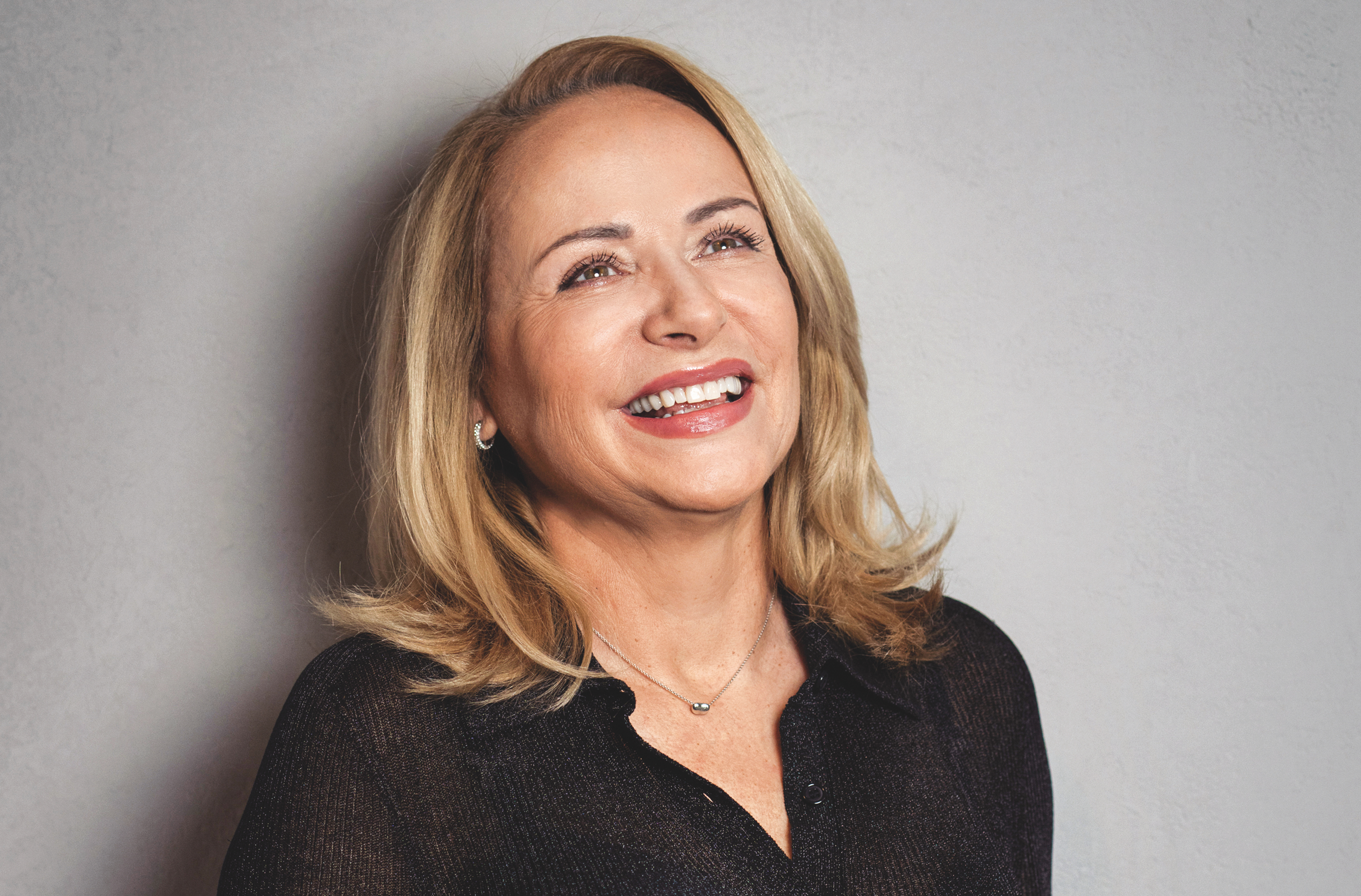
Miroslava Ferancová, a trained lawyer, entered politics twelve years ago under the banner of the ANO movement. She first took a seat on the Olomouc City Council and six years later was also elected to the regional council. Since the beginning of this year, she has led Olomouc, becoming the city’s first female mayor.
How does a woman at the helm of the city view this Moravian metropolis differently from her male predecessors?
That is a difficult question. Just as there are differences between male and female perspectives on many aspects of everyday life, there are also differences in how men and women perceive a city’s needs. Men tend to focus more on long-term, strategic development goals – on concepts and “big things.” Alongside major goals, women tend to pay closer attention to detail: whether curb ramps are included when streets and sidewalks are renovated, whether there are enough benches and waste bins, whether the opening hours of public institutions meet residents’ needs, or whether public spaces are kept clean. My ambition is to combine both perspectives and view Olomouc from multiple angles – as the seat of regional institutions, a historical and cultural center, home to an ancient university and an archbishopric, as well as headquarters of the Czech Land Forces; but also as a place where tens of thousands of people from across the region work and where more than one hundred thousand citizens live. The task of the city leadership is to ensure that everyone has access to essential services – shops, heating, lighting, drinking water, public transport, healthcare, and a sense of security, among many other things. I see our city as a living, constantly evolving organism, and I strive to make it above all a wonderful place to live for all its residents.
You lead a relatively broad coalition that includes ANO politicians alongside parties that are fierce opponents at the national level. What is your recipe for stable long-term cooperation?
Municipal politics – in Olomouc and generally – is different from national politics. It is more about specific people, specific problems, and concrete goals. Each coalition party should be able to fulfill at least part of its electoral program and the promises made to its voters. At the beginning of our mandate, we negotiated and published key priorities in our program statement, and we adhere to them. So far, cooperation has allowed us to advance our shared vision. Of course, we do not agree on everything, but politics cannot function without the art of compromise. The main thing is a shared goal – serving citizens and ensuring the city’s continuous development and improvement of quality of life.
Olomouc is a major university city, yet it sometimes seems overshadowed by academically dynamic Brno. Do you aim to change that?
Currently, around 23,000 students study in Olomouc. For a city with just over one hundred thousand permanent residents, that is a substantial number. We do not feel that we are lagging behind Brno. The leadership of Palacký University and the private universities in the city are certainly not resting on their laurels. New study programs, research centers, and facilities are constantly being developed. The university is one of the city’s key partners and a major employer. We often discuss the absence of technical fields, which have no strong tradition here, although parts of the business community are calling for them. Students are also a highly positive element in the city’s life – youthful energy suits our historic city. We certainly support the development of higher education, but we see development not merely as growth in numbers, but as growth in quality.
You lead one of the most beautiful cities in Czechia. How do you attract tourists from home and abroad, and what role does tourism play in the city’s economy?
Thank you for the compliment – and I must modestly add that you are absolutely right. Olomouc is beautiful, and we are pleased that each year more visitors from across Czechia and abroad come to see it for themselves. We promote the city directly at tourism fairs, through advertising and social media, and by presenting it in our partner cities. We also attract visitors indirectly by hosting a wide range of cultural and social events. The Olomouc Christmas Markets, the Tvarůžky Festival, the Festival of Military Music, City Days, and the “City Comes Alive” festival are already legendary and bring hundreds of thousands of visitors annually. We are delighted by every Czech visitor, but tourists from Slovakia and Poland are close contenders, and their numbers increase each year. We also attract visitors through gastronomy and experiential dining. Olomouc boasts a remarkable number of high-quality restaurants, including the renowned Michelin-starred Entrée. Tourism already plays – and we hope will continue to play – a significant role. During Advent, for example, it is almost impossible to find accommodation or a free table in a restaurant. We are not a city of heavy industry, but we have much to offer in terms of leisure activities. The city leadership supports tourism development in cooperation with the Chamber of Commerce and local entrepreneurs, and by maintaining the city so that it remains attractive to residents and visitors alike.
Before World War II, Olomouc had a significant German minority, and in 1919 Germans and Czechs were nearly equal in number; there was also a sizeable Jewish community. Brno increasingly embraces its multicultural past, even hosting a Sudeten German gathering. Could you imagine something similar in Olomouc?
You are right – Olomouc has always had a strong German and Jewish minority. In earlier periods, it was often seen as a predominantly German city, forming a defensive union with other “German” towns such as Uničov and Litovel. The Jewish population declined dramatically during the war, and after it, most residents who identified as German left. Like Brno, we proudly embrace our past. While we do not host expatriate gatherings, we maintain cooperation with the town of Nördlingen in Bavaria, where families of post-war expellees from Olomouc live, as well as with the Berlin district of Treptow-Köpenick. We visit each other and exchange experience in public administration. We also take part in historical festivals in Nördlingen, and their delegation regularly attends our City Days celebrations, including the historical procession and ceremonial mass. Cooperation is already lively, and I can certainly imagine it expanding further.
The author is a European editor of Deník

CV BOX
Miroslava Ferancová (born October 8, 1967, in Olomouc) is mayor of Olomouc and a member of the Olomouc Regional Council.
She studied law at the Faculty of Law of Masaryk University in Brno. After graduation, she worked at Olma until 2010, then at the Prostějov municipal office’s legal department until October 2014. She subsequently served briefly as HR manager at Czech Post headquarters and later headed the HR department of Military Forests. For many years, she also served as a lay judge at a district court.
A member of the ANO movement since 2014, she was elected to the Olomouc City Council the same year and re-elected in the following two elections. Since 2020, she has been a member of the Olomouc Regional Council, and since January 2026, mayor of Olomouc.
Her husband, Milan Feranec, served nearly eight years as a member of parliament for ANO. He passed away in January 2025.
reklama