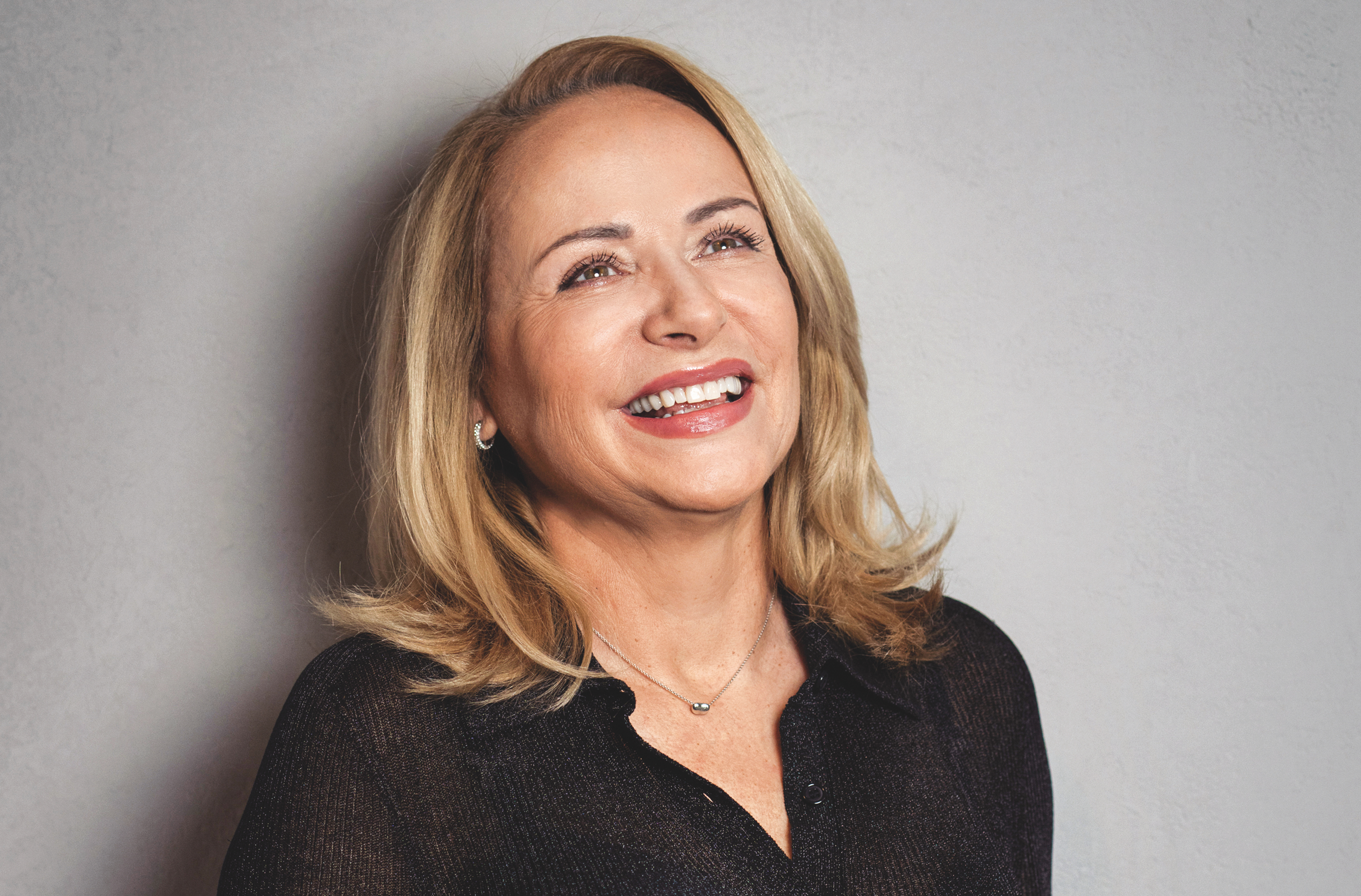
An excellent actor in both film and theater, perfectly fluent not only in his native Slovak but also in Czech. However, at one time, also a prominent politician. At the end of 1989, he was a founding member of Public Against Violence, then an advisor to President Václav Havel, a member of parliament, and a minister. All these are the faces of Milan Kňažko.
Let‘s reminisce a bit and go back to 1989. How did you get involved in politics?
Actually, it was the other way around. I didn’t enter politics, but politics entered my life. It started with signing the petition “A Few Sentences” for upholding basic human rights and freedoms. You know, I suffered a lot due to the occupation, as it caused the breakdown of my family. When I found out that the regime was arresting people who were laying flowers on the sites where children had essentially been murdered during the August anniversary, I didn’t hesitate to sign the petition. In the fallof 1989, I was supposed to represent Czechoslovak cinema in Madrid and Barcelona, but it was clearly undesirable for me to be the representative after signing the petition. However, no one explained this to me, and the minister of culture refused to see me even after multiple requests, so I got angry and returned my title of Merited Artist. I then wrote an open letter to the Central Committee and the Ministry of Culture, which was broadcast on Radio Free Europe the next day, though I hadn’t given it to them myself. This happened in October 1989. I didn’t know that November was coming, but I was sure that my acting career was over.
But then you became one of the faces of the revolution. Where were you when it happened?
On November 18, I was in Prague at a theatrical concert held at the Municipal House, where actors from Czech and Slovak theatres recited monologues from various plays. The first performance began at four in the afternoon, and half an hour later, representatives of the theatre management came with the announcement that the theatres were going on strike. When we announced this to the audience, they started shouting, clapping, and crying. No one knew what would happen next or that a week later, tens of thousands of people would be demonstrating in squares across Czechia and Slovakia. The next day, November 19, I was back in Bratislava, giving a speech in the square. Police cars were everywhere, and I assumed I wouldn’t return home that day. But for some incomprehensible reason, they let me go, even though some arrests took place on the spot. The next day, we gathered at the Small Stage of the Slovak National Theatre, where we founded the Public Against Violence (Slovak: Verejnosť proti nasiliu, VPN) movement. At the same time, the Civic Forum was formed in Prague. There were more protests that I helped organize and more speeches from the stands. My new role came to me completely naturally. After a few days, we were on a television debate pitted against members of the Communist Party, where we explained that we didn’t want social democracy, that we were modest, and simple democracy would suffice. Then Václav Havel asked me to come to Prague, and less than six months later, I became his advisor.
It didn‘t stop at advisor - after the election in June 1990, you were appointed minister…
Since VPN had been losing public support within months of its founding, I got swayed and ran for office. I told myself that being an advisor to the president was more of a friendly assistance than actual politics. But I was very unpleasantly surprised that the stars of the VPN election ticket included also communist cadres, against whom we had been demonstrating in the squares just four months earlier. Some servile functionaries from VPN’s leadership who had appointed these cadres did not participate in the elections themselves and did not accept any constitutional office. They wanted, or rather began, to run the state from behind the scenes. They formed so-called ministerial clubs, a sort of VPN central committee modeled on the Communist Party’s politburo, and every week they summoned us - Federal Assembly Chairman Dubček, Federal Government Chairman Čalfa, Slovak Parliament Speaker Mikloško, Slovak Prime Minister Mečiar, and other ministers and deputies - to tell us what we should say and do. At about the fourth such meeting, I stood up and called on them to take up a constitutional office since they had no idea what they were talking about. Of course, they didn’t want to - they avoided any political responsibility. Unfortunately, we have yet to come to terms with the past, so even after many years, we still encounter things in politics that remind us of our past.

How did you feel about the split of the federation and the creation of two sovereign states?
In 1990 and 1991, I was supposed to coordinate activities between the federal and Slovak governments and between the Slovak and Czech governments on behalf of the Slovak government, similarly to Jaroslav Šabata on the Czech side. And that’s when I realized, beyond any doubt, that in the Slovak government, we were deciding on something that had already been approved at the federal level, meaning we were responsible for a decision made by the federal government. That was the moment when we realized that things couldn’t go on like this. Václav Havel said that if we wanted an authentic federation, we should lay our cards on the table, sort things out, and clarify where power came from, how it was delegated, who was who, who did what, and what they were responsible for. And we, unfortunately, couldn’t agree on that. Time, I think, has shown that the split of the federation and the establishment of independent republics was a good step. Thanks to Schengen, we have no borders, and our mutual relations are the best they’ve ever been historically.
There was also talk about banning the Communist Party, not only during the period immediately following the revolution. That didn‘t end up happening…
The communists should not have been allowed to participate in public political life or practice democracy when they had opposed and suppressed it for forty years. And banning the Communist Party? If someone wants to be a communist today, they are sure to find a place in many other parties besides the communists.
You gave up acting for several years because of politics. Did you miss it?
I stopped acting in the fall of 1989, partly because I gave up the title of Merited Artist, and later, during the revolutionary days, because whenever I went on stage, people started clapping and would pick it up again after every few sentences I'd say. I gave up theatre acting for seven years, and film acting for an even longer period. When you run in an election, you have to be prepared to take responsibility if people elect you. For thirteen years, I had a reason to be involved. Then, all the important changes were set, Slovakia was anchored in European and foreign policy, and I no longer wanted to live on state money. That was one of the reasons why I didn’t return to the Slovak National Theatre in 2002.
After this year‘s presidential election, you said that Slovakia is at a crossroads - it will either continue toward the future, or it will head back to the past. So what is it then? And should the opposition in Slovakia be more active?
Slovakia has taken the wrong path and unfortunately continues to walk down it every day. We can only hope that it won’t go too far and that it can still turn back, or, to borrow from traffic terminology, it can take the off-ramp in another direction. Whether a wave of discontent will rise against the current government is hard to predict. Sometimes it takes only a small thing for the cup of patience to overflow. There are signs that there’s a lot of dissatisfaction, especially in the field of culture. And should the opposition be more active? I think that the current situation is largely not the result of Robert Fico’s genius, but rather the lack of activity from the opposition. People still believe in something that is leading them into a dead end, and that’s what the opposition should change.
ACTING IN CZECHIA
Milan Kńažko is a frequent performer in Czech theatres, and he is truly exceptional in his command of the Czech language. “I have a special relationship with Czech, partly due to my two sons who live in Czechia,” he confirms. “I enjoy coming here and am happy to take on new and interesting roles. Currently, I am performing at the small stage of the Studio Dva theatre, and from February 2025, I will also be back at the Na Jezerce Theatre. I remember a conversation with Jiří Suchý, who said that he will keep performing as long as he enjoys it, as long as audiences come, and especially until he no longer confuses Molavcová with Kopta. That says it all. I do theatre for the joy of it. If I had to perform twenty-six shows a month like I did at forty, I wouldn’t be able to keep up. But eight or ten performances is just right. I believe that one should never stop. At a certain age, one can slow down, but if you stop completely, that’s the end.”
CV BOX
Milan Kňažko (born on August 28, 1945, in Horné Plachtince) is a Slovak actor and politician.
He studied acting at the Bratislava Academy of Performing Arts. For two years, he was a member of the drama ensemble of the Theatre Studio, from 1971 to 1985 a member of the New Stage, and for another four years he joined the drama ensemble of the Slovak National Theatre.
He briefly served as dean of the Theatre Faculty of the Academy of Performing Arts, in 2002 became president of the Bratislava International Film Festival, and from 2003 to 2007 was the general director of TV JOJ. In 2016, he was named Actor of the Year, receiving the Thalia Award for his role as Shylock at Prague’s Na Jezerce Theatre. In October 2024, he received the Thalia award for best foreign artist.
He was a member of the Federal Assembly and from 1992 to 2002, a member of the Slovak National Council, now the National Council of the Slovak Republic. In the 1990s, he was, among other things, the minister of foreign affairs and later the minister of culture of Slovakia. In 2013, he ran in the presidential election.
He lives in Bratislava, has been married three times, and has three children.
reklama