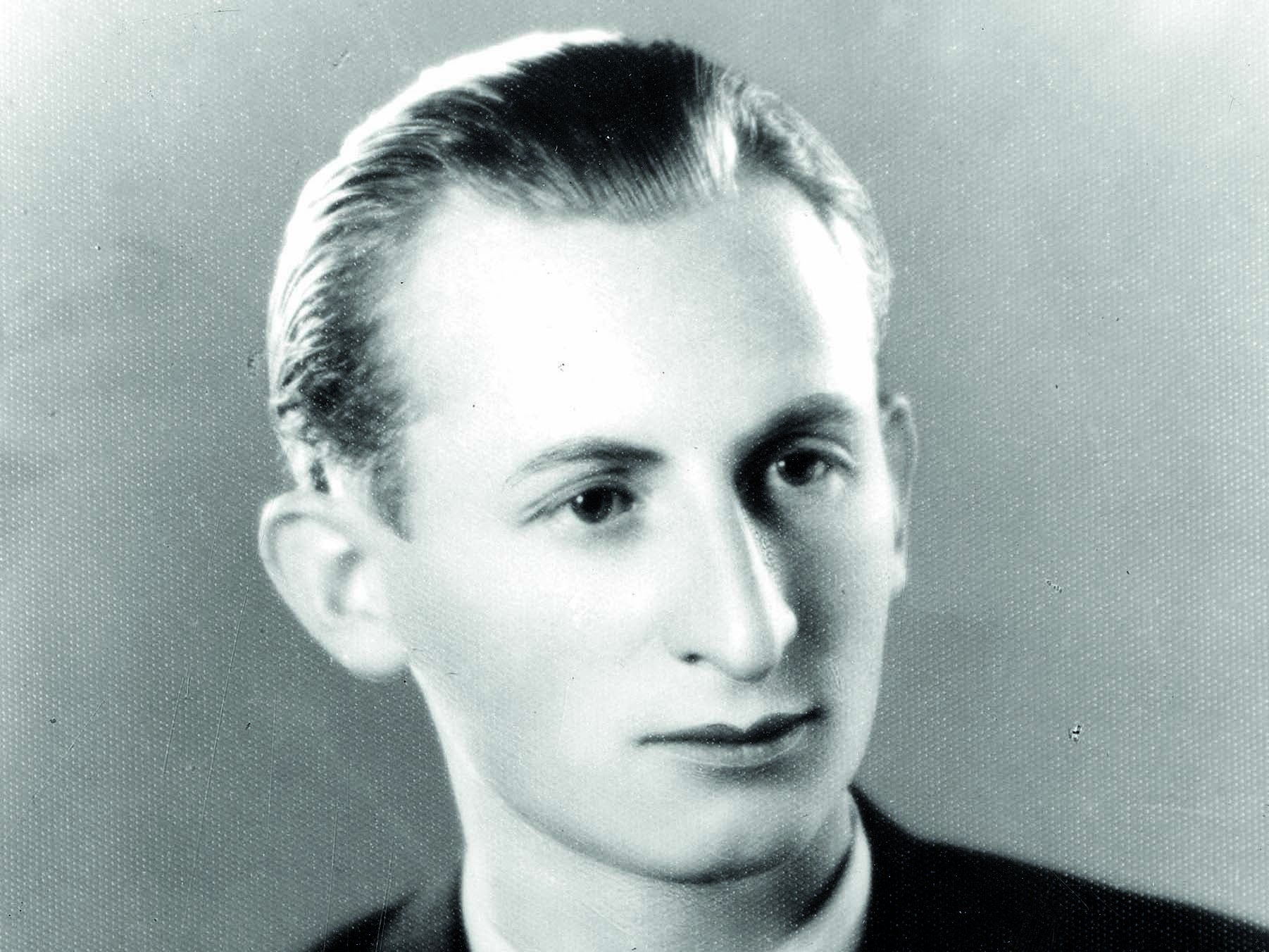
A veterinarian and politician who could be labeled the "father" of post-November democracy in Slovakia. He was an active member of the resistance during World War II and also signed the Christmas Agreement. He was one of the founding members of the Democratic Party, which was formed by unifying civil resistance groups during the Slovak National Uprising, remaining a party official until the year 1948. Following Victorious February, he was exiled, only returning to politics after the Velvet Revolution.
Martin Kvetko was an active politician and proponent of the democratization of Slovakia during the times it was ruled by totalitarian regimes. He tended towards anti-fascist, democratic, and Czecho-Slovak oriented views. He was in favor of the federation, considering its fundamental application to be the common state, while also seeking balance in the coexistence of Czech and Slovak people. Following the restoration of Czechoslovakia, he was appointed commissioner of the Slovak National Council, which was formed based on the Christmas Agreement. He worked as a commissioner of agriculture (1945–1947) and commissioner of nutrition (1947–1948) as well as a member of the Interim National Assembly (1945–1947).
Alleged reform saboteur
During the period from April 1945 to November 1947, as a member of the Board of Commissioners, he was tasked with matters of agriculture and managing the second stage of the Slovak land reform. As one of many, he fell into political disfavor due to the so-called millionaire tax. Another target of criticism besides Martin Kvetko was Kornel Fillo who was in charge of the department of nutrition and provisions. Starting in 1946, the Democratic Party (DP) was continuously accused of passivity towards the people, Kvetko even of sabotaging the land reform. All of that happened despite the increasing power of Ivan Pietor's faction within the DP, which was planning to depose the party chairman Jozef Lettrich by the end of 1946 and establish a more conciliatory approach towards the Communist Party. A food shortage and poor supply distribution, as well as all the economic issues that came to a head during the summer of 1947, became the pretext that the communist-controlled unions needed. They demanded that order be restored in supply distribution and agricultural policy, and shortly thereafter, their efforts led to a demand that Martin Kvetko step down from his position. To achieve this end, the Communist Party of Slovakia (CPS) called a nationwide convention of the United Association of Slovak Farmers on November 14, 1947, in Bratislava. It was called by the Association's secretary general, Michal Falťan, but it was out of keeping with the association statutes.
Pressure campaigns
Not even pre-1989 historiography makes any serious effort to hide the fact that pressure campaigns against the DP, including the assembly of workers' unions on October 30, 1947, were engineered at various CPS secretariats. The Communist Party took it upon itself as a priority to remove DP officials from high political positions in the government as well as the economy, especially those most publicly active. The political crisis issues were definitively concluded at the November 1947 session of the National Front of Czechs and Slovaks. The DP substituted its commissioners of agriculture and nutrition sitting on the Board while also relinquishing the commissionership of healthcare, postal service, and justice. Martin Kvetko remained on the Board as a commissioner of nutrition for a few months thereafter. He resigned alongside other non-communist ministers and commissioners following the coup in 1948.
Staunch democrat even in exile
Kvetko refused to align himself with the Slovak separatist exile community, which he associated with the Slovak state of the 1939–1945 period. During his time as an emigré, he was one of the most prominent representatives of the Slovak democratic post-February exile community, operating out of England, Germany, and the USA. Kvetko was a member of the Council of Free Czechoslovakia, which he also helped establish. He worked in the Czechoslovak department of Radio Free Europe in Munich and New York. As a founding member of the Permanent Conference of Slovak Democratic Exiles, he was appointed its secretary general. He published the Naše snahy (Our Efforts) magazine in exile. During his time in exile, he held on to his Slovak citizenship, believing that he would return home and re-enter the Slovak political scene. And that is what ultimately happened. Following his return home after November 1989, Martin Kvetko once more engaged actively in politics and took part in restoring Slovak democracy. In January 1990, he was elected chairman of the DP, and in September 1990, the party's honorary chairman. He led the DP into the Slovak Parliament in the 1990 parliamentary election. He was awarded the Order of Tomáš G. Masaryk, II Class, by the President of the CSFR in 1991 for his lifelong political efforts. Kvetko died on June 3, 1995, in Bratislava, aged eighty-two.
HUSÁK'S LETTER TO THE DEMOCRATST
he then chairman of the Board of Commissioners, Gustáv Husák, sent a letter on February 21, 1948, to all DP commissioners informing them that, "The Board of Commissioners, observant of its legal and political status, carries out the major part of its mandated authority as an executive body of the government and its ministers, meaning that the authority belongs to the government and is merely carried out by the Board of Commissioners. The logical conclusion based on the departure of DP representatives from the government is that the same party's representatives may not hold authority delegated by the government and sit on the Board of Commissioners. To that end, the resignation of DP members from the government must be considered equivalent to the resignation of DP representatives from the Board of Commissioners." Following this ultimatum, Kvetko, a staunch anti-communist, escaped into exile. Husák immediately replaced the deposed commissioners with his own people.

Martin Kvetko in March of 1995
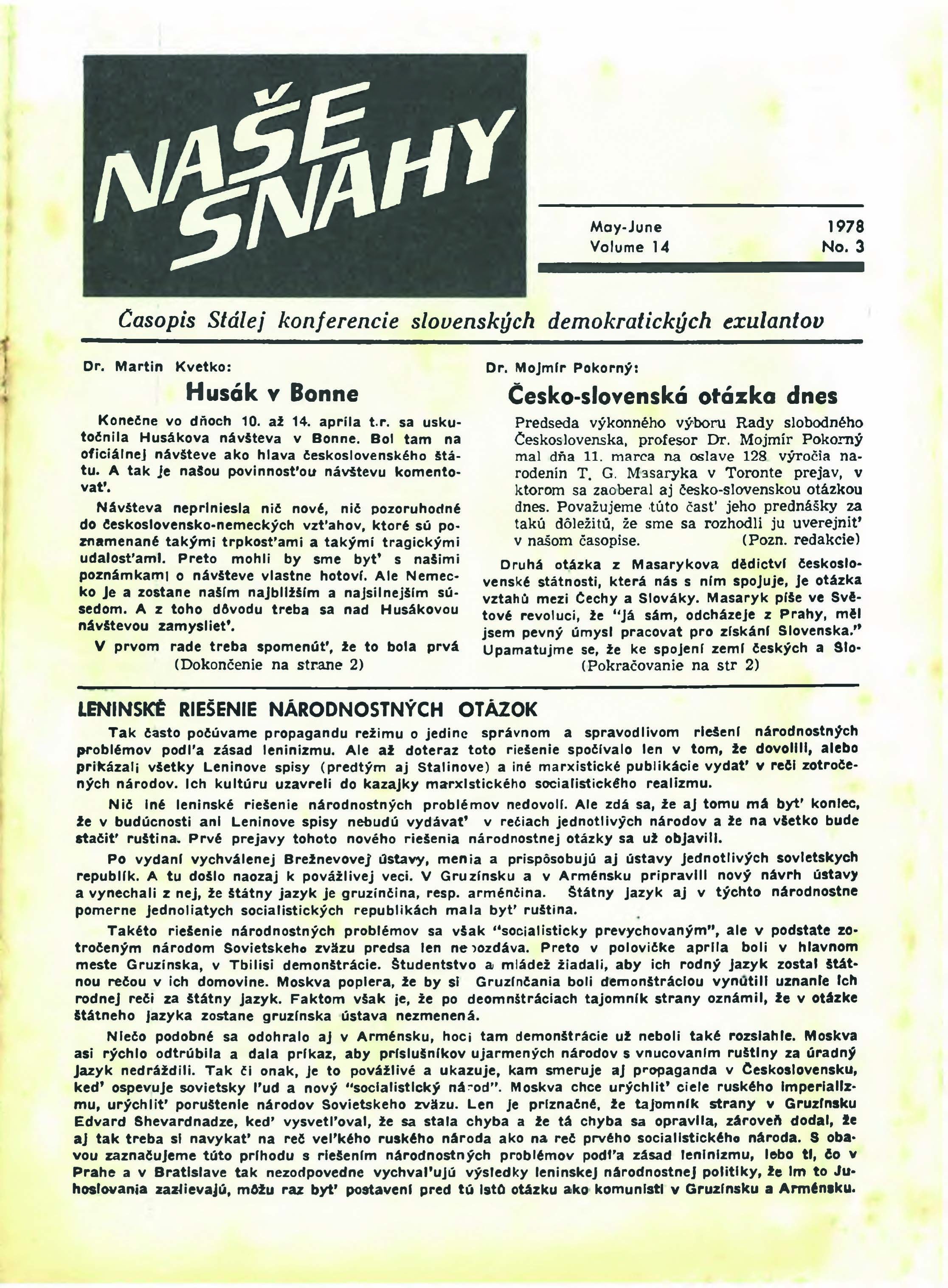
He published the Our Efforts magazine in exile
reklama



