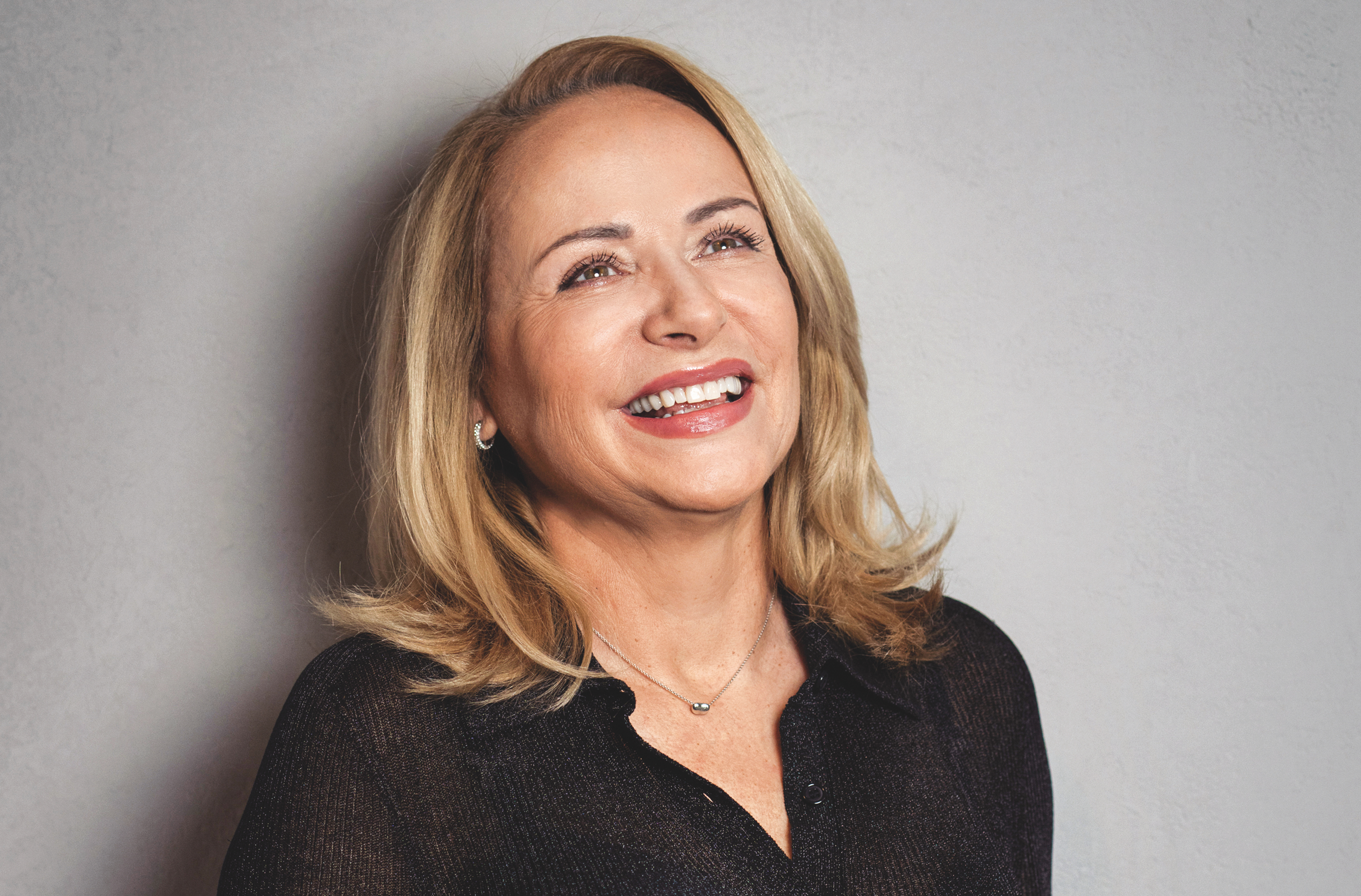
As this interview shows, Lucia Kurilovská is a woman of many professions, and the breadth of her responsibilities is striking. As the first state secretary of the Slovak Ministry of the Interior, she focuses on areas essential to public safety and to strengthening the resilience in society.
You teach at the Department of Criminal Law, Criminology, and Forensic Sciences. What led you to that field?
I have been working in criminal law since 1993, though I no longer remember exactly what first motivated me. I graduated with honors and received the Prosecutor General’s Award. Shortly afterward, two positions were announced – one in criminal law and one in civil law. I applied to both, and I was selected for criminal law. Looking back, it was probably fate.
A recently adopted amendment to the Czech Criminal Code includes changes to alternative sentencing. How widely do judges use alternative sentences in Slovakia?
I have been working on alternative sentencing for a very long time, including within the framework of restorative justice, going back to my time as an advisor to the minister of justice. Me and my colleagues introduced electronic monitoring, and we have excellent conditions for alternative sentencing – both legislatively and in practice. What troubles me is that it is still used too rarely.
In interviews, you often describe cyberbullying as one of today’s biggest challenges. How can it be prevented?
Cyberbullying, disinformation, and radicalization are new and evolving threats that require constant updates to preventive efforts. At the Ministry of the Interior, we carry out extensive prevention and awareness activities in schools focused on exactly these issues. We run many projects and initiatives aimed at training and educating both students and teachers. For example, we are currently launching the school campaign “Break the Silence – Safe at School,” which encourages young people to talk about what they are experiencing, recognize warning signs of bullying, understand when certain behaviors may already constitute criminal offenses, and learn what procedures apply under the Criminal Procedure Code or the Misdemeanors Act. The campaign also aims to motivate teachers and specialist staff to be alert to the signs, know how to respond, and feel confident addressing difficult topics. For parents, we emphasize the importance of not downplaying problems, keeping open communication with the school, and trusting the institution.
Can you mention specific measures?
As part of prevention, we have assigned liaison police officers to every school, introduced targeted measures to improve school security and readiness for external threats, strengthened support for victims (including information centers for crime victims), and launched the national project “Increasing the Resilience of Soft Targets by Strengthening Expert Capacity and Crime-Prevention Services in the Slovak Republic.”
Is the action plan and its related activities meant to prepare people for situations similar to the one at Charles University in Prague two years ago?
The attack at the university in Prague was classified as a high-profile incident targeting a soft target. Such attacks are motivated either by extremism or by mental-health issues. The 2025 Action Plan for the Protection of Soft Targets was prepared in direct response to current security threats to people’s health and lives, both in Slovakia and abroad. Its goal is indeed to prepare individuals and institutions for similar situations and to teach them how to respond. Key activities include educational materials (such as the handbook and public video “How to Act During an Armed Attack: Run – Hide – Fight”) and training exercises (drills to practice responding to an armed attacker in selected soft-target facilities). Preparation is essential – and possible. Although the first minutes of an incident often depend on intuition and improvisation, clear procedures and proper training can save lives.

What is the overall situation with juvenile crime in Slovakia?
Young people are criminally responsible from age 14 to 18. When it comes to antisocial behavior among youth (including criminal offenses, otherwise punishable acts, and misdemeanors), we have recorded a downward trend over the past two years (2023 to 2024). On average, misdemeanors make up 60 percent of these cases. And I believe the penalties, as they are currently set, are sufficient.
You are a woman of many professions. What do you enjoy about politics?
What I enjoy is that if someone wants to advance or influence something for the benefit of others – for example, when drafting legislation or providing support in other forms – politics is the right space for that. I had been thinking about it even earlier, when I worked as an advisor to the minister of justice. I saw how the processes, discussions, and negotiations unfolded, and it resonated deeply with me.
What currently takes up most of your energy in your role as first state secretary of the Ministry of the Interior?
At the moment, most of my energy goes into comprehensive work on protecting soft targets, amending the Mountain Rescue Service Act, and I now also have the amendment to the Municipal Police Act on my desk – we want to expand the competencies of municipal and city police officers and strengthen the role of volunteer firefighters. I also deal daily with migration, crime prevention, and training for our units. And the most energy-draining thing is having to explain completely obvious things supported by facts to people who insist on their own narratives and refuse to listen to anything else.
CV BOX
Lucia Kurilovská (born on December 21, 1967, in Poprad) is the first state secretary of the Ministry of the Interior of the Slovak Republic and a professor specializing in criminal law.
She graduated from the Faculty of Law at Comenius University in Bratislava, where she still teaches at the Department of Criminal Law, Criminology, and Forensic Sciences.
She has served, among other roles, as director general of the Criminal Law Section at the Ministry of the Interior, advisor to the minister of justice, and rector of the Police Academy.
In 2023, she was elected to the National Council as a member of HLAS-SD, but she does not hold her parliamentary seat, as she was appointed state secretary at the Ministry of the Interior by her party.
She is divorced and has a daughter. Her interests include sports, walks through historic city streets, reading, and fashion.
ad