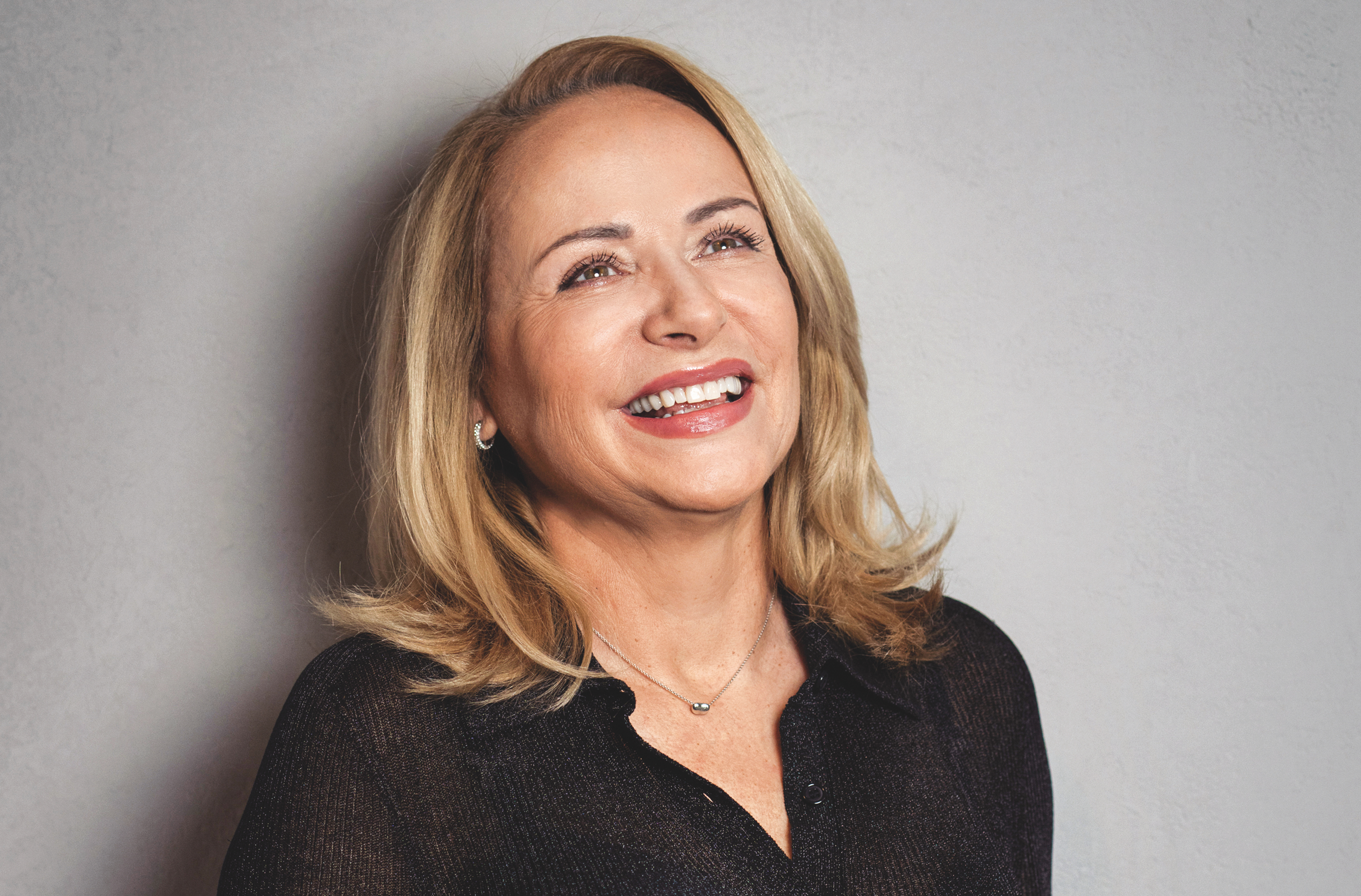
As is usually the case with politicians, everyone has both supporters and critics. Former prominent ODS figure and now the Motorists’ foreign policy expert Jan Zahradil is no exception. No matter how people feel about him, one thing is certain: a conversation with him will not be filled with empty phrases. Jan Zahradil has clear positions, clear arguments – and he knows how to defend them.
You are the main author of the Motorists’ foreign-policy program, and the movement is expected to receive the foreign ministry in the new cabinet. What should change in Czech foreign policy, and what should remain the same?
Foreign policy must reflect the changes of recent decades. We are not living in 1995, when the world was unipolar, dominated by the United States, we were joining NATO, and Clinton was playing the saxophone for Havel in the Reduta. Today the world is multipolar. The Western civilization no longer dominates it; other continents and states are asserting themselves, and not only China. Western democracies no longer form a majority. We are not the moral guiding light of the world – no one is interested in our moralizing, and no one is buying into our attempts to promote our own values abroad when their interests come first. The United States, it seems, has understood this. It is focusing more on the western hemisphere and the Pacific, not on Europe. What does that mean for us? The motto of our time is pragmatism, realism, and communication. Let’s talk to everyone, including those we don’t like. That is the job of diplomacy. It is not an exercise in applied morality. We should let go of the “Havelian” approach; it is no longer useful and only burdens us with misplaced sentiment. So, let me lay out the practical step-by-step: build Central European cooperation without prejudice; strengthen ties with the United States (which today are virtually nonexistent); normalize relations with China; invest more in economic diplomacy, especially in Asia. And regarding Ukraine, we must stop evaluating every foreign-policy issue solely through that lens. Our foreign policy has become overly focused on Ukraine – and that must change.
Why has American President Donald Trump been unable to secure a ceasefire in Russia’s war against Ukraine? And from your perspective, what would be an acceptable peace treaty for Europe and the West – one that would ease concerns of further Russian aggression against the West?
In my view, Trump is determined to rid himself of the Ukraine problem once and for all. And he will do it – with or without us. Europe, especially Eastern Europe, is not his priority. Once the Americans step away, Europe will be left with only two approaches toward Russia. The first is confrontation – which means a wartime economy, lower living standards, and the risk of conflict. The second is some form of accommodation or appeasement. One or two election cycles from now, we will see which path European voters choose. I doubt that Spain, France, Italy, and others will take the confrontational route. Scandinavia, the Baltics, Poland – yes. But do they represent a European majority? I don’t think so. Central Europe, including the Czech Republic, will have to decide eventually. I cannot predict what the decision will be, but I do see a widening gap in many European countries between the political establishment and ordinary people on the issue of Ukraine. If the establishment pushes too hard, voters will vote them out. I believe the maximum Ukraine can realistically expect to achieve is the role of a buffer state between the EU and Russia, likely with the loss of part of its territory. NATO membership will not happen. And EU membership? By the time it is up for a vote, most of those promising it to Ukraine today will no longer be in power. We are lying to Ukraine – and to ourselves.
You have excellent contacts among American Republicans. What is your view as we approach the first anniversary of Donald Trump’s victory and the rise of his MAGA movement? What do you see as the highlights for Trump and the Republicans, and what as the problematic aspects?
Let’s not focus on domestic political details. Trump is caricatured deliberately in the European public sphere – which is incredibly short-sighted. The important thing is that Trump has reshaped the American political landscape. He has broken the long-standing foreign-policy consensus between Republicans and Democrats and is creating a new one. It is a new consensus of national conservatism – and where necessary, protectionism or even isolationism. The American view of globalization is increasingly critical; there is deep mistrust toward international organizations, and free trade is no longer an untouchable principle. This is literally a tectonic shift unlike anything since 1989 – arguably since 1945. Europe has no idea how to respond to it. But it will continue, even after Trump. Complaining about it will not help us – we must find answers, and quickly.

The European answer to Trump’s tariff policy has been the expansion of free-trade agreements. Do you think this is the right strategy? And is it a mistake for the EU to add environmental or political conditions to some of these agreements?
Unfortunately, that is not completely accurate. The process worked well under Jean-Claude Juncker, up to 2019. After that, under both the previous and the current Commission led by Ursula von der Leyen, it has ground to a halt. And the reason is exactly what you describe: the EU wants to set the standards for trade agreements. It demands conditions that partners cannot – and will not – meet: social, environmental, political, and others. This gets us nowhere. China is asking for none of this and therefore has open doors everywhere. Yes, this is a form of covert economic colonization on China’s part. But what the EU is doing is, in its own way, another form of colonization – a social one. We fail to take regional and local realities into account. We impose our own social models on societies that function in completely different ways – and when they reject them because they don’t work there, we stop talking to them. That’s not policy. It’s some sort of rigid pseudo-missionary mindset.
The Czech Republic has a large Vietnamese community, whose integration is seen as a success. But in Vietnam the Communist Party remains in power. Does the free-trade agreement between the EU and Vietnam help liberalize life there?
Since January, Vietnam has been a strategic partner of the Czech Republic – and I consider that a success of the outgoing government. It is also a sign of healthy political pragmatism. We can debate endlessly why North Vietnam defeated the South 50 years ago and unified the country under communism, but at this stage it hardly matters. In Vietnam almost no one dwells on it anymore. Relations with their former mortal enemy, the United States, are excellent. And Vietnam is one of only two Southeast Asian countries that have a trade agreement with the EU. I was able to observe this up close for nearly ten years, and it was an incredible experience. Business is booming, trade is expanding, the economy is growing, and the working-age population is strong. Vietnam is the country of the future in Southeast Asia. Assuming that everyone in the world longs for the European model of democracy is a mistake we make in Europe. We must keep our expectations grounded – not only in relation to Vietnam.
The author is a European editor of Deník
CV BOX
Jan Zahradil (born March 20, 1963, in Prague) is an ex-member of the European Parliament, former chairman of the European Conservatives and Reformists party, and erstwhile vice-chair of the ODS.
He graduated from the University of Chemistry and Technology in Prague, going on to work as a researcher in water management.
In 1990, Zahradil became a member of Občanské Fórum, joining the ODS a year later. In 1992, he was elected member of the Federal Assembly (Chamber of Deputies since 1998). In 2002, he ran to become chairman of the ODS but was unsuccessful. He did go on to serve as vice-chair and first vice-chair of the party. In March 2025, he announced that he was leaving ODS after 33 years and started closely cooperating with the Motorists party.
He was an MP until 2004 when he became a member of the European Parliament, which is a position he held until the 2024 elections. In 2009, he founded the European Conservatives and Reformists (ECR) group in the European Parliament and became its vice-chair. In March 2011, he became the first Czech to hold the position of ECR chairman.
Zahradil is married and has two children. He is an avid music fan, especially of rock music.
ad