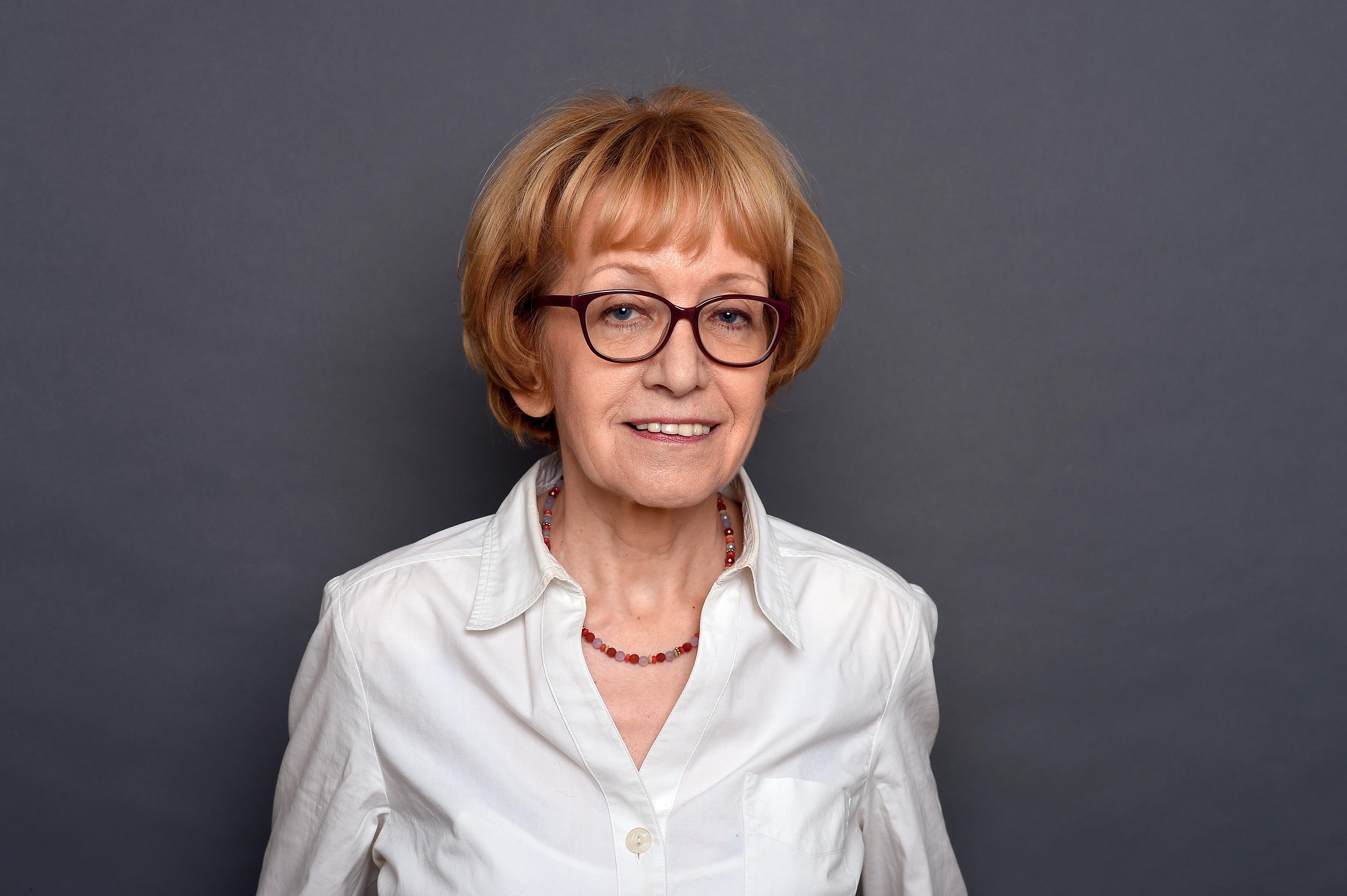
Next year - the year of a parliamentary election - the deputy for the ANO movement Helena Válková will have celebrated fifteen years of non-stop work in the Chamber of Deputies. She used to be the Minister of Justice, the Government Commissioner for human rights, or the president of the College of Business and Law.
You’re a woman of many professions, which one felt the most comfortable?
Each job had different requirements for skills and approach, and all of them were fun - coming up with solutions, organizing people, and, at the risk of sounding a bit vain, setting an example for them. I’m strict with myself, the same way I’m strict with my colleagues, which might not always be pleasant, but it pays off. Should I describe it with one sentence, across these different positions, I’ve always really enjoyed all the donkey work, when you’re in the process of bringing an idea to life. Be it the founding of the department of criminal law at the University of West Bohemia in Plzeň, leading a branch of the German law literature publishing house C. H. Beck in the Czech republic, teaching students, creating legislation, and so much more.
As this interview is happening, one big issue is the postal voting bill. How do you personally look at the bill proposal, and postal voting itself?
I am no staunch opponent of postal voting. I certainly agree that we should make voting easier for Czech citizens living abroad, but it must be according to a regulation which will minimize the risk of manipulating election results. Such a bill must be well prepared, discussed across the spectrum of all political parties, and will also require the amendment of all related laws, or even passing new ones. For example, there’s currently no lawful adjustment to ensure the criminal defense of a just postal voting process. Another aspect of this, which not only the coalition, but also some opposition deputies don’t like hearing, is the inequality or discrimination in the fact that Czech citizens living in the Czech republic will not have the option to vote by post. I think that the Constitutional Court will take this objection seriously, should the bill make it over there for examination.
The surrounding countries have already solved the postal voting issue, why does it bring up so many emotions over here, and why do we not get inspired by what worked abroad?
If we are to mention getting inspired abroad, we must remember that each country has its rule of law set by a constitution, constitutional order, and so getting inspired word for word is never an option. What we, if I’m allowed to speak for my colleagues, find an issue with, is the expediency literally radiating off the bill. If we had enough time and the chance to modify the draft with amendment proposals of our own, and remove all of its inconsistencies, we won’t fight it. But making all of this happen in time for the bill to take effect on the 1st of January 2025 is practically impossible. As I mentioned before, the legislation to guarantee the criminal defense of postal voting is missing, and the novelization of all other important related laws has not been prepared yet either.
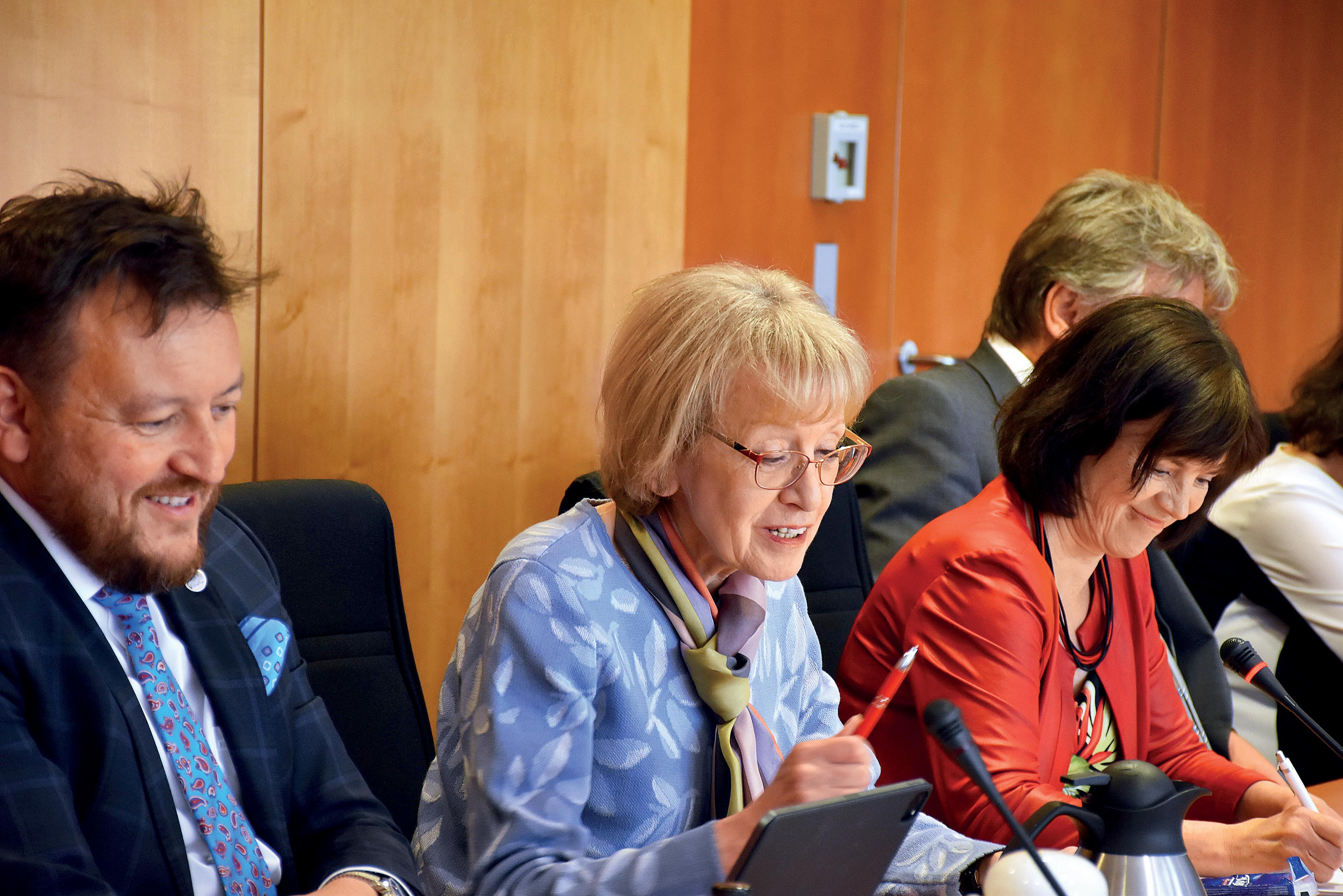
At a Berlin meeting of the Mandate and Immunity Committee.
Postal voting was on the list with Andrej Babiš’s former government. What happened, why is Andrej Babiš against the idea these days?
The postal voting bill wasn’t a priority for Andrej Babiš and his government. Today, Andrej Babiš doesn’t say anything other than he’s against postal voting in the context of the current situation, when the coalition, with their preferences decreasing, pushes for the bill to be passed at any and all costs. I’m personally missing a discussion over the bill proposal at one table. I don’t express radical opinions and I attempt to compromise. But unfortunately I’m starting to feel like it’s just an effort on the coalition’s side to gain every possible extra vote, even at the cost of risking the public’s trust in the proper conduct of elections.
Are these words not too strong?
It is legislative mistakes and the great pressure on accepting a legislatively imperfect proposal for implementing postal voting, that arouse doubt about the “pure intentions” of the coalition, and explain the aforementioned, emotionally tinted words.
This is your third election period as a deputy, what was the road that led you into active politics, and the ANO movement?
It all started with a text called “Law and justice”, which I prepared for the ANO movement and its program in the spring of 2013. Andrej Babiš liked my work, and offered me further cooperation. After some consideration, I accepted the offer, even considering that the movement wasn’t a part of active politics back then. As we all know, it saw success in the 2013 snap election, and became a coalition partner in Bohuslav Sobotka’s government. All of a sudden, I was a deputy, and the deputy chairwoman of the Committee on Constitutional and Legal Affairs. As a newbie, I learned everything as I went along, as was the case for the entire movement after all.
You were the government commissioner for human rights, and when you were about to run for the post of Ombudsman, a media furore broke out. How did you make peace with your past, as well as everything that was happening around you?
I was able to make peace with my past because I knew what the truth was, and what wasn’t. I never
hid that before the year 1989, I was a member of the Czechoslovak Communist Party, to be able to do the work I enjoyed. I had no post, I didn’t get involved in anything party-related, or collaborate in any other way. Connecting me to prosecutor Urválek and accusing me of bullying dissidents was absurd, but several weeks of media pressure can really deal a blow to a person, and not only politically, but mentally and personally as well. I was lucky enough that certain foreign politicians working in our country stood by my side, and even several dissidents as well. The whole thing still led to the withdrawal of my candidacy. Apart from other things, I lost the certainty that when you conduct yourself to your best knowledge and conscience and moral values, nothing can happen to you in politics. That entire era really was very difficult for me. Fortunately we succeeded - after 3,5 years of court proceedings, though - to finally prove that it was all lies, and thus clear my name. The scars on my soul remained, though.
Much like healthcare, education and other departments have their issues, does justice also have its own “skeleton in the closet”?
Unfortunately, justice isn’t any better off. Firstly, there’s the broken system of guardianship judiciary. I’m not saying we don’t have good guardianship judges, but unfortunately there are those among us who kept their opinions in the first half of the twentieth century, where the most important thing wasn’t “the best interest of the child”, but their parents, or even worse, just one of those. We’re also facing systemic issues, we don’t have enough experts, mainly child psychiatrists and psychologists. Another area where we’ve been dealing with a lot of issues and gaps in the law, is insolvency. And then there’s the systemic changes I wanted to implement as the Minister of Justice, but because of the time constraints of my term in the ministry, I couldn’t get to those in time, namely a judiciary reform including the abolition of High Courts and Chief Prosecutors’ Offices, replacing the Directorate General of the Prison Service with a department in the Ministry of Justice dedicated to managing imprisonment, etc. These obviously important large systemic changes are awaiting a new government and a new Minister of Justice.

CV BOX
Helena Válková (born on the 7th of January 1951 in Chlumec nad Cidlinou) is a deputy for the ANO movement, former Minister of Justice, lawyer and university teacher.
She graduated from the Faculty of Law at the Charles University in Prague, where she obtained her degree in the field of criminal law in 1982. She obtained her professorship in criminal law in 2006 at the Trnava University.
She worked at the Research Institute of Criminology with the Czechoslovak republic????s Prosecutor General‘s Office and the Institute of State and Law at the Academy of Sciences of the Czech republic, taught at the Faculty of Arts the Charles University, and the Faculty of Law at the University of West Bohemia, and also worked at the CEVRO Institute.
After 1989, she was involved in the Civic Forum, in 2013 she successfully ran for the Chamber of Deputies as a non-partisan for the ANO movement. In January 2014, she was named the Minister of Justice in Bohuslav Sobotka’s government, and resigned the post on the 1st of March 2015.
At the beginning of 2015, she became a member of the ANO movement. She defended her mandate in the 2017 and 2021 elections. Between 2019-2022 she was the Government Commissioner for human rights.
She is married, has one son, and lives in Prague.
reklama


