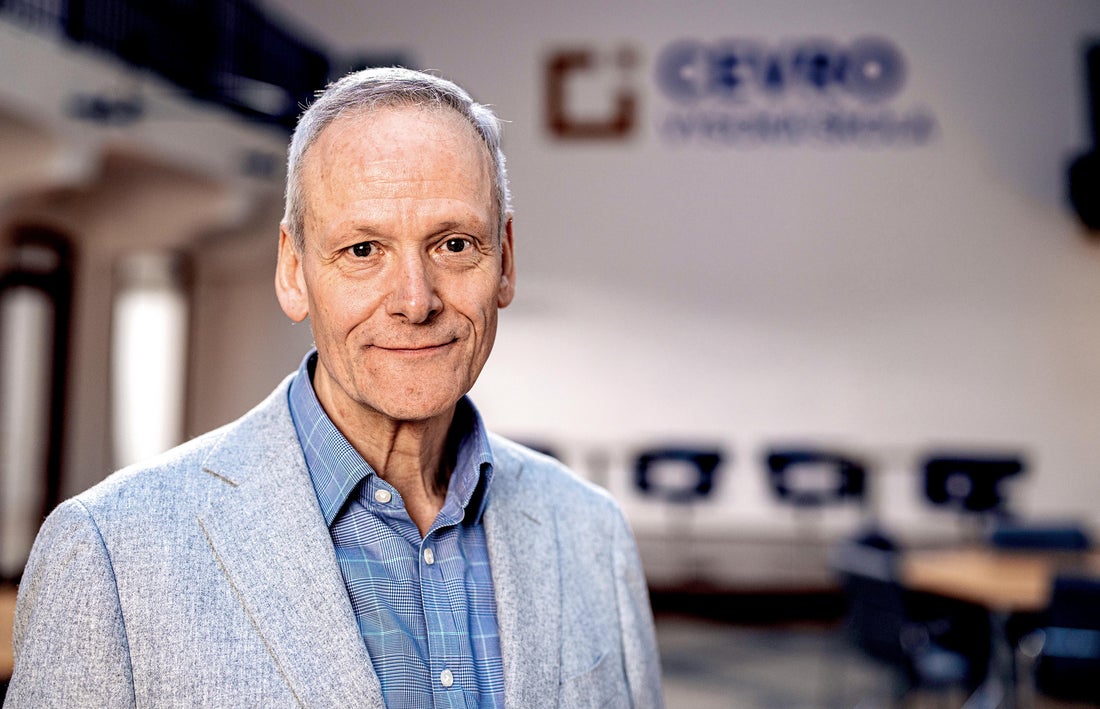
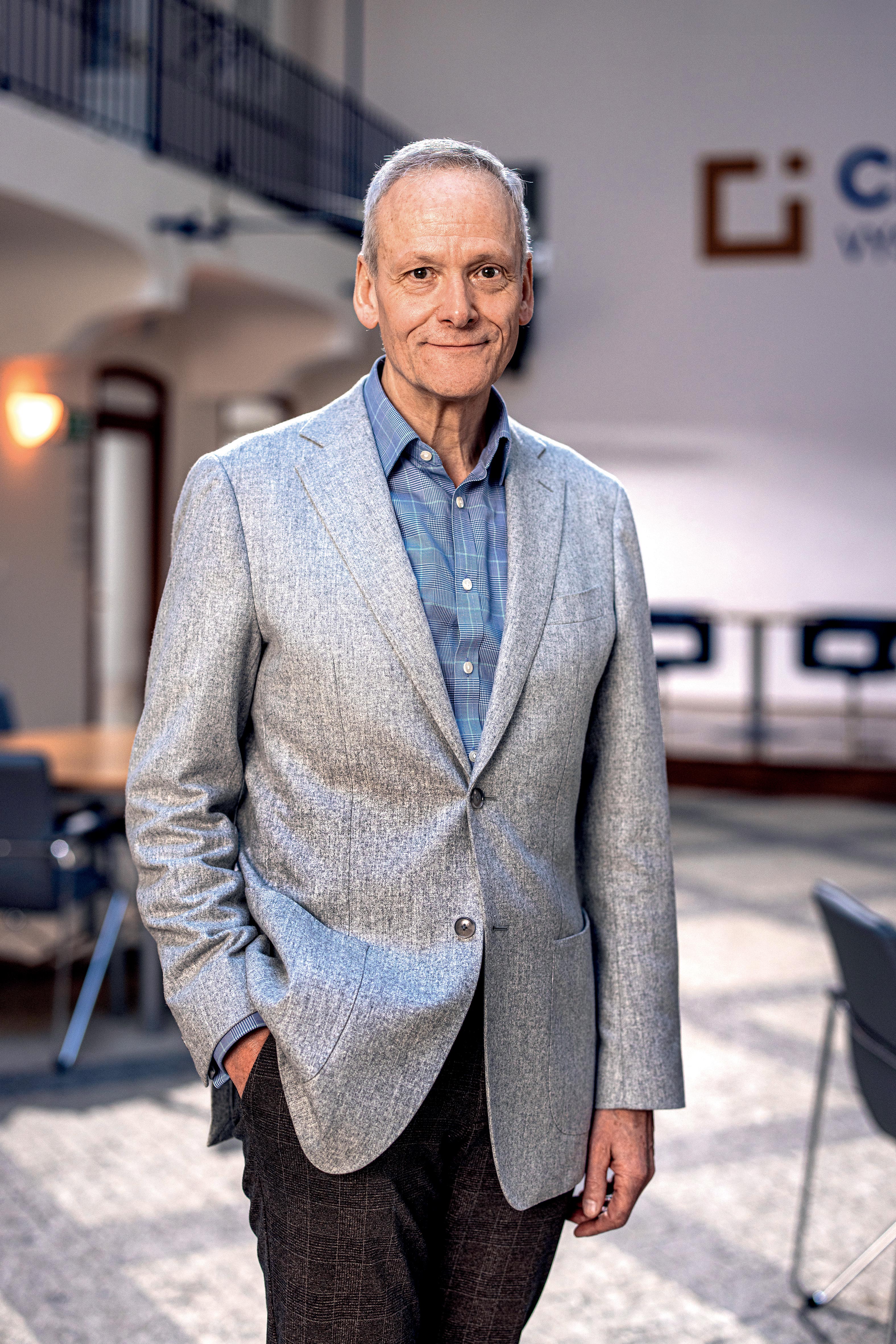
When the KDU-ČSL party did not succeed in the 2010 election and left the Chamber of Deputies, the then leader, the former Minister of Foreign Affairs Cyril Svoboda, left as well. He disappeared from high level politics, but he never left the domain of international relations and diplomacy. He leads the Diplomatic Academy, and his assessment of world events is clear, precise, observed from many angles, and brilliantly phrased.
Is politics different these days from what it was fifteen years ago, when you left it?
Politics is politics, it’s the actors who have changed. The post-revolution ones are different from those of today. The new generation of politicians didn’t live the same experiences we once did. During socialism, each active political stance had its basis. A democrat was always terrorized in one way or another by the communists, and a communist was despised in the opposition. And so one had to make up their mind very well, which side they chose. The democrats faced constant repressions from the power of the state. This pressure shaped them. I hope I don’t have to remind anyone that for the majority of the society, politics was a foreign concept, and people only adapted to external circumstances. Nothing has changed in that aspect. But because today’s political leaders were not formed under pressure, they understandably have no shape, and have no strength. They never had to fight for their stance. They know how to tactic skillfully, but that’s not enough. Even the circumstances are different. We are in a time of short-term internet message politics. Their authors can very easily write whatever, since a few minutes from now, something new and different will take over social media. This way of communicating is very superficial, superficial to write and to read. It stands to reason that the politics based on it is superficial as well. Few people write coherent texts that might capture readers’ attention ten years from now, or in the next century. And if one doesn’t have to think, one gets stuck in the present moment.
What do you think about current international affairs?
The world is at a crossroads. It’s very different, but also the very same. Same in that countries still put their own interests forward, and mainly great powers battle for global influence. It’s understandable that the USA and Russia compete with one another, and China and India have joined them in the highest global league, and many others will follow. What’s new is the globalization of conflict. War is waged across different fronts, for example Ukraine, Israel, Sudan, the Sahel region or Yemen. These conflicts are interconnected, because the involvement of these great powers in different conflicts is a part of a hybrid war. All sorts of resources are used and abused, not just cold hard military power. The war is not only hybrid, but also asymmetrical, there’s private armies (like the Wagner group) or terror cells engaged in these battles. We haven’t yet experienced such a complexity of war. There is no functioning traffic light at the aforementioned crossroads, it just keeps blinking orange in every direction. The democratic powers, mainly the USA and EU, don’t have the strength to implement any rules for safely passing through the crossroads, and are incapable of agreeing on any of them, either. Non-liberal players would only switch on the green light in their own direction, and the USA with the EU would only switch on the red.
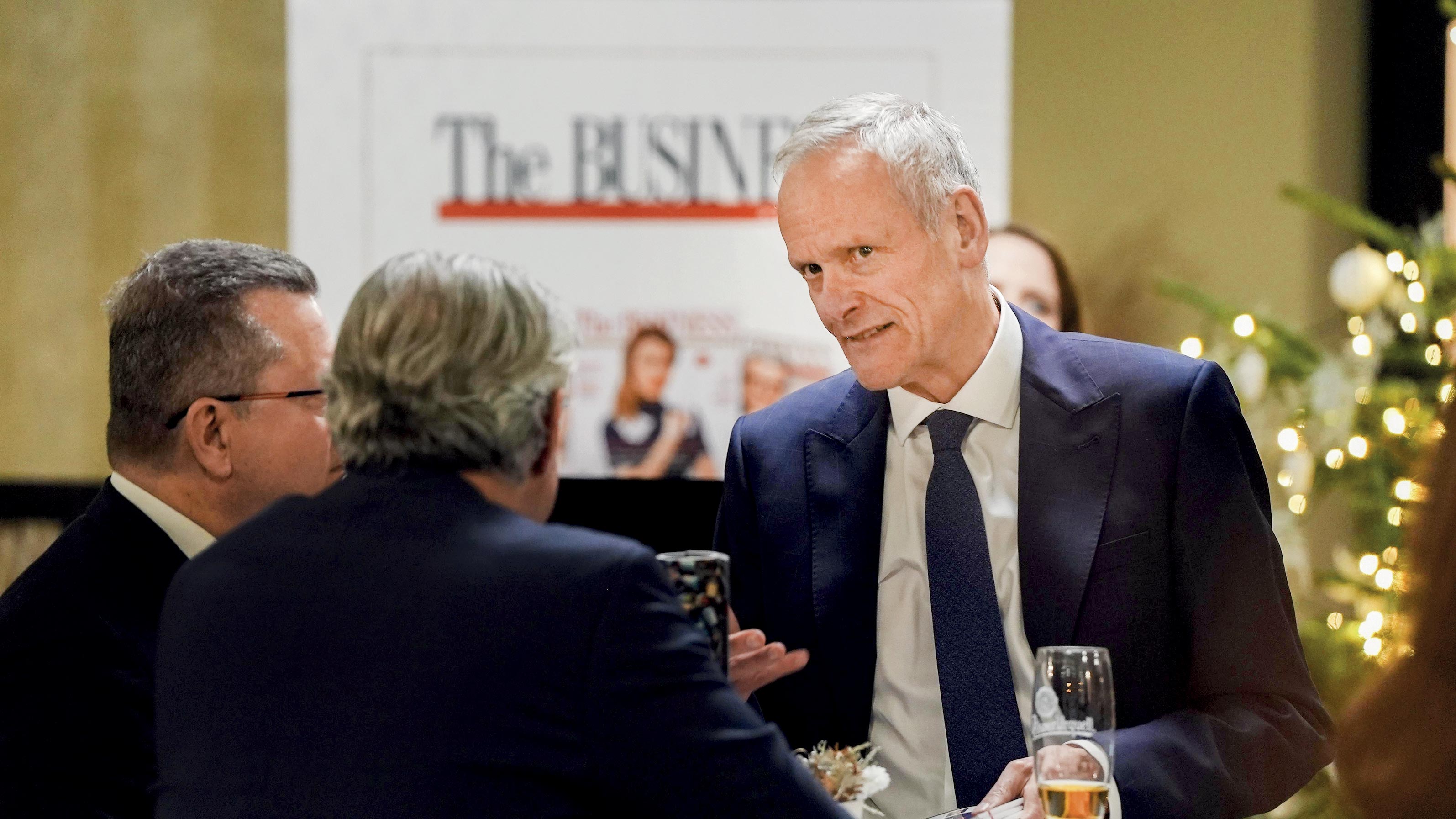
At last year's Czecho-Slovak Diplomatic Evening.
The Green Deal and migration are some of today’s most significant topics. What’s your take on them?
I don’t consider the Green Deal a key issue. I’m certain it will only remain a slogan, a shell with no core inside. Too much was politically invested into the formulation of it for it to be rejected. No one will do that. Moreover even its opponents are half-wits, they know for a fact that the proponents of the Green Deal are right about certain things, and those proponents also realize that their opponents’ opinions have a certain relevance. And so the name will remain, and the content will continue evolving according to the circumstances. On the other hand, migration is an exceptionally serious topic. It is associated with Ukraine. That country is already missing a lot of manpower, mainly men. There’s around eight million Ukrainians abroad, and we don’t know how many thousands were killed or maimed at the front. And Ukraine will need a workforce to rebuild, both in the industry and agriculture. Africa will be the only source of a male workforce. There’s around 1,2 billion people living in Africa. The age average is around 21. A population growth up to 2 billion is expected by the year 2050. Even today, Africa is incapable of feeding this many people. I think the Ukrainian oligarchs, supported by Russia, will organize a massive flood of Africans into Ukraine. The migrants’ main goal will be to progress into Europe beyond the Ukrainian border. This will certainly be hundreds of thousands of people. This is a real issue. Europe must be prepared today to be defended in this massive migration wave.
Do you think the European Union will see any significant changes, will it hear the growing displeased voices of its citizens?
The EU will hear out nothing. The elections will turn out according to the internal political atmosphere. The European Parliament elections are actually domestic. They traditionally have a very low attendance. I would hazard a guess that around 95 percent of voters have no idea how the European Parliament decides things, and they are not interested in finding out. Therefore they believe their political parties, and the way they present European politics to them. Let me give an example. I heard about the quotas that the EU supposedly used to order us to accept migrants, and that we averted these. None of that is true. If it were true, why wasn’t the Czech republic penalized by the European Court of Justice for not fulfilling the decision? Another example might be the thoroughly purposive interpretation of the weapons directive. According to the Czech interpreters, the EU limited our production of certain weapons. Another lie. The directive relates to possession of special weapons for the common citizen, similar to the weapons the shooter had at the Faculty of Arts at Charles University. Next to the USA, the Czech republic is the most liberal when it comes to the selling, buying and owning of weapons. Weapons manufacturers and sellers have nothing to complain about. We can see that the voters orient themselves according to the interpretations presented to them by those political parties they sympathize with. And they will vote according to those sympathies in the Czech republic. They know that the elected Members of the European Parliament will retreat into their factions, and support their own politics, passing it off as national interest.
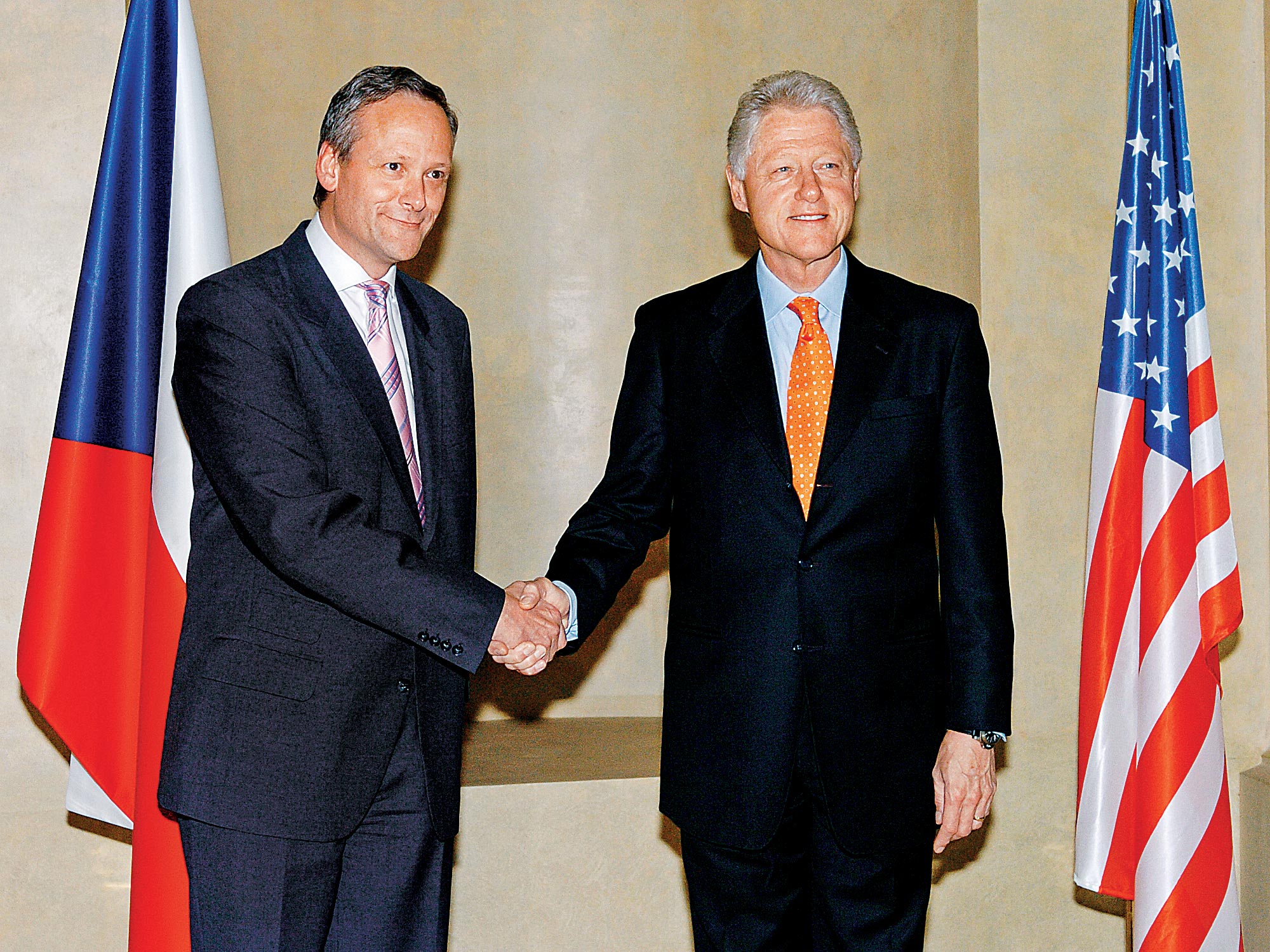
In 2005, with the former US President Bill Clinton.
You founded and are the leader of the Diplomatic Academy. How would you characterize the term “democracy”?
Diplomacy is a tool to put politics into action. Diplomacy is about the art of creating, maintaining and changing relationships. Diplomacy is a way to uphold and protect interests. Diplomacy in and of itself is a skill, not a virtue. And thus anyone can act diplomatically, a wag, a clown, a scared official or a criminal, but also an honest, persistent, bold and courageous person. History presents us with examples of all of these.
What is the Diplomatic Academy involved in, exactly?
In the Diplomatic Academy, we learn about different skills that (not only) a diplomat should wield. Our graduates succeed not only in public democracy, but also in civil service and the private sector. There are also some among our graduates who only wished to broaden their horizons. We’ve got over a thousand graduates, so it’s clear that passing our courses is meaningful. Our graduates have found employment in many fields at home and abroad. Our main program is accredited by the Ministry of Education, Youth and Sports. The Diplomatic Academy has an institutional accreditation of the Ministry of the Interior. That makes the quality of the Academy’s educational activities officially confirmed.
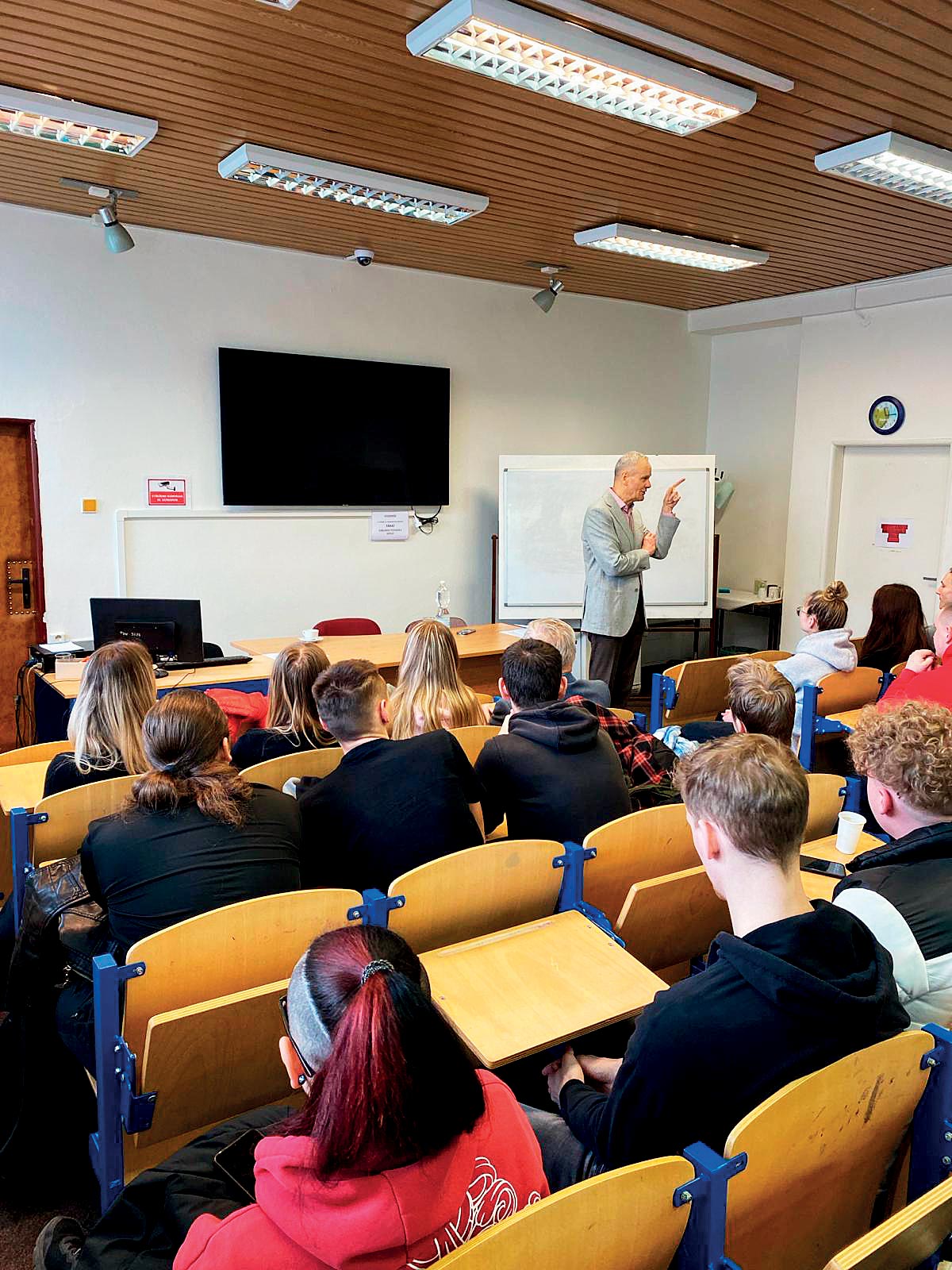
Cyril Svoboda leads the Diplomatic Academy, and also teaches at the CEVRO Institute, among other things.
How do you currently feel about your alma mater, the KDU-ČSL party? It’s on a bit of a losing streak with the voters, according to the surveys...
The Christian democracy is a part of the democratic makeup of our state’s political system. If Europe professes a Jewish-Christian tradition, there should be a party present on the Czech political scene that protects these traditional values, even if this stance is not in the majority these days. The KDU-ČSL party makes the mistake of not being brave enough to be significantly different from the other political parties, stays in cover behind its coalition partners, and so the voter rightfully doesn’t consider it a power capable of protecting their interests.
And finally on a personal note - when you meet as a family, it must be a very lively event...
Oh yes. We have ten grandchildren so far. Every one of them is unique. Together and apart, they are an extraordinary enrichment. But any other grandparent might rightfully tell you the very same thing. I’m glad that our sons live in a free country and each one of them can do what he likes - from business to advocacy, to neurosurgery. And our daughters-in-law belong on the honor board. This needs to be emphasized. Becoming a part of a large family is never easy. The exceptionality of this task lies in the fact that my parents have six and five siblings, and I myself have seven, so there’s never a shortage of relatives of all different ages. And on top of that, us siblings and most of our cousins are in regular contact. There’s even a village where our siblings, children, nieces and nephews own seventeen houses altogether. And we spend a lot of free time there. And this is the kind of an assembly our daughters-in-law had to join, and they managed perfectly. That’s unusual.
FAMILY
When the Svobodas meet as a family, it’s a lively event. “We have ten grandchildren so far,” explains Cyril Svoboda. “Every one of them is unique. Together and apart, they are an extraordinary enrichment. But any other grandparent might rightfully tell you the very same thing. I‘m glad that our sons live in a free country and each one of them can do what he likes - from business to advocacy, to neurosurgery. And our daughters-in-law belong on the honor board. This needs to be emphasized. Becoming a part of a large family is never easy. The exceptionality of this task lies in the fact that my parents have six and five siblings, and I myself have seven, so there‘s never a shortage of relatives of all different ages. And on top of that, us siblings and most of our cousins are in regular contact. There‘s even a village where our siblings, children, nieces and nephews own seventeen houses altogether. And we spend a lot of free time there. And this is the kind of an assembly our daughters-in-law had to join, and they managed perfectly. That‘s unusual.”
CV BOX
Cyril Svoboda (born on the 24th of November 1956 in Prague) is the former Minister, and also the former leader of the KDU-ČSL party.
He graduated from the Faculty of Law at Charles University. He began his political career in 1990 as an advisor for human rights, restitutions and the relationship between the state and the church to the Deputy Prime Minister. In 1991 he became the advisor to the Head of the Federal Government of the Czechoslovak Federal Republic, starting in 1992 he was the director of the legislative section in the Government Office of the Czech republic, and deputy chairman of the Government Legislative Council. Between 1992-1996 he held the post of the first Deputy Minister of Justice.
In 1995 he entered the KDU-ČSL party. He found his way into high level politics in 1998, when he held the post of Minister of the Interior. Between 2002-2006 he was the Minister of Foreign Affairs, starting in 2007 he spent two years as a minister without portfolio, and in 2009 he spent five months as the Minister for Regional Development.
Between 2001-2003, and then between 2009-2010, he was the leader of the KDU-ČSL party.
He left politics in 2010. He founded the Diplomatic Academy in 2011, which he‘s been leading ever since.
reklama


