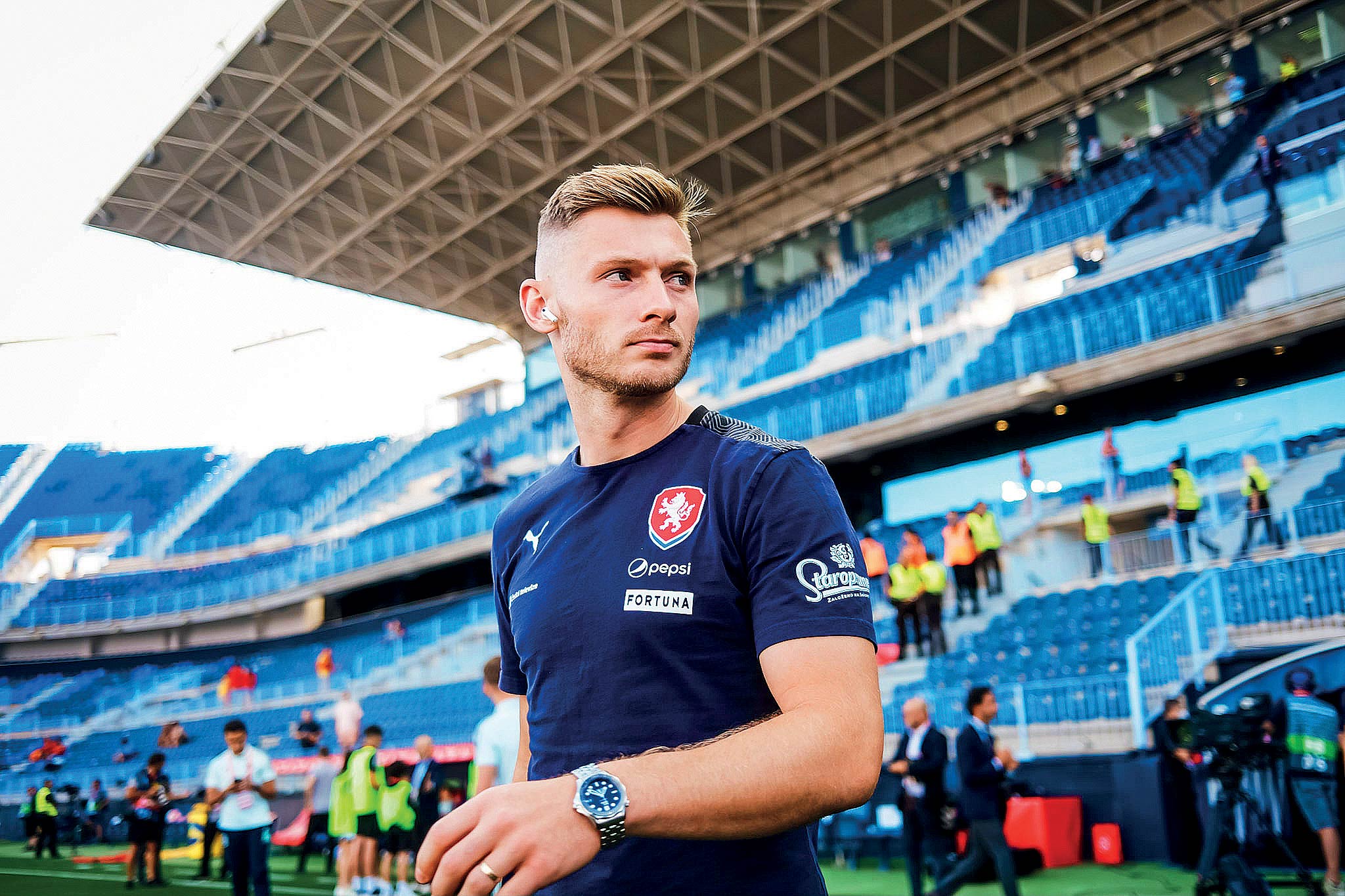
It almost seemed that former MP and minister of culture Antonín Staněk would stay away from frontline politics after 2021, when he chose not to run again for the Chamber of Deputies. But in the 2024 elections to the European Parliament, he ran for Přísaha and, thanks to the number of votes he received, became the second alternate for newly elected MEP Filip Turek. One year later, he moved from alternate status to a full seat in the European Parliament.
You have just completed your first session of the European Parliament, where you took your seat after Filip Turek left for Czech politics. What are your first impressions, and how does the experience compare with the Czech parliament, where you served for four years?
If I’m being honest, my first impressions are quite mixed. The Chamber of Deputies of the Czech Republic has 200 members, while the European Parliament has 720. It is a truly vast institution. Its procedures and day-to-day functioning are governed by similar, yet significantly different, processes that you first have to understand for your work to be meaningful and effective. I often compare it to jumping onto a moving train.
At the same time, I am gradually getting acquainted with the agenda I inherited from Filip Turek. His committees – ITRE, IMCO, and ENVI – are highly prestigious and thematically broad, covering everything from energy security and technological research to the functioning of the single market and environmental policy. These areas do not fully overlap with my own professional background, which is why I appreciate that part of his expert team has stayed on and that I am further expanding my staff. That continuity allows me to build on the agenda I have taken over and gradually master it so that I can be a fully competent and active member of these committees.
Did you have any hesitation about joining the Patriots for Europe, the group Filip Turek belonged to and which, despite its size, has the status of an extremist group in the European Parliament and was denied leadership positions it would otherwise be entitled to?
In view of the election program with which we, as candidates of the Přísaha and Motorists alliance, entered the European elections, my decision to join the Patriots for Europe group was clear. It is currently the third-largest group. It is critical of the centralization of power in Brussels, advocates stronger sovereignty for member states, criticizes the lack of transparency within the European Commission, and actively opposes several EU policies. The group generally rejects the Green Deal and ambitious climate measures, which it views as economically harmful and an example of Brussels overreach. In the past, the European Parliament operated on the assumption that such critical groups were not to be negotiated with, that a type of cordon sanitaire existed. That no longer reflects reality. As recent votes – especially on climate packages – have shown, the EPP repeatedly looks for majorities on the right side of the spectrum because, without them, it simply cannot pass key priorities. The recent negotiations on climate legislation made it clear that the old model of political isolation is no longer followed in practice. Pragmatism, not ideological labels, now drives outcomes. Today, the cordon sanitaire is more a wish held by part of the political spectrum than a description of how the Parliament actually functions.
Přísaha, the movement you ran for in the European elections, has not parted on the best of terms with the Motorists in recent months. Were program differences part of the reason? What are the main distinctions between what Filip Turek has advocated in the European Parliament until now and the approach you intend to bring?
Since I was not part of the negotiating teams, I can only rely on the information available to me as a member of the National Council of the movement. My impression was that the harmony and alignment that worked during the European elections did not carry over into the regional elections, and the two leaders increasingly diverged in their views. I also observed the position of the Motorists, who increasingly presented themselves as genuinely right-wing and viewed some of our positions as too left-leaning. Regarding my position in the European Parliament, I believe it is important to highlight the Memorandum on Coalition Cooperation agreed between Přísaha and the Motorists for the European elections and signed by all candidates, including me. It sets out program alignment in key areas that is binding for all candidates: voting against any attempts to undermine the veto right or limit the sovereignty of the Czech Republic; voting for and actively proposing strict protection of borders against illegal migration; rejecting any support for mass migration or subsequent attempts to redistribute migrants among EU countries; supporting all efforts to reverse the ban on combustion engines and opposing any renewed attempts to enforce such a ban; voting and speaking out against the current form of the Green Deal for Europe, which we consider a threat to industry, energy security, and the prosperity of the Czech Republic and its citizens; and opposing efforts to abandon the Czech koruna in favor of the euro. I do not believe that these priorities have changed since the memorandum was signed, so they remain binding for me as well. However, culture and education were priorities for me in the European Parliament elections. I am therefore actively negotiating the possibility of transferring from one of the committees where I currently serve to the Committee on Culture and Education (CULT).
In which areas do you want to be active as a former minister of culture, respected university lecturer, and former mayor of Olomouc? What role should the European Union play in culture and education? And is the Erasmus student exchange program something you also see as a success the EU can be proud of?
As I have already indicated, I am actively seeking a place in the Committee on Culture and Education (CULT) because culture, education, and academia form a natural part of my professional background. The committee plays a key role in promoting cultural heritage, media literacy, and educational programs such as Erasmus+, which I consider one of the EU’s most significant achievements in academic mobility and lifelong learning. At the same time, committees such as ENVI, IMCO, and ITRE, where I already serve, have a direct impact on science, research, and universities, whether through the regulation of artificial intelligence, technological development, or the implications of legislation for academic institutions. With my university experience, I can advance issues that matter to me even within these technical committees. If I do not manage to obtain a place in CULT at this stage, I will continue to promote culture and education through informal channels as well: by submitting questions to the Commission, participating in intergroup cooperation, and supporting initiatives that strengthen cultural diversity, education, and an open academic environment in the EU. I consider this an area where the European Union should play an active and confident role.
The new Czech government wants to reject the new ETS2 allowances for households, even at the cost of fines and legal disputes. Based on your first experience in the European Parliament, do you sense broader European resistance to this next step of the Green Deal, which will directly impact citizens the most?
Yes. The most recent votes in the European Parliament on the Framework for Achieving Climate Neutrality suggest that the number of pragmatic MEPs is growing. Unfortunately, they lack the courage to vote openly against what many see as green extremism, which is why the Patriots are proposing secret ballots. And it is in those votes that it becomes clear how many MEPs would prefer to significantly revise the entire European climate policy and its targets for 2030 and 2050. A recent vote shows this clearly: although we lost 60 to 40, our position continues to strengthen. That is also why secret ballots are a thorn in the side of green-leaning MEPs, and we face harsh criticism for promoting them.
The author is a European editor of Deník
CV BOX
Antonín Staněk (born on March 2, 1966, in Olomouc) is a member of the European Parliament and a former Czech MP and minister of culture.
He studied at the Faculty of Education at Palacký University in Olomouc, where he later served as vice-dean.
In 2001 he joined the Social Democratic Party (ČSSD) and entered municipal politics. He began in the Olomouc district of Nové Sady and eventually became mayor of Olomouc. In 2017 he won a seat in the parliamentary elections and became an MP. From 2018 he served for a year as minister of culture. In the 2021 parliamentary elections he did not run and gradually left ČSSD for the Přísaha movement.
After the 2024 European Parliament elections, he became the second alternate for newly elected MEP Filip Turek. After the 2025 parliamentary elections, once Filip Turek moved to the Czech Chamber of Deputies and the first alternate, Robert Šlachta, declined the seat due to his position in the Senate, Staněk became a full member of the European Parliament.
He is married and has one son.
reklama


