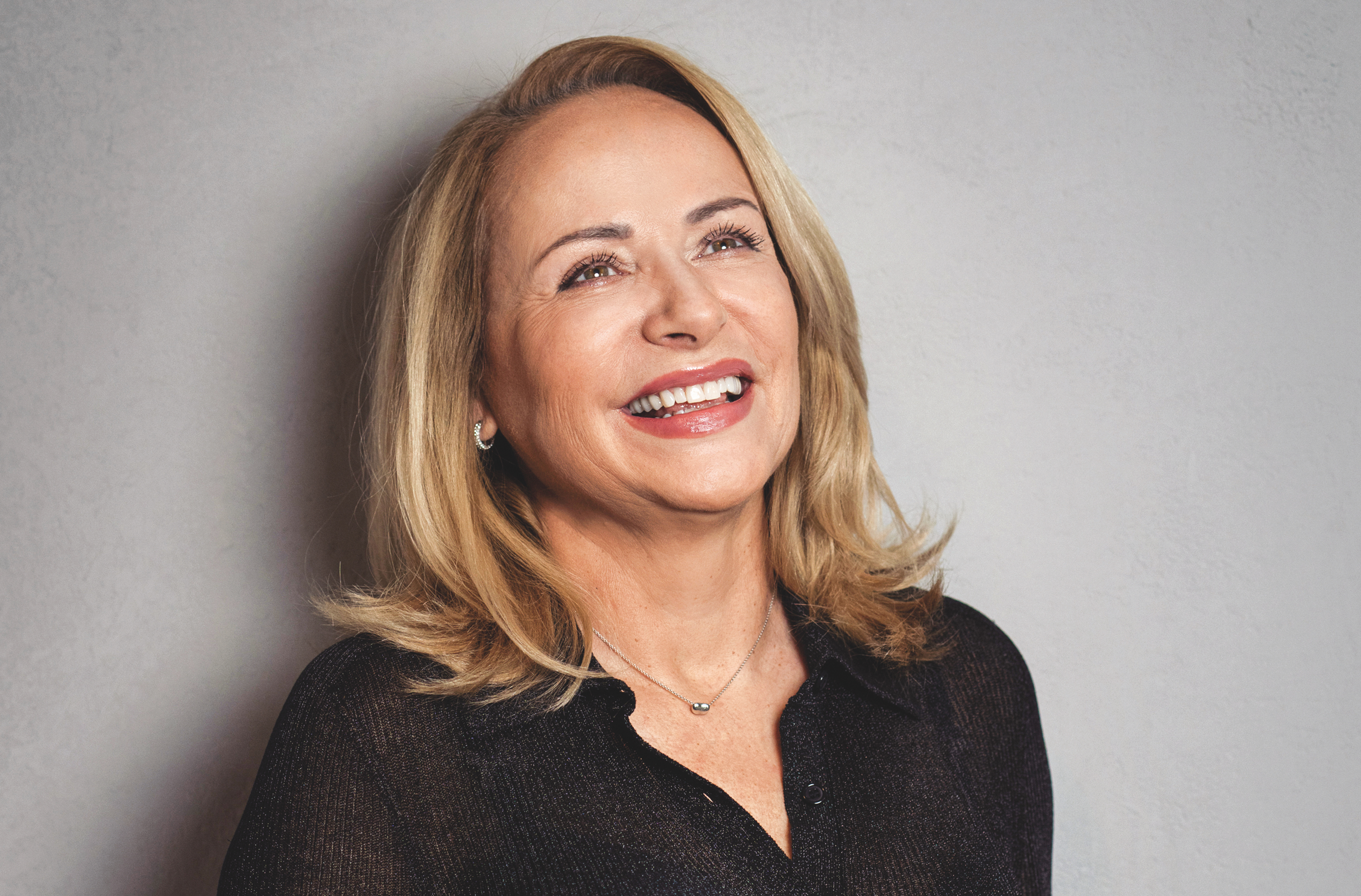
“I did not expect such a phenomenal result, and it made me enormously happy. Four years of diligent opposition work, consistent government shadowing, and preparing our own solutions finally paid off,” says a delighted Alena Schillerová of the ANO movement, which won 34.51 percent of the vote in the October elections to the Chamber of Deputies.
How do you feel about the cooperation with your new coalition partners, the Motorists and the SPD, so far?
Our cooperation has been very good. When we make an agreement, we stick to it. Our negotiations are strictly factual and professional, and we are all guided by a common goal. First, that goal was to prepare a solid policy statement. Now the task is to implement it. Journalists keep asking why we want to introduce measures such as relief for the self-employed or lower energy costs starting next year instead of waiting. My answer is simple: the sooner our pro-growth measures take effect, the sooner the Czech economy will benefit from faster economic growth. And let’s not forget that one percentage point of economic growth means an additional 20 billion CZK that will remain in the economy permanently. Germany also knows exactly why it is moving to drastically reduce electricity prices for businesses. It is good that the Czech Republic will have a government that does not simply copy surrounding countries, but pursues its own confident economic policy. And our coalition is united on this.
Prime Minister Petr Fiala’s government resigned but refused to submit its draft budget for 2026 to the Chamber of Deputies. Even President Petr Pavel said it should do so. Why do you think it took so long?
I am convinced that Minister Stanjura simply was not willing to defend his budget proposal in the Chamber. He prepared it knowing he would never govern under it – and that it would not even be possible to do so. His sole aim was to reduce the deficit to the lowest possible level, even at the cost of omitting mandatory, legally required expenditures. A separate matter is the transport infrastructure budget, which the government approved with a declared deficit of 37 billion CZK. Without these maneuvers, the Fiala government would be handing over a budget with a larger deficit than the one it inherited from us during COVID. Stanjura’s approach most reminds me of the famous scene in the Mr. Bean movie, when he tries to “fix” Whistler’s Mother in a Paris museum. He smears it, ruins it, and covers it up – just to make it look acceptable. The budget proposal that ultimately landed in the Chamber was botched in a very similar way.

What does it mean in practical terms when mandatory expenditures are missing?
Just consider this – senior officials responsible for individual budget sections laid out the situation clearly, and it was truly shocking. In the Ministry of Labor and Social Affairs alone, mandatory – meaning legally required – expenditures for next year are short by an unbelievable 32 billion CZK. And these concern socially very sensitive items: pensions, sickness benefits, unemployment benefits, care allowances, and benefits for material hardship. For example, the care allowance is set to increase next year, yet the budget remains at the same level. Even a first-grader could see that something is wrong. It is an absolutely unprecedented situation. We convened the budget committee and reviewed each section. We calculated an alarming 95 billion CZK gap between expenditures and revenues. And we are talking about legally mandated spending and key planned investments. We are fine-tuning the next steps now – several options exist. But one thing is certain: the state must safeguard its essential functions and its key investments. On this, our government will not compromise.
Your coalition program with ANO, SPD, and the Motorists includes relief for the self-employed. How will you help them?
As we promised, we will stop the increase in the assessment base for social insurance contributions, which means the self-employed will save at least 715 CZK per month. We have already prepared and submitted the bill. If the law cannot take effect in January, it will come into force later in the year, and whatever the self-employed pay extra during the first months will be refunded. The outgoing government’s tax package alone increased social insurance payments for the self-employed by 50,000 CZK over three years. For many, that was very painful. We want people to keep more of their money so they can save for retirement in the third pillar of the pension plan, put it back into the economy, or reinvest in their businesses. I am convinced that the sharp rise in contributions under Petr Fiala pushed many self-employed people into the gray economy. We intend to reverse this trend.
Can households also look forward to returns on their savings through government bonds?
Czech Republic Savings Bonds are an excellent instrument. They allow Czech households – not just foreign banks or institutional investors – to earn interest on public debt that the state must pay regardless. I consider the outgoing government’s decision to suspend these issuances a mistake, and I would certainly restore them if I return to the Ministry of Finance. It is advantageous for the state when part of its public debt is held by domestic households – it provides greater stability during crises. Developed countries maintain at least five percent of their debt portfolio this way. I will do everything I can to ensure that Czech investors can buy government bonds as early as next year. The interest structure will, of course, be determined with experts at the Ministry of Finance. But I can already reveal that bonds will be available from as little as 1,000 CZK, with an upper limit of 3 million CZK.

What about defense spending?
The practice of non-transparent procurement – which forced us to report the matter to the authorities – will end immediately. Defense expenditures are no different from any other expenses – this is taxpayers’ money, and the state must ensure responsible stewardship. It is unacceptable to use the obligation to spend a certain percentage of GDP on defense as an excuse to buy overpriced weapons or equipment. Nor will we allow procurement through intermediaries who simply add a margin. Our goal is not to spend as much as possible and then boast about it afterward, but to meet the needs of the army in line with its real objectives and its obligations within NATO. If I’m not mistaken, the Czech Republic’s primary task was to build a heavy brigade. And from what I hear from colleagues who specialize in defense, we are far from fulfilling that requirement.
Let’s step away from work for a moment and remember the recently deceased Cardinal Dominik Duka. You knew him personally – what was he like?
I had the honor of knowing the Cardinal personally. My strongest memory is from his eightieth birthday celebration, where we spoke privately for about an hour. He was a very wise, attentive, and kind-hearted man who never imposed his advice on anyone – yet I still draw energy and inspiration from that meeting today. What I valued most was that he never let himself be carried along by fashionable trends. He had his own firm system of views – clear, comprehensible, and deeply sincere. His life story is remarkable as well. As the son of a pilot who fled during the Protectorate era to join the Czechoslovak foreign army and serve with the RAF, he did not have an easy childhood. His father was imprisoned, and Dominik Duka himself was later imprisoned for secretly training Dominican novices under the communist regime.
CV BOX
Alena Schillerová (born March 18, 1964, in Brno) is the minister of finance for the ANO 2011 movement.
She obtained a law degree from the Masaryk University in Brno. She went on to work at the Brno-venkov District Financial Office, later becoming the director.
She served as the deputy minister of finance for taxation and tariffs, starting in 2016. In 2017, she was appointed minister of finance, which was a position she held until the 2021 elections. She has been a vice-chair of ANO 2011 since February 2022.
Following the success in the 2025 elections, she is once again head of the Ministry of Finance.
Christmas
The Christmas season will be the first moment since the elections when Alena Schillerová will finally be able to catch her breath. “I will enjoy it to the fullest – mainly thanks to my three beloved grandchildren,” she says. “I can already picture their eyes lighting up when the bell rings and the gifts appear under the tree. We will go to the Christmas markets in Brno, and there will certainly be Christmas carols. And what kind of former finance minister would I be if we didn’t put a carp scale under our plates? But above all, I am looking forward to family comfort, relaxing on the couch, good Christmas sweets, and of course beautiful Czech fairy tales.”
reklama