The famous turn of phrase, "Cherchez la femme!" from a novel by Alexandre Dumas père implies that a woman should be sought behind all things. Yes, not only men but also women have changed the world. Many were heralds of historic change and influenced various aspects of life. There are plenty of examples.
For centuries, women have been fighting for emancipation; and to this day, they often call for equal treatment. In the so-called civilized world, they have gained the right to vote, they can study, work, run a business, govern, and have their say on various aspects of life alongside men. Women of the past mostly stood in the shadow of men, although, there have always been exceptions – ambitious female rulers and politicians, big names in the world of science, philosophy, arts, and fashion. Others reached global renown by influencing the world from within the bedrooms of their royal or presidential lovers. Let us look at the most fascinating women who changed the world.
Maria Theresa
Politics was historically the domain of men, but there have been cases of female rulers in the past. One such ruler was Maria Theresa (1717–1780). Throughout the 40 years of her rule, she enacted various beneficial reforms, which leads to her time in power being regarded as a period of prosperity. She reformed the justice system, education, and the economy. She banned torture and made landlords treat their subjects more humanely. She adopted a single currency, unified weights and measurements, implemented a general census, and established a land registry with house numerology. Maria Theresa enacted an educational reform that made school attendance compulsory and even opened the world's first mining academy in Banská Štiavnica, Slovakia.
Catherine and Victoria
The Russian empress, Catherine the Great (1729–1796), made a name for herself by enacting reforms and growing her empire. She added the territories of Crimea, Bosphorus, and the Dardanelles, but was also a patron of culture. During her reign, Catherine established more than 300 educational institutions and worked towards the modernization of socio-political relations. As part of her efforts, she intended to abolish serfdom, which was met with vigorous opposition from the nobility. In her attempts to be seen in a positive light, she built the so-called Potemkin villages, which were displayed to international visitors invited by the Empress for an official inspection tour across southern Russia in 1787.
Another important personality who was well liked during her time but is criticized today for her expansive policy and the treatment of indigenous peoples is the British queen, Victoria (1819–1901). During her reign, she shaped the United Kingdom into a global power by supporting economic growth and social reform. The Victorian Era saw the creation of the police force, the opening of the world's first metro network in London as well as the building of a 130-kilometer system of sewage and water pipelines, all the while free trade flourished. The epoch also spawned new movements in arts, literature, and architecture.
Elisabeth
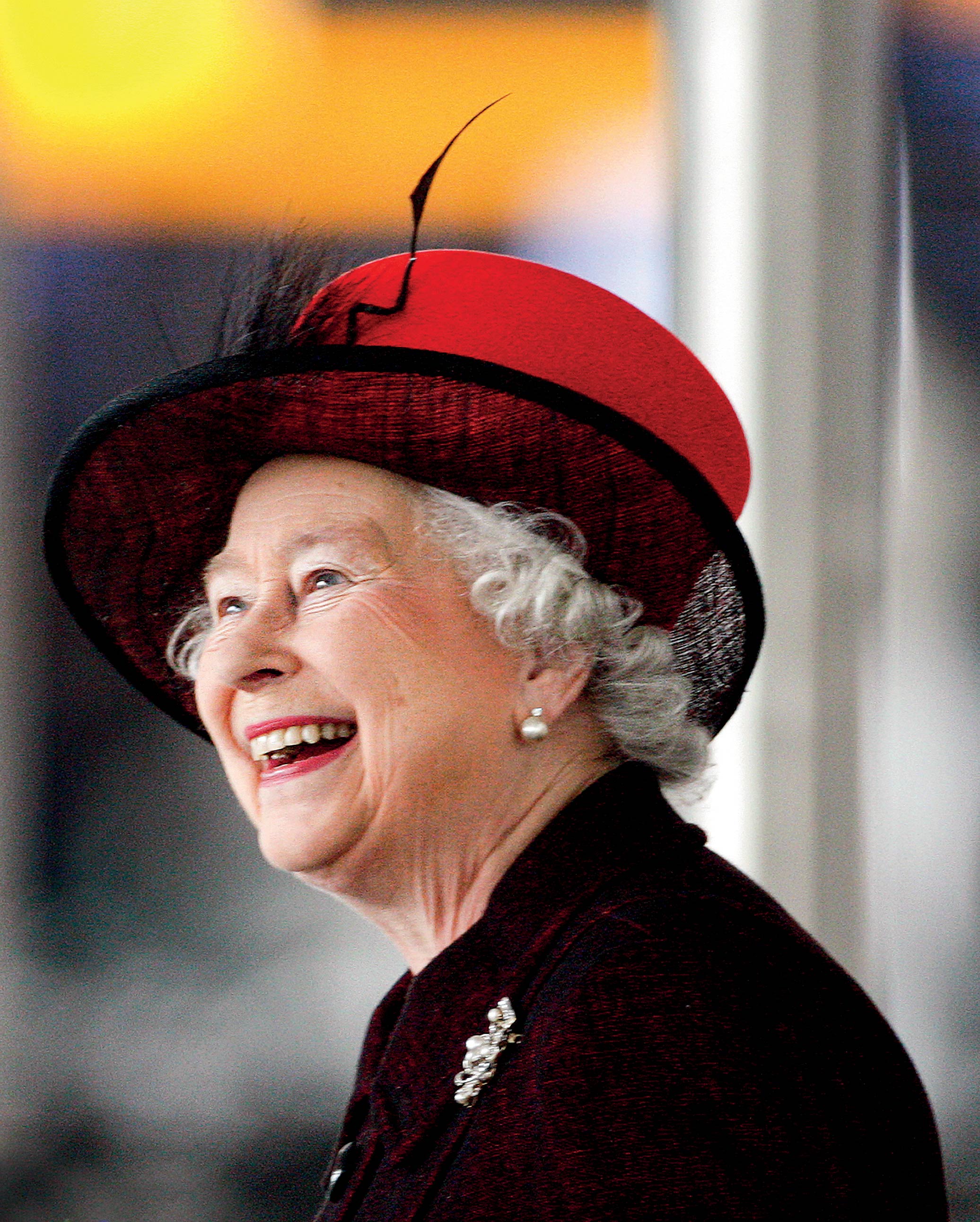
The longest-ruling woman in history, the recently deceased English queen, Elisabeth II (1926–2022), was the source of awe and enthusiasm for millions around the world. The great-great-granddaughter of Queen Victoria helped develop her country but had a much wider reach than just that. She was forced to deal with global events as well turmoil within her own family. Elisabeth has also become known for the decolonization of the British Empire. She was the first British head of state to visit China in 1986 where she ratified the Sino-British treaty from 1984, which outlined the conditions for the transfer of Hong Kong under Chinese control. Elisabeth II managed to maintain amicable relations with representatives of newly-formed independent states, be they formerly part of the Commonwealth or not.
Eva
The Argentinian first lady, Eva Perón (1919–1952), is one of the most popular and significant personalities of her homeland, even all of Latin America. Her name is etched in history primarily thanks to her charity work and her fight for women's rights. In 1947, together with her husband Juan Perón, she managed to enact the right to vote for women. Eva was an avid proponent of social and labor rights all across Argentina. She opened schools, hospitals, and shelters. On her watch, 12 state-of-the-art clinics that provided free healthcare were built. Following the 1955 military coup, the army transported her remains to Milan, Italy, where she was buried under the name of Maria Maggi, to avoid the darling Evita manifesting any further support for the Perón name. Her remains were returned to Argentina in 1974 and, ultimately, she was laid to rest in the family crypt in a Buenos Aires cemetery.
Marie, Artemisia, Elena
Women and science are inextricably linked. The first female university professor in Paris, Marie Curie-Skłodowska (1867–1934), is one of the biggest names in science around the world. She is a Nobel Prize laureate in two different fields. She was the first woman to earn the prize for physics in 1903 together with her husband Pierre Curie and Antoine Henri Becquerel; later in 1911, she was awarded the prize "in recognition of her services to the advancement of chemistry by the discovery of elements radium and polonium." The second award helped her convince the French government to fund the establishment of the Radium Institute. She was fascinated by radioactivity. Her notebook is still radioactive to this day and has to be kept in a leaded box. The same goes for her personal cookbook
There were other interesting firsts for women however, such as the first female member of the Florence-based Arti del Disegno academy of arts, Italian early-Baroque painter, Artemisia Gentlieschi (1593–1656). Her work is displayed around the world in renowned galleries such as the Prado in Madrid or the Metropolitan Museum of Art in New York.
Elena Cornaro Piscopia (1646–1684), the first female Doctor of Philosophy at the University of Padua, has become a role model to many women and men in their pursuit of education and knowledge. She also had a talent for languages, being fluent in Latin, Greek, English, French, Spanish, Hebrew, Arabic, and Aramaic. Elena also had an artistic side, she was skilled with various instruments and even composed music.
THE FIRST EXPLORER
Egeria (translates to "pilgrim"), a nun hailing from the Roman region of Hispania, made her mark on history as the first female traveler and explorer who also recorded her exploits in writing. The Itinerarium Egeriae is a recounting of her journey to the Holy Land. Between 381–384 AD, Egeria crossed from northern Spain, through the city that is today's Istanbul, all the way to Jerusalem, Mount Sinai, and eventually Syria. To this day, her writings remain a significant source of information for archeologists and historians trying to locate biblical cities, and they also provide a detailed account of the liturgical services in Jerusalem. Furthermore, her letter has been studied by philologists as the Latin she uses has colloquial elements to it.
FASHION AND CHARITY
Women conquered another formerly male-dominated field – fashion. Coco Chanel (1883–1971) has become a household name, helping define the female style of the 20th century. She ushered a breath of fresh air into fashion in the form of shorter hairstyles and pants for women. Coco introduced creations such as the little black dress, the perfume Chanel No. 5, and the world-famous 2.55 handbag, named for the date of its creation – February 1955. The cosmetics brand Estée Lauder is another similar case – an epitome of quality and luxury. It was established by the businesswoman Estée Lauder (1906–2004), whose motto was: "Every woman can be beautiful." Then there were women who taught the world to think of others, such as Grace, Princess of Monaco (1929–1982), and Princess Diana (1961–1997). Grace supported young artists and helped children in hospitals and their families. Diana endorsed over a hundred charitable organizations all around the world. She took an interest in people sick with leprosy and AIDS, the homeless, and orphans as well.
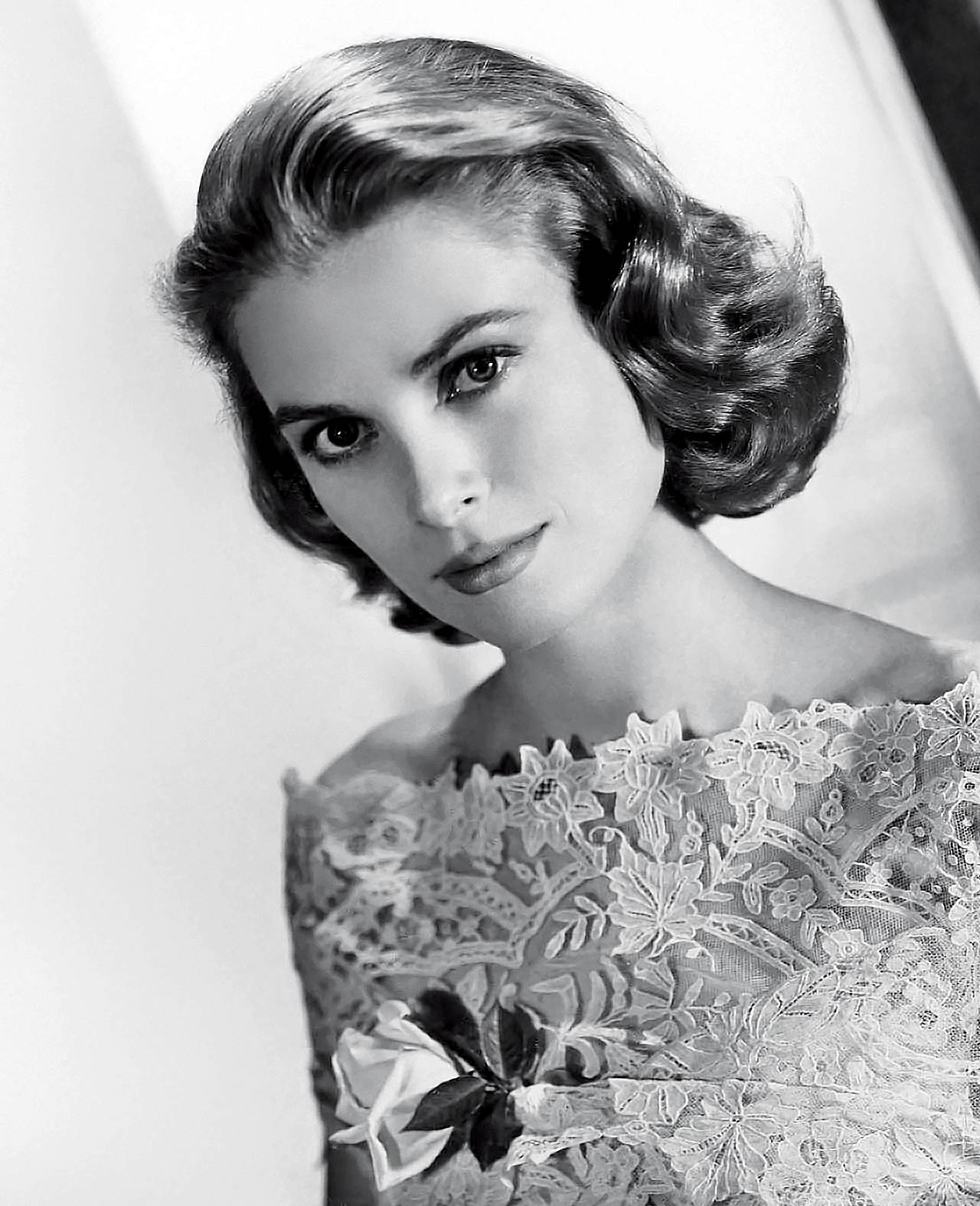
Grace Kelly
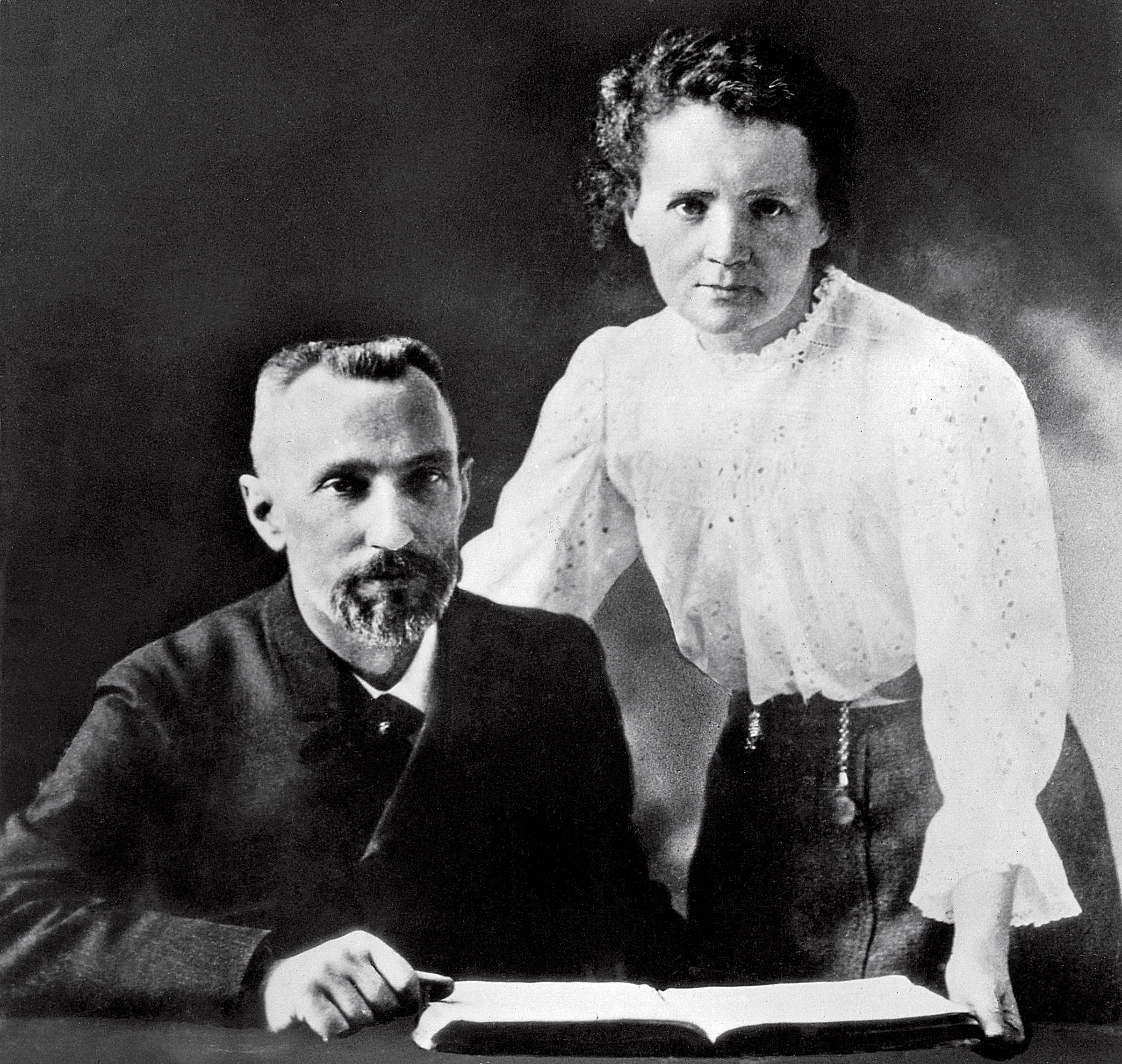
Marie Curie-Skłodowska with her husband Pierre
reklama