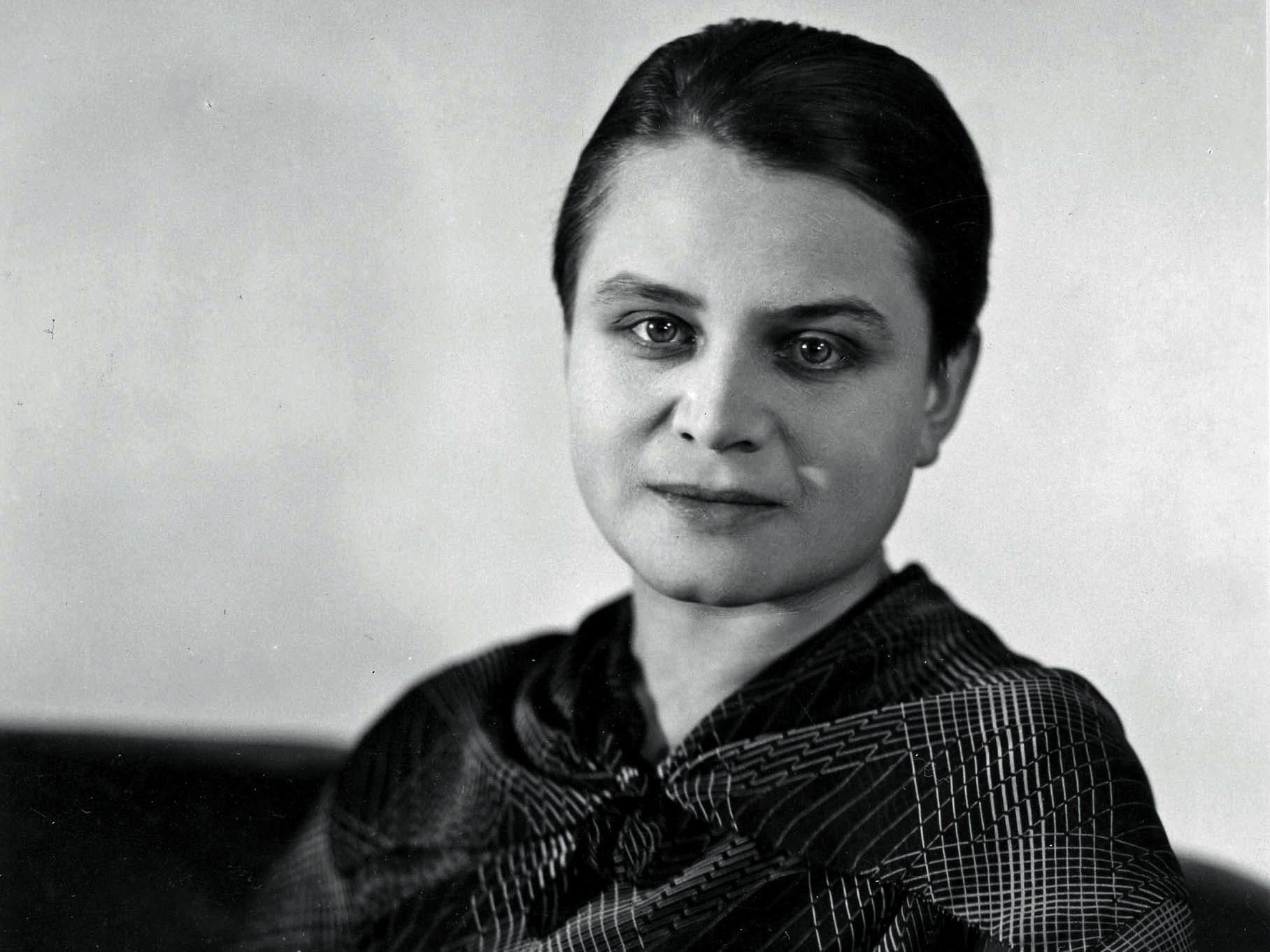
Mysterious, alluring. These might be the most fitting words to describe Toyen, the queen of Czech interwar avant-garde. Even people with no interest in art whatsoever have heard her name. Her paintings are famous and expensive. Everything around her is known, but very little is known about her.
It is ironic that during her life, she was mostly famous among Czech and French surrealists, but the broader public didn’t really know about her, and the first real recognition she got was during the sale of her estate in 1982 – it ended up bringing in a million and 900 thousand francs. Many of her paintings stoke people’s imaginations to this day because they can be interpreted in many different ways. Where one sees pain and despair, another sees hope. The painter herself used to say, “It is in the dark hall of my life that I regard the canvas of my brain.”
Leaving her family
When she was sixteen years old, then still called Marie Čermínová, she left home and since then would insist that she simply had no family. She never talked about her childhood, parents, or sister (whom she lived with for a while after leaving home). Her reasons for that remain a mystery. She enrolled in the Boháč brothers’ painting school and studied decorative painting at UMPRUM with Professor Emanuel Dítě Jr. She left that environment as well, though, and essentially remained self-taught her entire life. To make ends meet, she started working in a soap factory.
Surrealists
Her turning point came in 1922, when, during her trip to the Korčula island, she met the painter, poet, and photographer Jindřich Štyrský. They found great inspiration in one another and remained side by side until his death in 1942. Even despite the numerous speculations surrounding them, their relationship was never successfully proven to be anything more than friendship. They both kept denying the presence of any intimacy whatsoever. It was together that they had their first exhibition in 1923 (where Toyen did not yet want her name included), together that they became members of the Devětsil artists’ union. But she also visits different anarchist meetings and is a member of the very first communist cell (her name was even preserved in police records, she took part in subversive propaganda and courier service). After the death of his father, Štyrský inherited some amount of money, and together with Toyen, they left for Paris in 1925, where they came up with their own art style – artificialism. Their paintings didn’t see many sales, though, and they swiftly ran out of money. They come back home in 1934, and, influenced by the French surrealist group around André Breton and Paul Éluard, they establish the Surrealist group of Czechoslovakia.
Post-war disillusionment
At that point in time, the painter is no longer known by her nickname, Manka, but goes by Toyen. Several stories exist regarding her pseudonym, but Toyen herself said it came from the french word "citoyen", meaning citizen. Apparently, she liked that the term was genderless, and allowed her to talk about herself in the masculine. After all, she acted and dressed like a man, she used to smoke very strong Gitanes or Gauloises cigarettes in France... Men showed interest in her, but she insisted she liked young women. The truth, or nothing but a pose? Nobody knows. During the occupation, she sheltered the poet Jindřich Heisler in a rented apartment in Prague’s Žižkov district, to save him from being deported. After the war, she organized an exhibition for herself, which Edvard Beneš himself got to visit, and she endorsed a celebratory article about the Czechoslovak Communist Party, but disillusionment arrived shortly after, in the form of arguments with her colleague Vítězslav Nezval regarding the Stalinist purges in Russia, and a falling out with Paul Éluard, who became a devout communist.
Destitution in Paris
She leaves for Paris with Heisler in March 1947, bringing Štyrský’s painting The Trauma of Birth with her – the very same one hanging above the artist’s bed at the moment of his death (after Toyen’s death, it was found rolled up under her bed). She also had a grave built for Štyrský in the Olšany cemetery, and for the gravestone, she selected a drawing from his Apocalypse series. For the first time in her life, she has a considerable amount of money at her disposal after the sale of the tenement house inherited from her parents, but she loses all of it after the February revolution in Czechoslovakia. What’s more, at the very beginning of the sham cases against the group surrounding Milada Horáková, she’s placed on a list of suspected Trotskyists. Heisler and she are now destitute in France. After his death in 1953, Toyen finds a place to stay in the cheap Hotel de la Pen on Île Saint-Louis, Paris, in a room with no bathroom. It’s her friends from the surrealist group around Breton who keep her afloat.
Without a profession
André Breton dies in 1966, and his wife offers Toyen a place to stay in his studio in the Pigalle district in Paris. But his entire surrealist group breaks up after his death. This is just one more hard blow for Toyen. She does have an exhibition every now and then, but she’s no star. She paints less and less, she creates collages out of newspaper clippings and sketches. Every now and then, she takes walks in the Blanche or Clichy squares, but she also visits pornographic cinemas around Pigalle. At 74 years of age, she suffers a fall down a set of stairs, and barely leaves her apartment after that. In her very last identity card, she lists herself as without a profession. She dies on November 9, 1980. She’s buried in the Batignolles cemetery, and her friends place her most beloved hat onto her coffin. There’s no official news of her passing in Czechoslovakia.

Toyen and Jindřich Štyrský, 1931
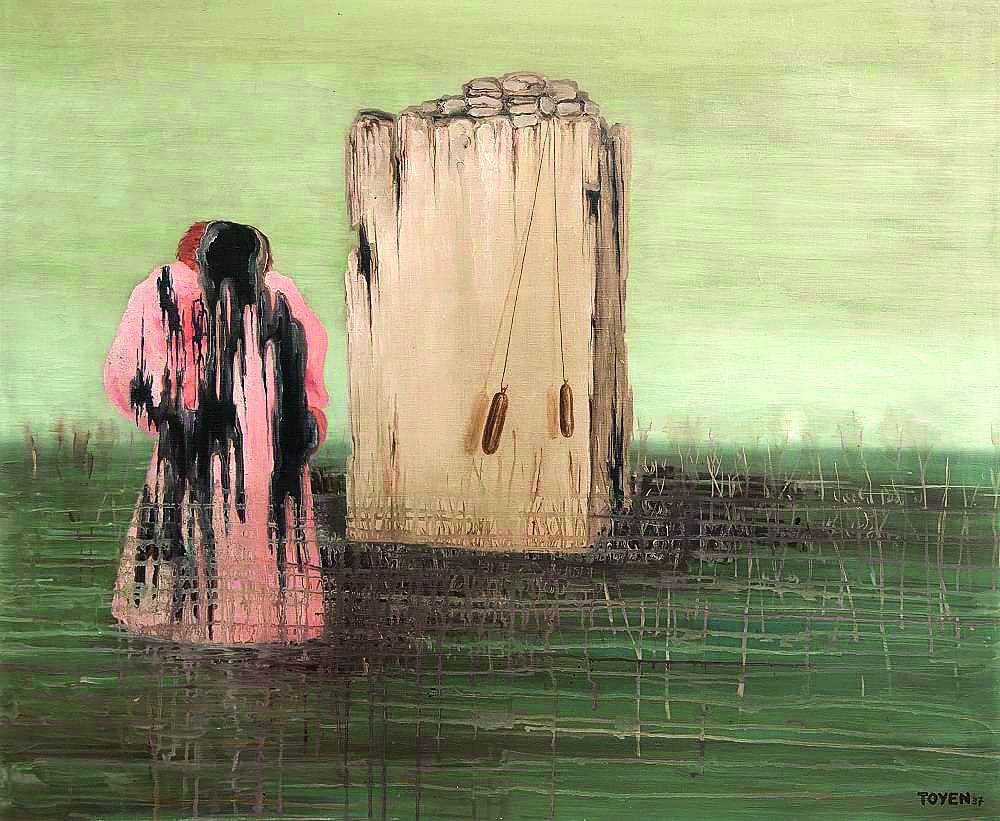
Dream (1937)
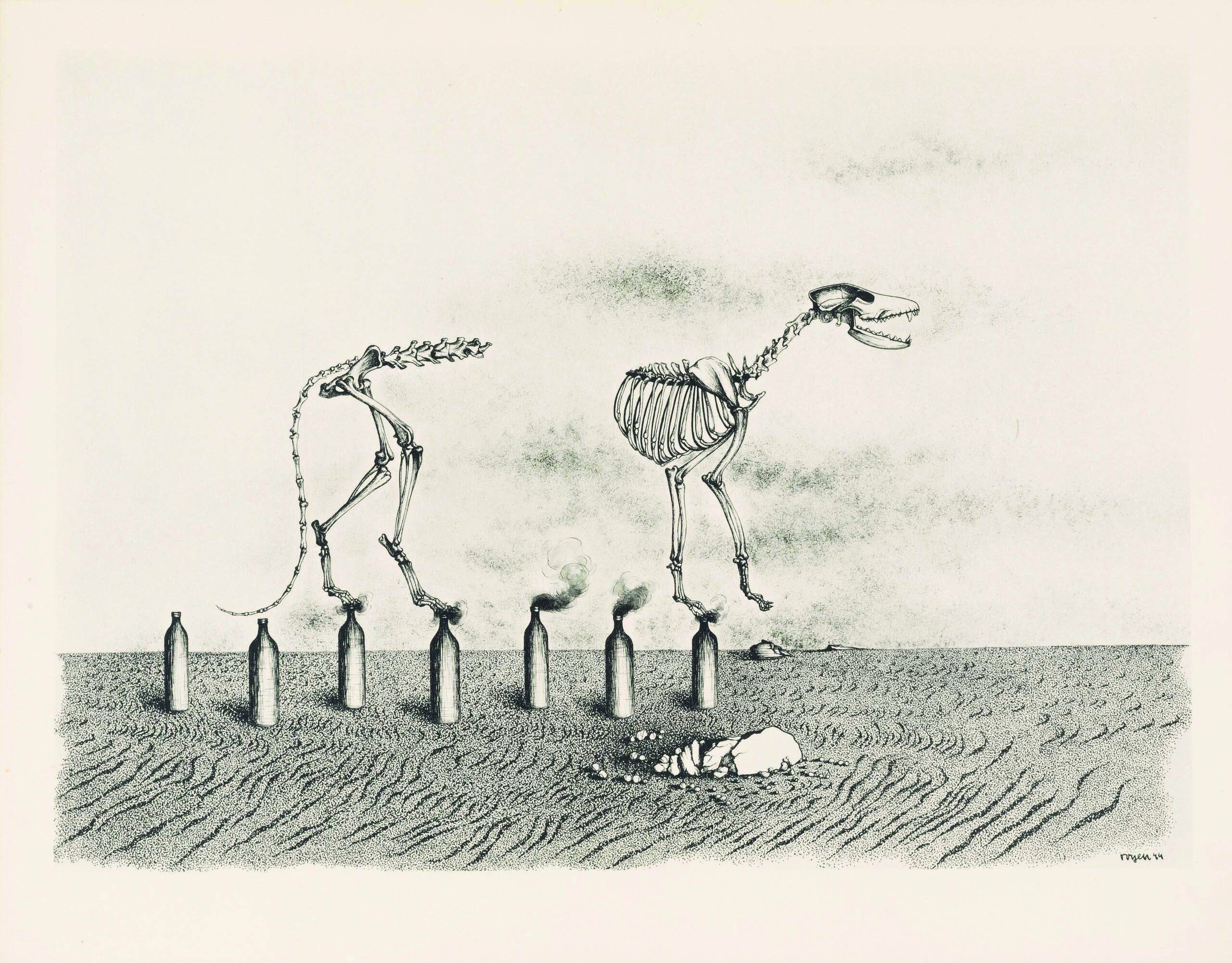
From the Hide Yourself, War! cycle (1944)
reklama