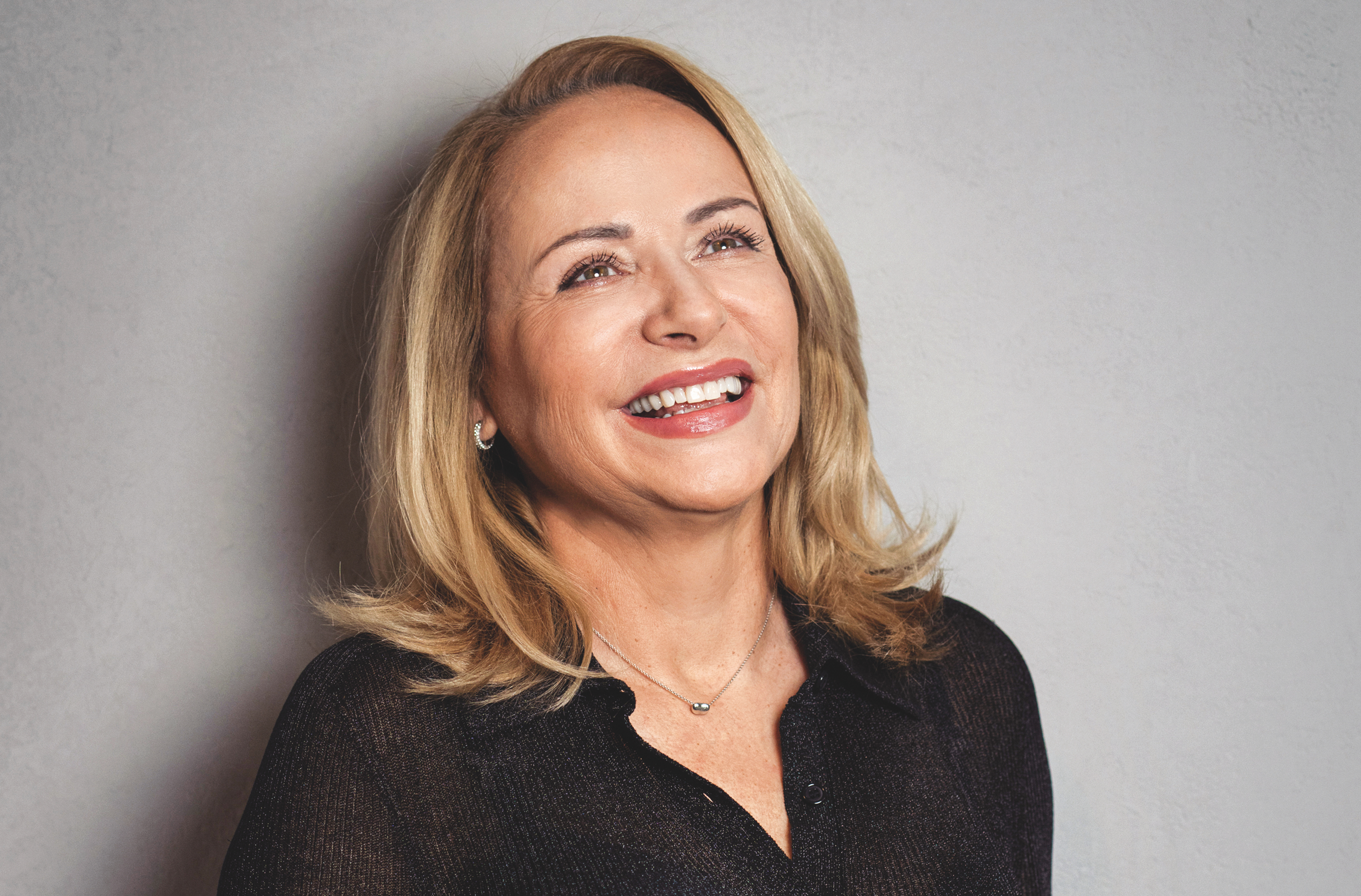
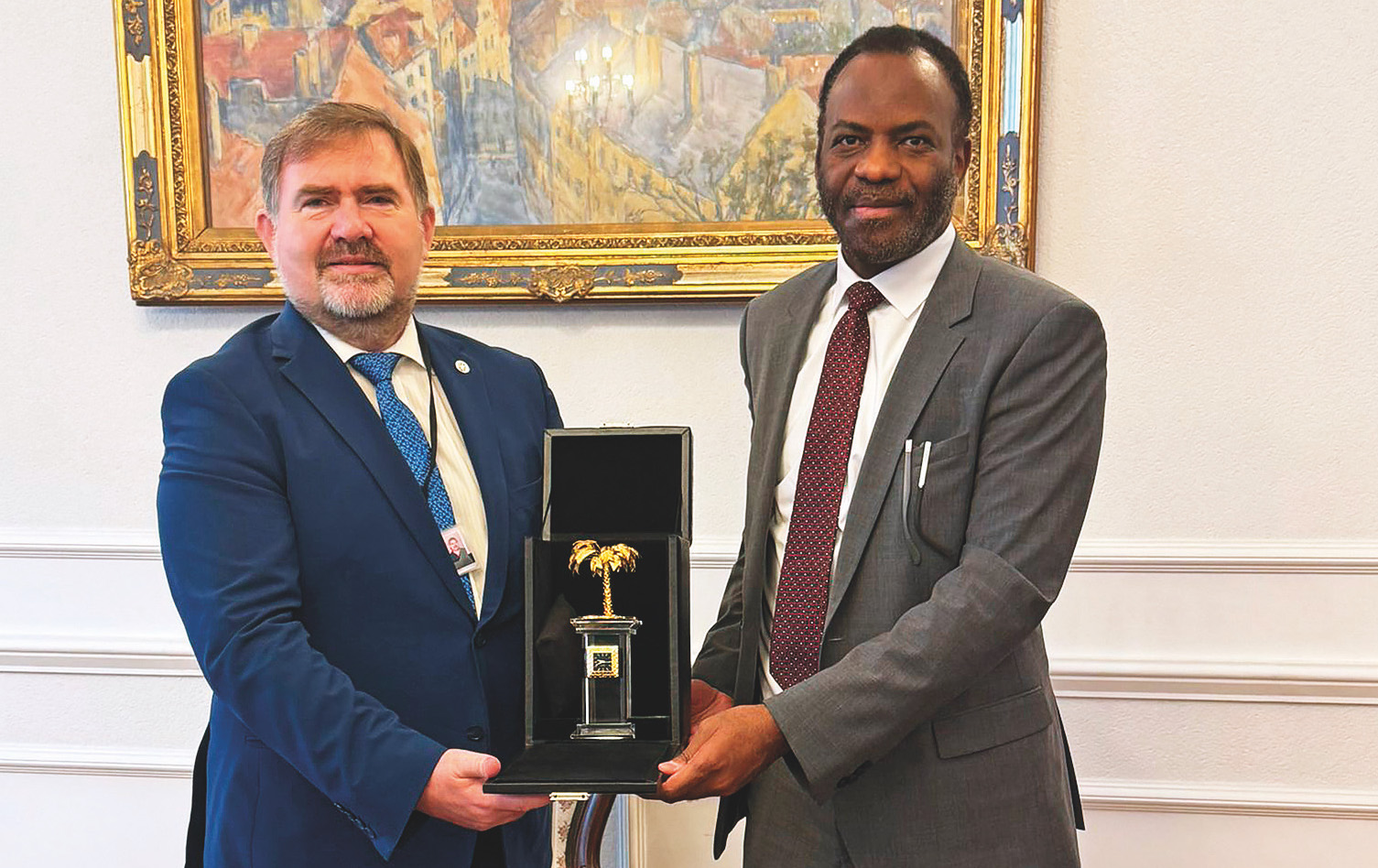
"For me, there is no greater honour and prestige in the foreign service than to be an ambassador in Prague. I have a lot of friends here and I feel at home here, "Rastislav Káčer confesses during the interview, who’s just recently ‘settled’ in his position.
You have been working in the foreign service for decades. Is it possible to dream of such a profession? What did you really want to become?
Before 1989, I could have never imagined working in the civil service let alone in diplomacy. I wanted to be a doctor. Like my father. I was kicked out from my exams at the medical school, though, because I could not explain what proletarian internationalism was, so I got the opportunity to work in a factory for a year. In 1989 I graduated with a red diploma in Organic Chemistry. I enjoyed the exact sciences and I was good at them. The events after the Gentle Revolution mysteriously instilled into me wanting a change from the exact sciences, and in 1991 I returned to school to study international relations and law.
What qualities do you need to represent a homeland as a diplomat?
The foreign service has a wide scope, so various professional and human profiles can fit in. If you are intelligent, educated and a motivated person you can be one of us. There is no "blueprint" of what a diplomat should be like. Personally, in addition to language skills, I consider it important to have empathy, to be an open and flexible person. But the most important thing is healthy patriotism. That is you loving your
country and respect it and understand it. You don’t have an attitude and see things as they are historically and geopolitically. The ability to perceive one's country realistically, not ideologically and with a layer of nationalist mythology is important.
When you were just thirty-eight, you served as ambassador to the United States for five years. Did you find ways they go about things quite different?
I was in Washington after we successfully completed NATO accession negotiations. The job of a diplomat, the techniques and methods are similar everywhere. But being an ambassador to the United States is a prestigious career milestone in every service. At the same time, it is a huge professional challenge for diplomats from small countries. It is not easy to get involved and compete in the competition of other ambassadors (bilateral and multilateral).
How did you find Hungary, when you were serving there as an ambassador?
I have a very close and emotional relationship with Hungary as a country and with Hungarians as people. For a thousand years, Slovaks and Hungarians have lived together, and we have grown into modern nations holding hands. I feel at home there. Hungarian pressures after the Austro-Hungarian settlement, Apponyi's school laws, and the insensitivity of the central government greatly damaged this millennial marriage. You can feel the scars until now. I am not happy with the political developments in the country over the years. But I also like the country and the Hungarians, the culture, the mystery of the wasteland and the rolling hills of the Balaton Felvidek, the heated debates with Pest intellectuals, and the pensive conversations over local brandy with candid village rangers at the Romanian border. I miss the sausages from Komlóš. They are the best in the world.
We have you now for a few months in Czechia. Do you enjoy living and working in Prague?
For me, there is no greater honour and prestige in the foreign service than to be an ambassador in Prague. A thousand years in the Kingdom of Hungary have shaped us to be who we are individually, family-like and community-like. The 70 years of Czechoslovakia and especially the years of the pre-war republic had a fundamental influence on what kind of political nation we are. Thank God. I have always been drawn to Prague, like almost everyone. I have many friends here and I feel at home here.
Are you looking forward to getting to know Prague?
I want to get to know Prague as intimately and as deeply as possible. But that's not enough for a diplomat's ambition. I want to know the country, to understand the nuances of its mentality, to know its light and dark sides. I want to be able to decode her DNA. It is a personal and professional desire for me.
It is said that Czechs and Slovaks have a direct "karmic relationship"...
Yes, our relationship is karmic, I use that term and I feel it. I am a person with a strong emotional inner world, I am an idealist and I believe that there are karmic relationships. Both between people and between countries. However, our relationship is not only emotional. It is also beneficial in terms of interests. When emotions and interests are combined, i.e. relationships where love and reason are in balance, they are the best. Our relationship is that.
How can our relationship be further improved?
No interpersonal and interstate relationship is perfect. Everyone needs to work on it all the time. The moment we start to take a relationship for granted it starts to erode. As a person whose good long life relationship fell apart after 34 years, I know that even the best relationship is permanent work, interest and the search for ways to maintain and improve it.
What does a usual diplomat's day look like?
The work of a diplomat is a permanent job, even a weekend outing is work. The key is to get to know the country as well as possible, to understand how this "watch ticks", to have a rich network of contacts to obtain information and promote the interests of your own country. Of course, this includes an active presentation of the country, its culture and public diplomacy. It is necessary to be aware that a diplomats co-create the image of their own country with their personal life, every meeting and every activity.
CV BOX
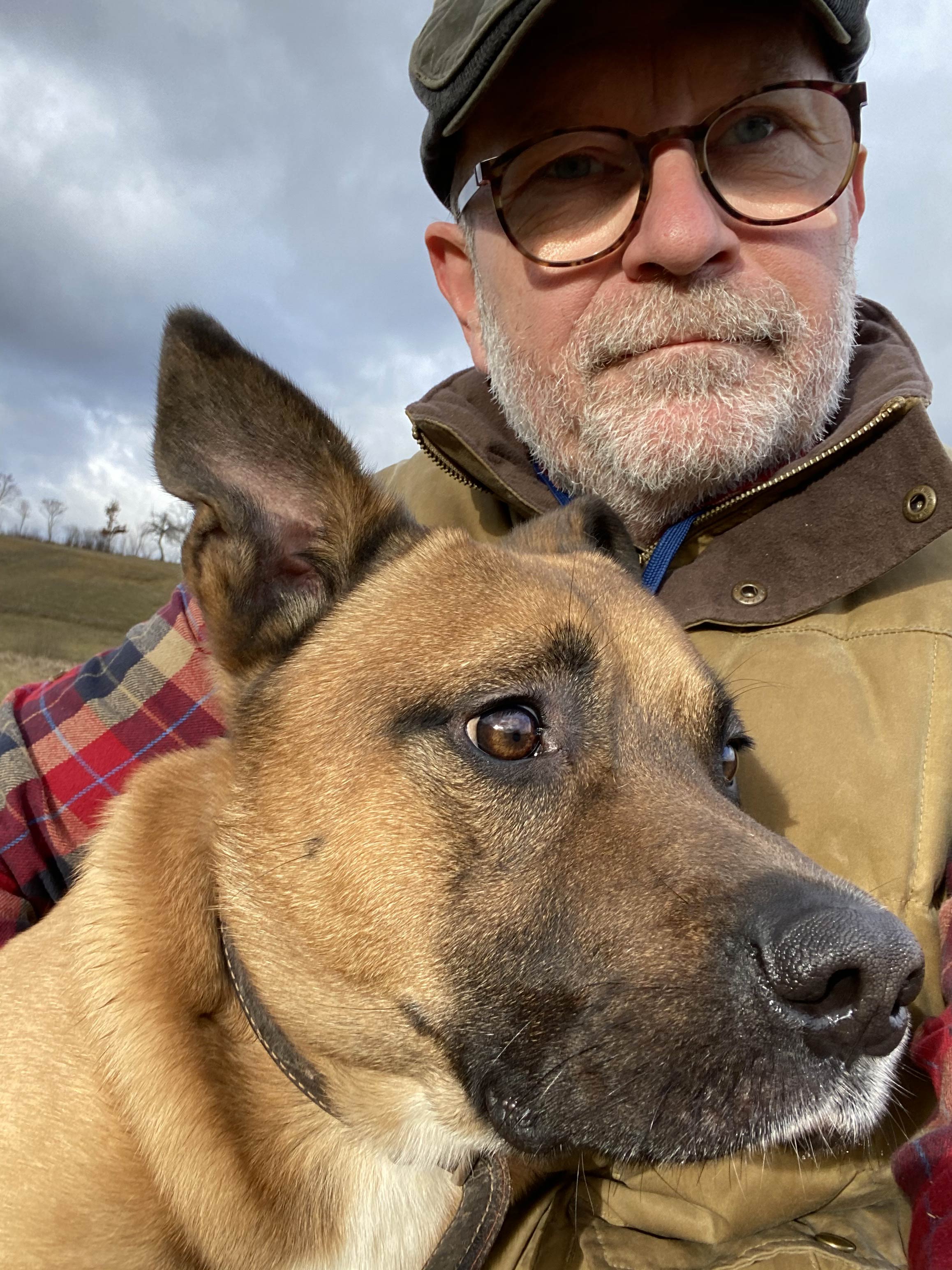
Rastislav Káčer (born on 9th July, 1965 in Nova Bana) has been the Slovak Ambassador to the Czech Republic since October last year.
He graduated in Organic Chemistry in 1989 and in International Relations in the 1990s.
He started his career in the Slovak foreign service as an Analyst and Speech Writer. From 1994 to 1998, he worked at NATO Headquarters in Brussels. Upon his return, he became Director of Policy Planning and then Director-General for Security Policy and Multilateral Affairs at the Ministry of Foreign Affairs. Three years later, he became Secretary of State at the Ministry of Defence, responsible for the negotiation process and Slovakia's accession to NATO.
#From 2003 to 2008 he was Slovakia's Ambassador to the USA. Upon his return, he served as President and Chairman of the Slovak Atlantic Commission (now GLOBSEC), a member of the Atlantic Treaty Association, and then was Slovakia's Ambassador to Hungary.
#He is widely recognized as an expert on US domestic and foreign policy, transatlantic relations, defence and security issues.
reklama