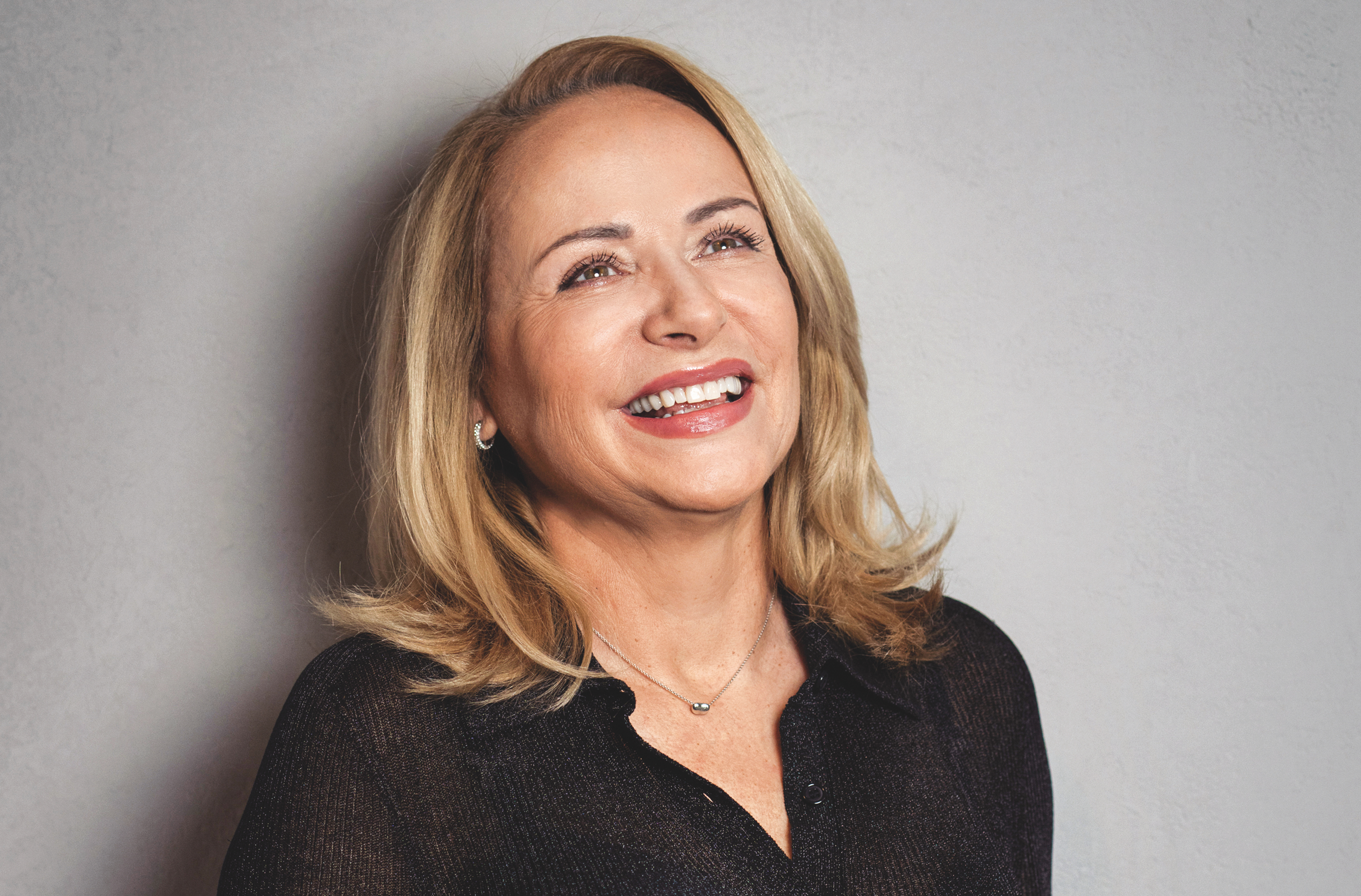
“I don’t like settling for something not working out. And in the field of public administration, this sort of rigidity and resistance to change is oftentimes greater than in business. That presents a challenge to me, to get things going,” says Marie Jílková, vice-chair of the KDU-ČSL parliamentary group, member of the Chamber's Committee on Social Policy, and chair of the Standing Commission on Family and Equal Opportunities of the Czech Parliament.
What made you become a politician? Isn’t it a slightly thankless job?
I like changing things that don’t work. Some people improve business fields, my main interest is public administration. I’m interested in our surroundings, the laws we follow, the decisions that impact our lives. I keep gaining more and more proof of just how thankless a job it is. If we want to lead this country responsibly, many unpopular decisions need to be made, and those certainly aren’t met with a lot of gratitude. Oftentimes, the political negotiations themselves fail, and nothing moves forward. But upholding and actually bringing good things to bear brings me all the more joy for that.
At one point, you pursued the education and personal development of people in management positions. How do you take to your own personal development?
Now and then, I like to joke that being a parent is the best personal development training there is. I try to be a good parent, which means I constantly have to adjust to the ever-changing style of a child’s communication, I have to organize logistics, negotiate, motivate, set boundaries, delegate responsibilities. When you look at it that way, it’s the perfect development program for a high-ranking manager. It’s true that the older I get, the kinder I try to be to myself, to rest more, not work until so very late, and chiefly, to get enough sleep – that’s what recharges my batteries the best. I love walks in nature, a bit of solitude and quiet, those are dearest to me.
Is it possible to express good intentions without compromise in politics?
There’s no negotiating without compromise. At the same time, compromise should not be seen in a negative light – it always comes down to the boundaries you’ve set, and the values you hold dear. The more flexible the boundaries, the bigger the resulting compromise.
What of the many things you’ve brought to bear in politics are you the most proud of?
The thing that makes me the happiest is actually this tiny little achievement that only impacts about five hundred families a year. It started simply enough – I met with a young woman in the MP’s cafe, and she told me her life story. She gave birth to a dead baby, and she and her husband went through immense suffering as a result of the experience. But where she had the right to still use up the rest of her maternity leave, men don’t have any such opportunity to come to terms with the loss of a child. It took me six months to change the law in such a way that men, too, now have the right to go on paternity leave for up to two weeks in a case like this. Regarding the really big achievements, those include some specific support for part-time workers, so that parents don’t need to make the impossible decision between spending time with their children and working. Employers receive tax benefits, to be able to meet parents, and the elderly as well, halfway in those cases. We’ve also restarted the dialog about violence towards children, be it mental or physical. The resulting debate is much more sophisticated and cultured than ever before, it’s obvious that the general public’s opinion towards those most vulnerable has changed considerably.
What do you consider to be the most important social topic of today?
The current situation in the employment department, and its many offices, takes up most of our time these days. This department has become the main tool through which the state can help people who are facing financial hardships, for example due to the increasing energy prices. So on the one hand, it’s under constant pressure to help its clients, but then it is also suffering from an outflow of employees. But it’s really all about what this entire situation reflects about society itself – the unfortunate truth is that many households simply can’t make ends meet with the paychecks they do receive, and they rely on state support. The differences between the rich and the poor, between urban and rural areas, are growing more vast by the day. This comes hand in hand with fewer and worse opportunities for education and healthcare. We can’t really figure out how to handle "working poverty" – a state of being wherein even though they’ve got one or even two jobs, people simply aren’t earning enough to make ends meet.
It is said that you believe that women with children up to the age of eight should receive more vacation days.
We inherited this particular proposal from the previous election term, and I was happy to support it. Childcare doesn’t end when a kid is enrolled in elementary school, so in my opinion, it is paramount that we stop saying that our children will raise themselves. They won’t. They need their parents. This entire issue is reflected in a specific European Union directive, which we are obligated to integrate into our laws. It concerns a non-transferable two-month-long vacation for both parents, and also comes with the goal of strengthening a father’s irreplaceable role. At this moment in time, my colleagues and I are in the process of searching for a solution that would fulfill this directive without impacting our budget too severely.
Once, during a filibuster in the Chamber, you declared that you’d probably spend the whole night there crocheting. Are you into crafts at all?
Crocheting is one of many good ways to keep one’s attention sharp. It works wonders for freeing up my mind, and I can concentrate much better on what’s being said. It’s the same with everything else that keeps my hands busy. I like painting, sewing. With spring on the way, I can’t wait to relax while decorating some Easter eggs, as well.
CV BOX
Marie Jílková (born June 9, 1977) is an MP for the KDU-ČSL, vice-chair of the party's parliamentary group, and a former representative and councilor for the Brno-Center district.
She studied political science and social policy at the Faculty of Social Studies, Masaryk University.
She worked at the Regional Office of the South Morava region, she took part in the preparations for the CEITEC project that took place in the Masaryk University research center. Since 2007, she’s been a lecturer and evaluator for the MotivP educational agency in Brno.
Between 2003 and 2004, Jílková was an advisor on European relations to the President of the Senate. In the year 2009, she also worked at the Office of the Government as an advisor to the minister, and after that, she became an analyst for the Prime Minister’s research department, with a focus on human rights and social issues.
Since 2009, she’s been a member of the Committee for equal representation of men and women in politics and decision-making positions.
Working for a branch of an international company, she also pursued the education and personal development of people in management positions.
Jílková has been a member of KDU-ČSL since 1995. In 2021, she became an MP. She is the chair of the Standing Commission on Family and Equal Opportunities of the Czech Parliament.
She’s married with two daughters.

reklama