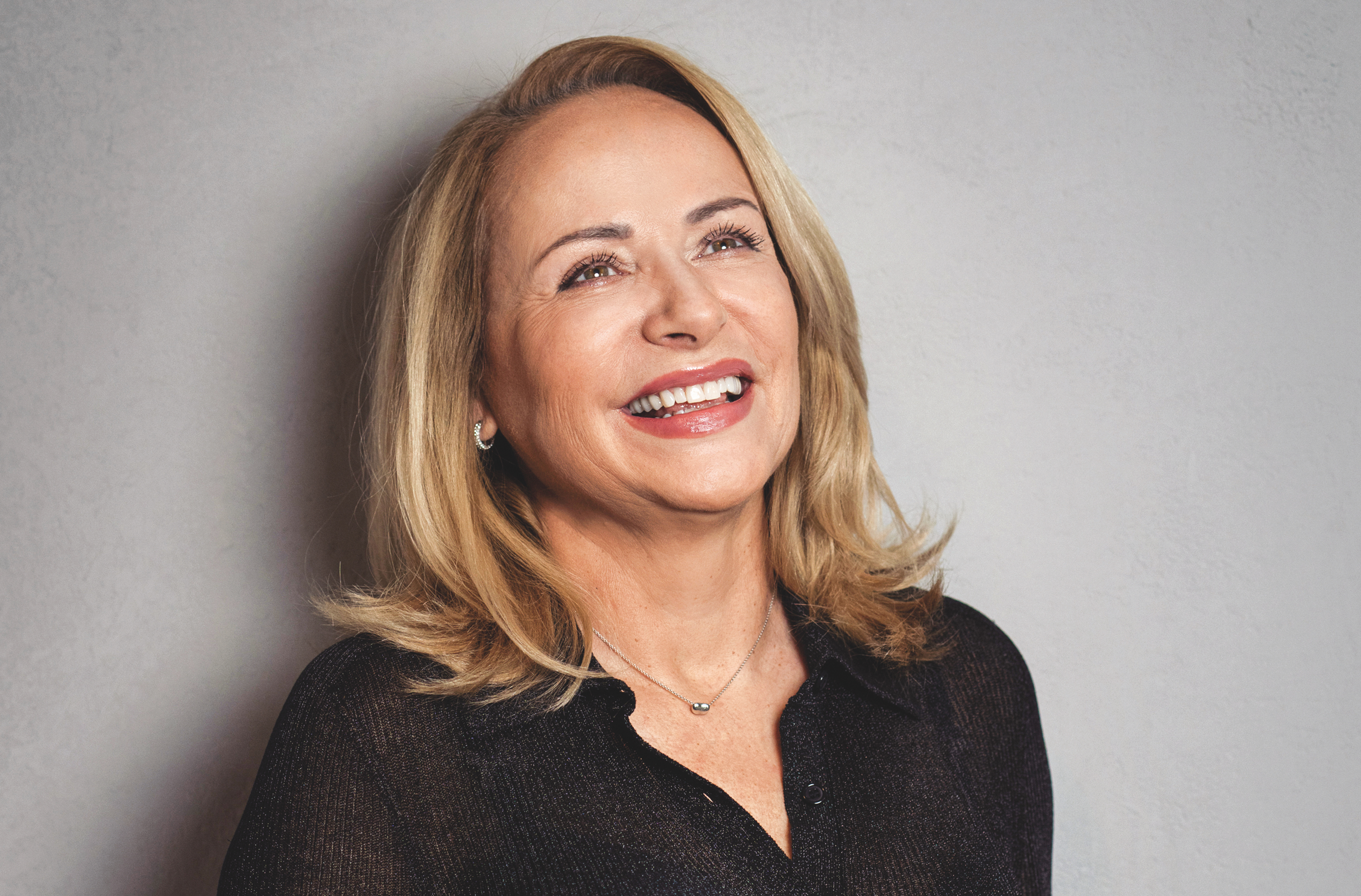
If there is one person who is considered a respected political and economic commentator and analyst, it is without a doubt Lenka Zlámalová. She has worked at pretty much all major Czech media outlets, she appears on TV and the radio. She holds strong opinions and knows how to defend them. You’ll have a hard time interrupting her during the course of a conversation.
Which do you enjoy more, politics or the economy?
I've always liked the things "in between". I enjoy the edges, the ties between politics and the economy, between politics and social topics. That's why I never picked up a more specialized profession, I find immense enjoyment in the complexity of journalism. I used to dream of becoming an architect. My father, an architect in his own right, sat me down and explained to me that while I can draw amazing things and I have a lot of talent, my spatial intelligence is lacking. And that's a huge hindrance in this field. I was drawn by the Renaissance aspect of the profession, how you need to have insight into various areas. You need to know math, have a grasp of how concrete works, know a bit of Feng Shui, know how a room is designed and conceptualized. Journalism is a little like that to me. I really enjoy factual journalism. I feel that fact should be the cornerstone to which subsequent connections are added. I studied economics and sociology, and this background helps me as a journalist to understand the economy and politics from the perspective of society and to be able to "read" society – especially at a time when it is firmly separated into various bubbles. I feel that we are not living in times of extreme specialization but rather an era of great complexity, which is something I'm well prepared for, given the things I'm interested in. From time to time, I need to work on a completely different topic. As I said, I like architecture, I like design, so I'll do an interview with Eva Jiřičná, for instance. But at the same time, I'll talk to her about the impact the economic crisis is having on construction. Because what happens in politics or the economy translates into areas such as fashion and design.
Are you not so affected by your profession that you always think about who or what is behind a politician when you look at them?
No, quite the opposite. I've been working in the media since I was 22 years old, although, I initially thought I would work in marketing because I enjoyed observing society, trade, working with data, making connections. I’ve always had one foot in business and one in politics, and when my friends would be dumbfounded by one case or another, I would have an inkling that it isn't as complicated as all that. I subscribe to the principle of Occam's Razor, which states that things are often much simpler than they appear. And I'm strongly opposed to conspiracy theories. I know the majority of people in politics, and I know that it's not always about doing shady business but often rather some form of unsatiated ambition, a desire to be popular, which they can't stop chasing. With some politicians, I can clearly see that their addiction to the limelight is a much stronger driver than money, for instance.
Could you give us a specific example?
There is one which is clear as day related to the recent presidential election. As part of Petr Pavel's team, the strategic advisor Petr Kolář, a former diplomat, will be coming to Prague Castle. A textbook example. If I were the "maker" of somebody's success, I would be extremely careful, and would rather remain the strategist behind the scenes. But Petr Kolář just can't help himself, he keeps appearing in the media and saying that he should be president. Or Miroslav Kalousek. He effectively left politics, but just look at how he keeps pushing himself into public discourse. And there are more such cases. They're not even really interested in influencing specific issues. It's another thing entirely if you have an idea about how things should be done and you use all the resources at your disposal to make it come true. That I can understand.
Aren't you fed up with politics sometimes?
Definitely not, but I only worked very briefly as a correspondent, I was quick to learn that it's just not my forte as I have very strong opinions. And so, I started working as a commentator. I'm interested in factual topics, how society is or isn't moving forward. I also see my work as a way to exert influence on society. I’m not saying that I’m merely a passive observer.
What do you think is next for Czechia this year in terms of politics or economic matters? Any necessary, albeit unpopular and painful measures?
The national budget is facing expenses of two trillion 223 billion crowns. A gargantuan amount, one most of us can't even fathom. And nearly 880 billion of that is going to social benefits, out of which 700 billion goes to old-age pensions. There are three things you can do. First, lower pensions – absolutely unacceptable in my opinion because seniors are already living on extremely low incomes. Second, increase social security payments – absolutely unacceptable. Ours are the fourth highest in the EU; it would ruin the economy. And then there's the third option – arrange for fewer people to go into retirement, motivate them to retire as late as possible. But how to do it in a popular way? Create a feeling in society that it's cool to retire at a higher age. That it is morally, socially, and otherwise correct for a person to work as long as possible. We need to create a feeling that retirement is only truly meant for those who cannot work for some reason. Nowadays, we live out 21 years in retirement, more than a third of our productive age. And what's more, people certainly aren't ripe for retirement at around sixty-three. They are often still mentally and physically fit. It will be unpleasant, of course, because we are dealing with the narrative of well-earned rest, which is a horrendous turn of phrase in my opinion. I'll borrow a statement from Mirek Topolánek who said in an interview that when a person retires, they become a discount hunter. That's a big no. The norm should be that people work as long as they can. They don't have to work in their original field, of course.
How would you motivate people to that end?
They've worked for some time, shown their merit, paid their dues in social security. So I would say, "Once you reach a certain age, everything you earn is yours to keep. You won't pay any taxes and no social security either." Basically, set it all up in a way that motivates people while also paying out less in pensions. It's a major political, economical, and social challenge, as well as a communications challenge. You need to convince people that it’s in their best interest. That they’ll be happier if they work rather than just sit at home in their old age.
So the opposite of when you want to work in retirement and you're having to deal with obstructions...
Absolute nonsense, and a crime perpetrated by Miroslav Kalousek who even took away tax credit from seniors. I basically see two options – either you get a pension and keep working but you pay social security and taxes, or you don't get a pension and keep working for the same wage but you don't pay social security or taxes. The extent of one’s pension should be set based on the time they spent working.
Several of the recent elections have been more of an "anti-vote" than anything else. People often vote against somebody rather than for someone they like. What about you?
I've also been voting for the least bad solution in recent years. I haven't voted with my heart for a long time, unfortunately. In 2006, the last I can remember. For a long while now, there hasn't been a person who would make me think: That's it, that's the one.
CV BOX
Lenka Zlámalová is a commentator and analyst at Týdeník Echo and Echo24.cz.
She studied sociology and economics at the Faculty of Social Studies, Masaryk University and at the University of Michigan.
Zlámalová’s career has taken her through every major Czech media outlet. She worked as an editor, commentator, and head of the economic section at Mladá Fronta DNES, later transferring to the weekly Respekt where she held the same position. She was the head analyst at Hospodářské Noviny and Lidové Noviny, which she left due to the takeover of the newspaper by Andrej Babiš’s MAFRA media group.
Zlámalová was one of the co-founders of Echo 24. She focuses on the economy, politics, social topics, global trends, and European politics. She provides her commentary on economic matters and politics for Czech Television, the Nova and Prima CNN channels, and numerous radio stations.
She loves reading, traveling, skiing, running, mountain climbing, fashion, architecture, design, gardens, dance, and gastronomy.
She has a fourteen-year-old daughter, Tereza Anna.
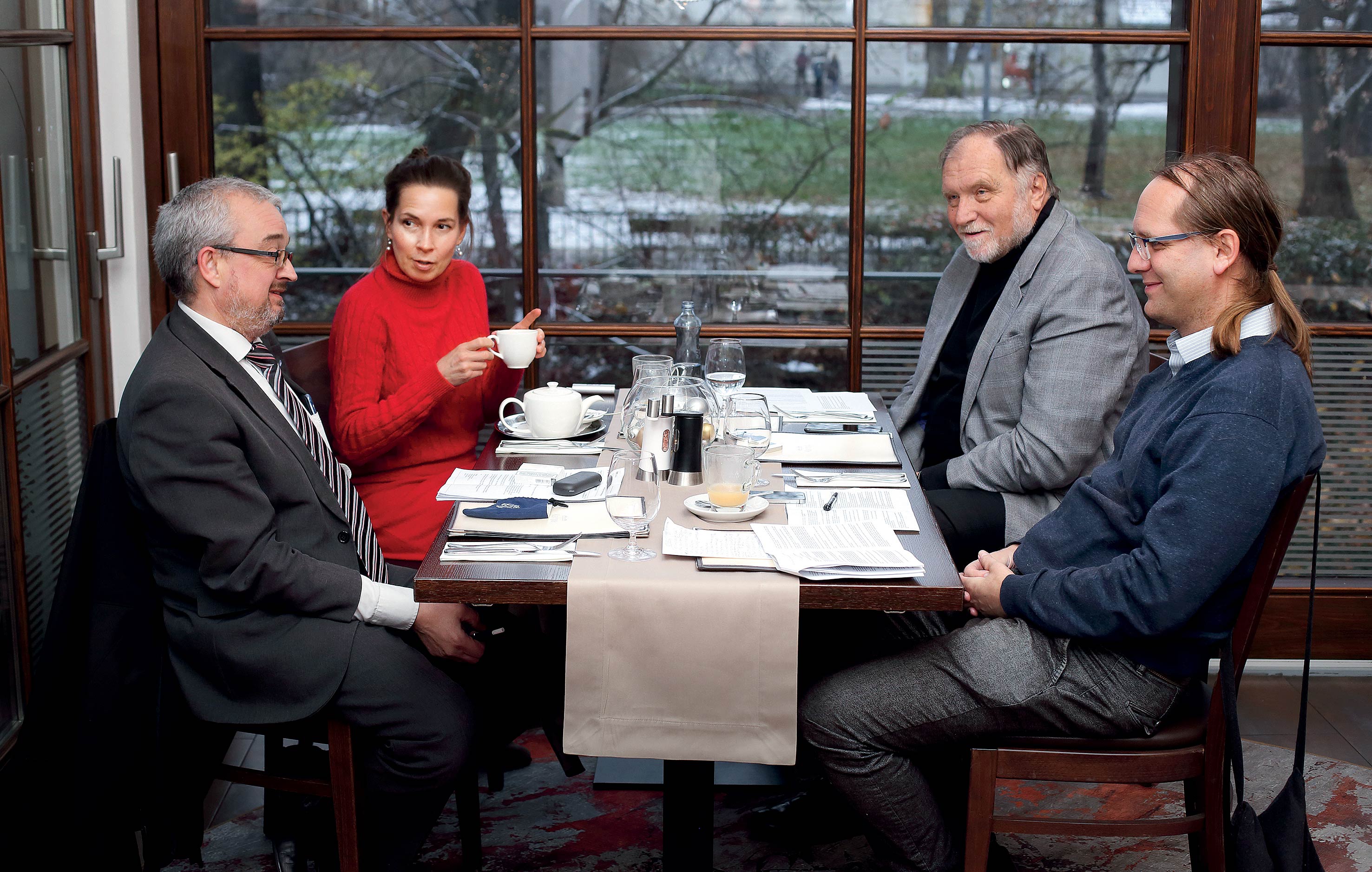
Lenka Zlámalová in a discussion with attorney and ex-minister of the interior Tomáš Sokol, Jan Wintr of the ChU FoL Department of Legal Theory, and MP Marek Benda.
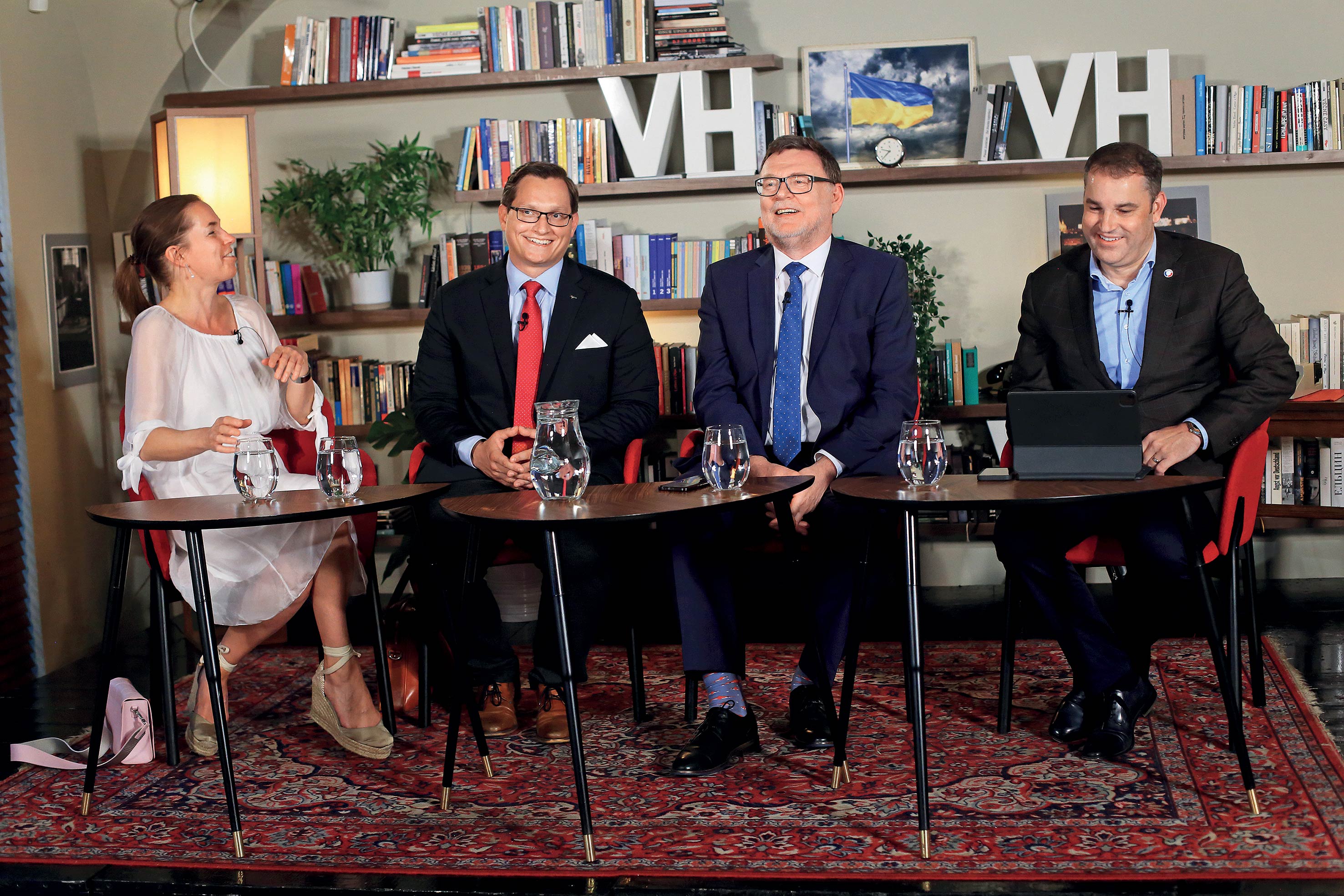
Lenka Zlámalová, Štěpán Křeček (economic advisor to the prime minister), Zbyněk Stanjura (minister of finance), and Mojmír Hampl (chair of the Czech Fiscal Council).
reklama