Czech-British relations have always been immensely important for our country, but right here I don’t have the room to describe them in any other way than through the focus on my own Czech-English family.
My father Pavel Kavan was born into a Prostějov- Jihlava based Jewish family. After the rise of Hitler, his father Hugo Kohn renamed himself Kavan, which did not save the family, though. My Grandmother Olivie perished in Auschwitz and from all the others, the only one to survive was Uncle Karel, who escaped the concentration camp and made for the Soviet Union (and went on to fight in Svoboda’s army), and my father, who escaped Prague for Poland in 1939 thanks to the resistance group “V boj” (To Battle). After the fall of France, where he fought as a part of the Czechoslovak troops, he made his way to England, where, among other things, he and four of his fellow student soldiers from the artillery regiment contributed to the 17th of November being named the International Student Day. President Eduard Beneš enthusiastically supported this.
Fights in France
Father was elected chairman of the foreign committee of the Central Union of Czechoslovak students in exile, deputy chairman of the Czechoslovak Youth Headquarters, deputy chairman of the International Student Council, and other roles, thanks to which he led discussions with British citizens across the island, attempting to gain support for his occupied homeland and, along with the others, called for speeding up the allied invasion of France. At these discussions, he caught the attention of an English teacher, whom he fell in love with. On the 30th of September 1944, alongside the Czechoslovak independent brigade, father sailed to France, where he took part in the siege of Dunkirk. He was injured in the resulting battle, and ordered to return to France to recuperate, where he got married, and returned right back to war. Towards the end of the war, he received the Medal of Valor.
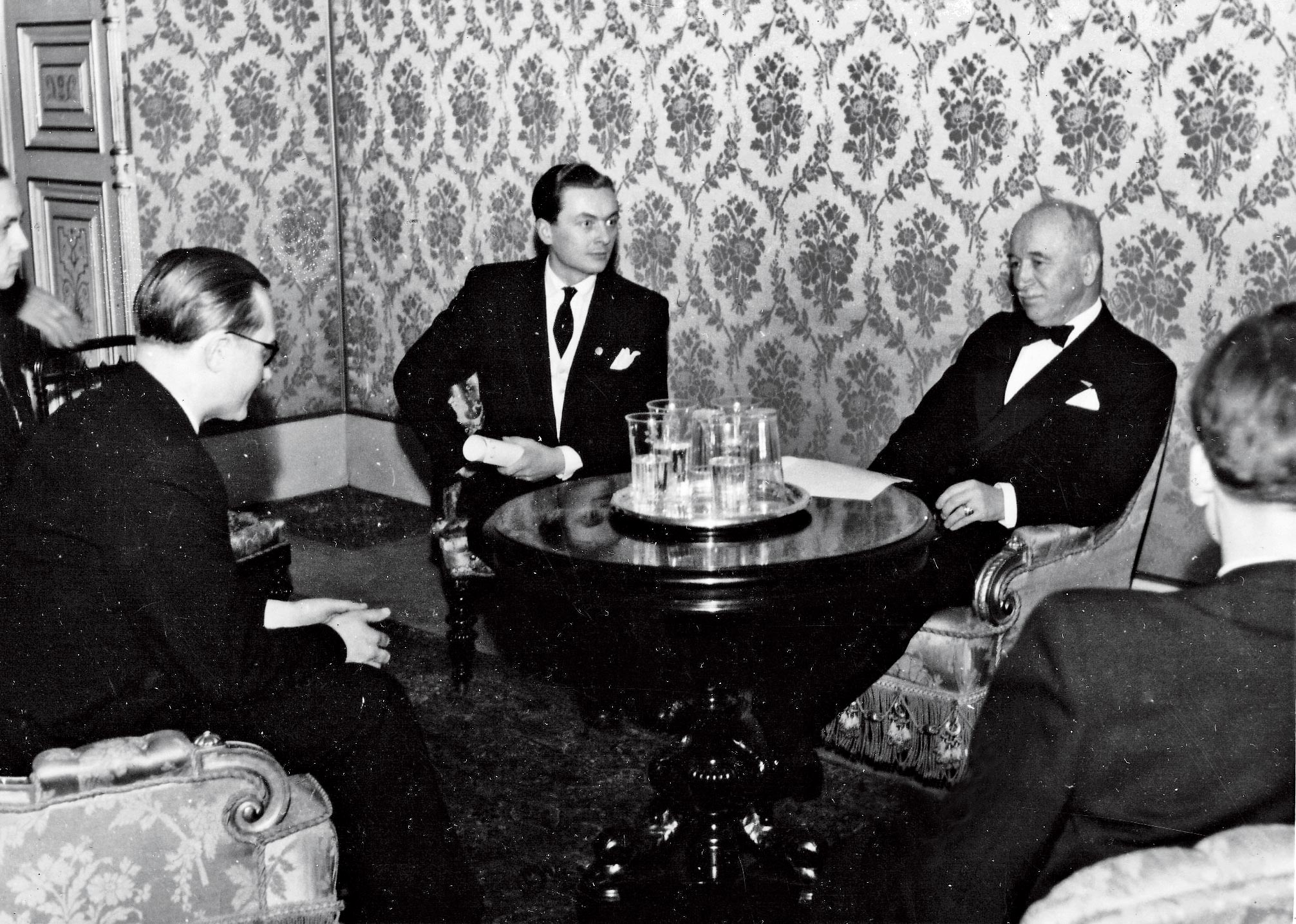
Negotiations with the then president Edvard Beneš. Jan Kavan (wearing glasses) sits opposite him.
From the Embassy to prison
After the war, Minister Jan Masaryk first wanted to place him at the Embassy in Belgrade, but then he realized the boon my father’s British connections were, and sent him to the Embassy in London. That’s why I was born in this city, and I have a British citizenship alongside my Czech one. However, in November 1950, father was called back to Prague from his position of charge d’affaires, and suddenly imprisoned and charged with high treason. He was then tried alongside three other members (including Richard Slánský and Eduard Goldstücker) of the so-called anti-state center led by Rudolf Slánský, and sentenced to twenty five years in prison. The charge was built mostly upon his contact with the British Marxist Labourist Konni Zilliacus, who the Czech and Soviet investigators made out to be an imperialistic agent. Towards the end of 1955, Zilliacus successfully attempted reconciling Khrushchev and Tito in Moscow, and he declared that he would be returning to London via Prague, where he wanted to meet his friends. My father was hurriedly discharged in Jáchymov (alongside Eda Goldstücker), and so I saw him for the first time since his imprisonment. My English mother, as “the imperialistic wife of a traitor”, had a lot of trouble finding work, but she bravely helped me and my brother to survive that difficult time. Our English Grandmother visited us at that time as well, and she told me how ashamed she was about the pre- war Prime Minister Chamberlain, and his Munich refusal to help “a distant country we know nothing about”.
The last visit with Masaryk
Not even prison managed to break my Dad’s leftist convictions. He did, however, change his opinion of the death of Jan Masaryk, whom he had worked with in London, and appreciated greatly. In the guestbook of the Ministry of Foreign Affairs, my father was logged as Jan Masaryk’s last visitor before his fall out of the bathroom window in the Černín Palace flat. The day before his death, on the 9th of March 1948, my father came to him from London and brought him letters from his closest English friends, who admonished him for his support of Gottwald’s government. They talked for about 30 minutes, and my father later told me that Masaryk suffered from insomnia and depression. The letters from his friends probably only deepened that depression. Due to his family history, my Dad fairly easily believed the idea of his death being deemed a suicide. Even Masaryk’s former secretary Antonín Sum confirmed this to him. After his experience in prison, though, Dad was no longer so sure. Before the war, he was a leftist national socialist, but immediately in 1945 he entered the Czechoslovak Communist party. But even after being released from prison, he had a lot of issues there, since opinion-wise, he belonged to a group of people (once again alongside Eduard Goldstücker) later called reformist communists. He never lived to see their victory in 1968, because due the mistreatment in prison, he died at forty- six years of age, eight years before that fated January when Antonín Novotný was replaced at the highest post in the party by Antonín Dubček.
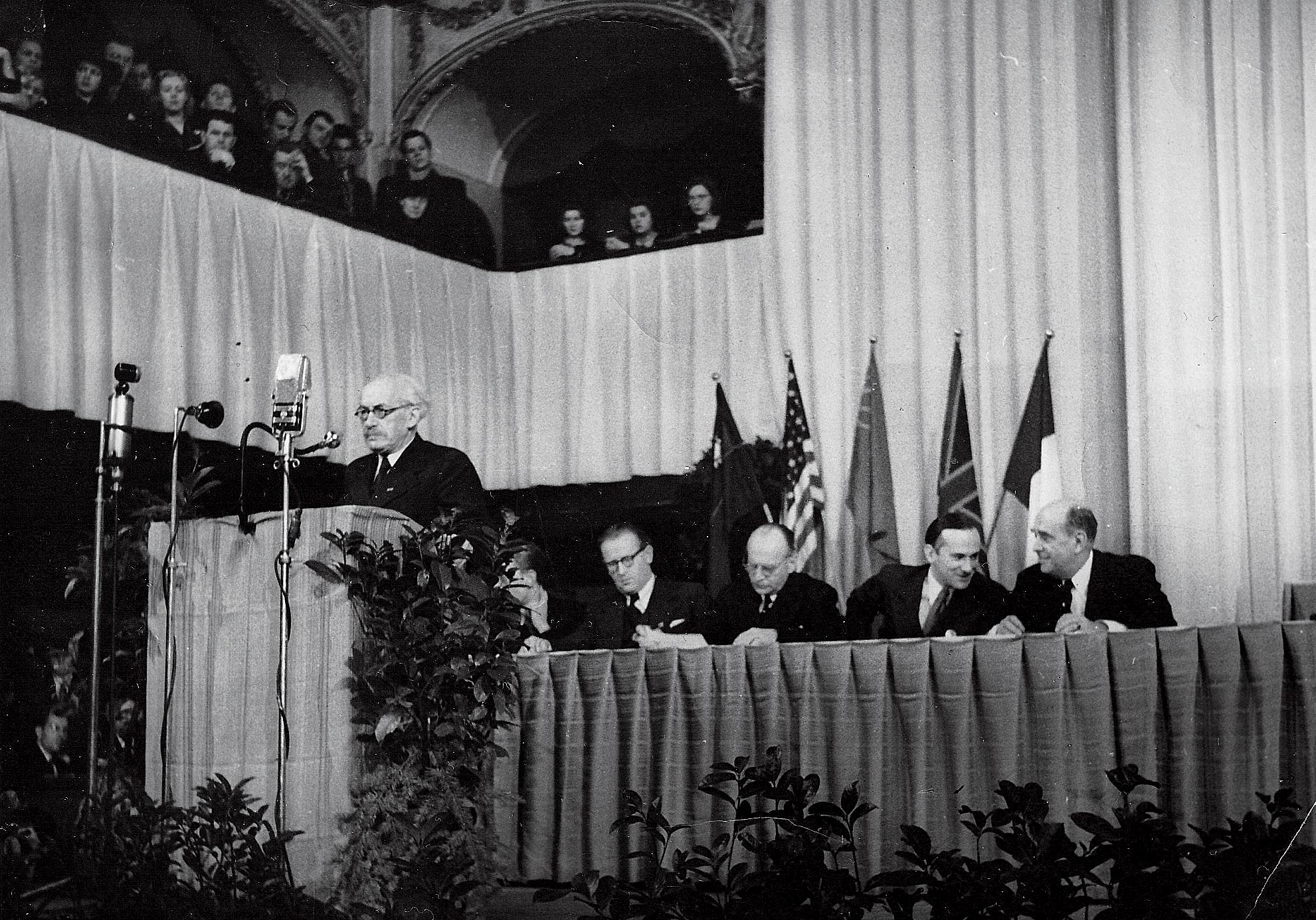
Speaking: the then Minister of Education Zdeněk Nejedlý, behind him on the right are Jan Masaryk, Pavel Kavan next to him, and the former Deputy Prime Minister Petr Zenkl.
The still attractive London
My mother took her two sons and emigrated to England after the invasion in August 1968. She spent over ten years helping me with the exile publishing house Palach Press, and translated all the Charta 77 documents, declarations of the Committee for the defense of the unjustly prosecuted, and articles from dissidents. Unfortunately she found out that she’d brought cancer with her from Prague, and she died eight years before November 1989. My brother became a lecturer at a British university, and so I was the only so-called re-emigrant to return home on the 25th of November 1989, and I was elected for the first free parliament. I followed in my father’s footsteps. My connection to Britain was, is, and always will be strong. My eldest daughter lives in the British city of Leeds, and suffers from the consequences of the ill-advised Brexit. These days she keeps hoping, much like most of the British people, that a compromise will be reached with time. My middle daughter lives in Prague, but married an Englishman. And my youngest daughter recently moved to Britain, where she had studied at Oxford, fortunately pre-Brexit, because now she could no longer afford the expensive tuition. London remains an attractive destination for a lot of Czech people, not only tourists, but also people looking for interesting jobs. In spite of all the issues and crises, it still is a functioning rule of law, with the tradition of respect for freedom.
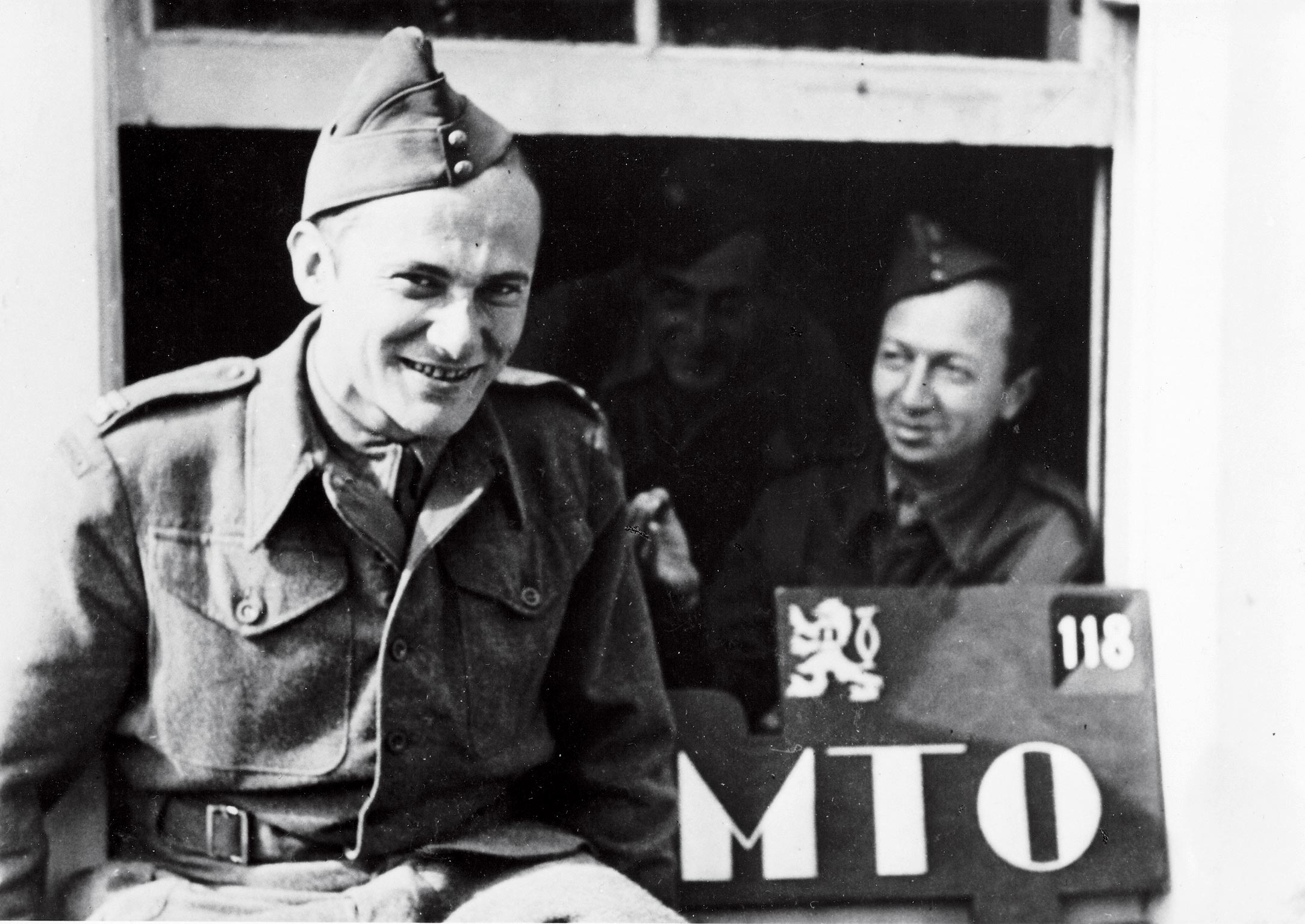
Pavel Cavan as a Czechoslovak army soldier.
THE AUTHOR
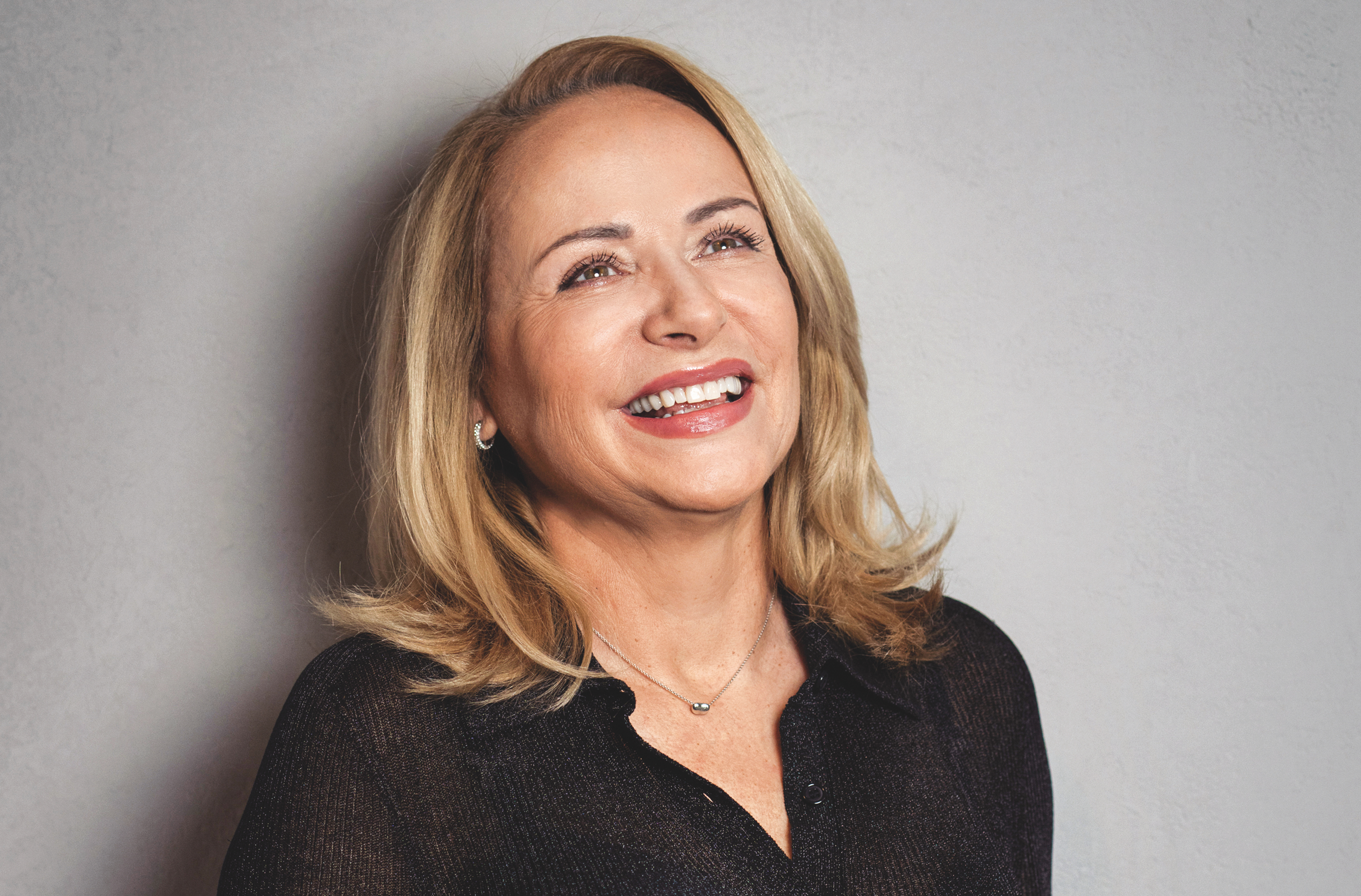
Jan Kavan (born on the 17th of October 1946 in London) is the former Minister of Foreign Affairs and Deputy Prime Minister.
In the 60s, as a student of Charles University, Kavan was one of the leading representatives of the student movement. In 1969, he emigrated to Great Britain. He studied international relations at the London School of Economics and Political Science, and then history and politics at universities in Reading and Oxford.
In November 1989 he returned to Czechoslovakia, and took an active part in the Civil Forum. In the 1990 election, he took a post in the House of the People. He remained in the Federal Assembly until the 1992 elections.
In 199Š he entered the ČSSD party, and was elected senator three years later. Between 1998-2002 he held the post of Minister of Foreign Affairs, and at the same time, between 1999-2002, the post of Deputy Prime Minister. After that, he spent a year as the President of the UN General Assembly. He was a deputy between the years 2002-2006.
He is divorced, and has four children.
reklama