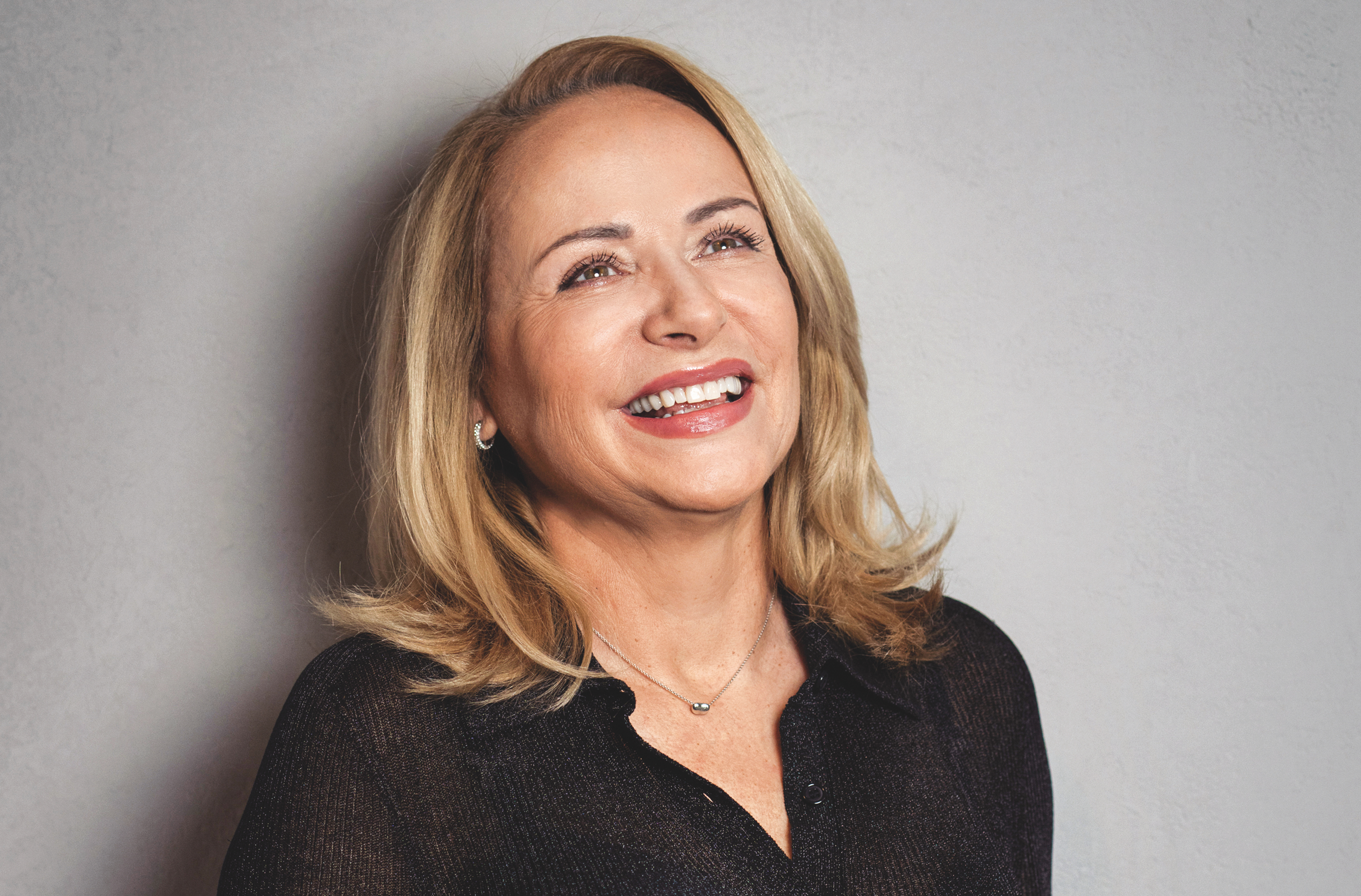
KDU-ČSL MP Jan Bartošek got into politics 18 years ago. According to him, he did so because he felt a strong desire to change aspects of public life that he found unsatisfactory. He worked his way up from municipal politics to the Chamber of Deputies but remains closely tied to his beloved South Bohemian Region and the town of Dačice.
The South Bohemian Region is often perceived by the rest of Czechia as an idyllic oasis of peace and good, drama-free life. Is it really so?
It absolutely is, and we South Bohemians are proud of our region. Beautiful nature, a prosperous countryside, and stunning historical towns where life is great. Of course, there are areas for improvement here too, such as access to housing and healthcare or the state of transport infrastructure. Phosphorus in South Bohemian ponds and reservoirs is also a problem, leading to algae overgrowth and green water. On the other hand, the opening of vast sections of the D4 highway to Strakonice and the D3 motorway toward the Austrian border is a positive development. Healthcare in South Bohemia remains at a top level, and its quality isn’t declining. We’ll use new forms of state support to build affordable housing, and I have been working long- term with fishermen and experts to clean up South Bohemian ponds and reservoirs.
Is it a significant disadvantage for South Bohemia that there‘s still no completed highway or high-quality railway connection to Austria? Why are highway and railways built so slowly in Czechia?
As I mentioned earlier, work is ongoing on the highways, which means that after many years, we are finally making significant progress in developing our region’s transport infrastructure. The biggest challenge of connecting to České Budějovice will be in Central Bohemia, where the completion of the highway to the south is still years away. A long- standing issue with building motorways and railways in the Czech Republic is the high cost and a lot of red tape. These two problems are interconnected, as the longer the preparation and construction take, the more money it costs. That’s why, in the current government coalition, we passed the so-called Line Act, which significantly improves the situation. Authorities now have to issue a building permit within four years of the moment when the investor submits all the necessary documents, including the environmental impact assessment (EIA). Unfortunately, in the short term, the length of approval processes has been affected by the failed digitization of the building permit system under Pirate Party Minister of Regional Development Ivan Bartoš. However,
I firmly believe the government will soon set things straight.
I looked at the population development in Dačice, your town, where you were once the deputy mayor. How are you managing to maintain a stable population on the border of Bohemia and Moravia, and why are people not leaving for bigger cities like in many other places?
Dačice is my home, and it’s always on my mind when I’m at work. That’s why I still hold the unpaid position of opposition assembly member. Unfortunately, we did experience some population decline from the 1990s onwards. As you mentioned, this is a trend in most towns of our size across Czechia. However, the population decline has recently been halted. Besides beautiful nature, we offer a wide range of cultural activities. Just this summer, we had a fantastic edition of the Dačice Carving Festival, the Blooming Dačice competition for the best flower decorations in people's yards, the Dačice Cube summer cultural festival, and many other events. In short, we have a vibrant community life, whether it’s thanks to hunters, active volunteer firefighters, or the local Tyl theater troupe. When people have jobs, affordable housing, and neighbors they get along with, they have no reason to leave.

As a Christian Democratic politician, you probably aren‘t satisfied with your party‘s polling numbers. What‘s the path back above the five percent threshold, and is that path possible for the Christian Democrats as part of the SPOLU coalition? Do you believe you can beat ANO again in next year‘s parliamentary election with this coalition?
I think we’ve grown distant from our voters, and as a result, they’ve grown distant from us. We are dealing with issues that our voters aren’t interested in and offering solutions that are marginal for them. This doesn’t mean the solutions are bad, but they simply don’t address the needs of our voters and supporters. We need to reconnect with our people, local associations, and communities. We must offer practical solutions to the problems they face in their daily lives. I wouldn’t blame the SPOLU coalition for the decline in support. We joined the government to carry out necessary reforms, which may anger people, but were essential. For example, we committed to addressing pension reform so that there would be money for pensions for our children and to prevent the national budget from collapsing. We also promised to consolidate public finances, as failure to do so would have triggered a debt ceiling this year, meaning there wouldn’t be enough money for young parents, healthcare, education, or infrastructure. We’ve succeeded in these areas. This government has taken many positive steps, but it often struggles to communicate them effectively to the public. Moreover, it has been extremely successful and efficient in handling crises, as shown during the floods, and unexpectedly smoothly managing the refugee crisis, with great cooperation from the people, who deserve enormous thanks. The energy apocalypse the opposition warned us about also didn’t happen - thanks in part to our government’s actions.
You were also a therapist for a time, caring for people with addictions. How do your professional experiences shape your view on the potential legalization of certain drugs?
The economic arguments for legalization are moot. The expected revenue for the state budget has never materialized abroad. Moreover, the increased costs to healthcare are often overlooked in public discourse. In Canada, for instance, there has been a rise in traffc accidents caused by drugs, more young people have started using drugs, there has been a sharp increase in hospitalizations due to drug use, and the total number of users has grown. The expected financial gain for the state budget turned out to be significantly overestimated. Punishing people for growing a few plants at home is wrong. However, as a therapist who helped people change dangerous behaviors, I consider the introduction of state-regulated commercial sales to be highly irresponsible. Especially in a situation where addiction prevention, including alcoholism, still lacks stable, long-term funding in the Czech Republic. If we want to make a change, it should focus on ensuring sufficient investment in prevention.
How significant is faith in God in your life? And what does it bring in a country like Czechia, where few people attend church regularly?
Faith in God is a key part of my life. It provides me with a value framework and moral compass that guide me in both my personal and political life. On one hand, it teaches me humility, but also that we must not yield to evil, and the values of good must be defended so they aren’t crushed by evil. Faith gives me strength and motivation to work for others and maintain firm principles, even when facing difficult decisions. In a country like the Czech Republic, where only a minority regularly attend church, faith offers a quiet but strong witness to the values upon which a stable and just society can be built. Christian Democratic politics doesn’t necessarily depend on how many people attend church but rather on the principles we bring to public life: respect for life, family, freedom, and human dignity. These values are universal and can unite even those who aren’t believers but share similar goals for the development of society.
The author is a European editor of Deník
OREL
Jan Bartošek has been active in the Catholic sports organization Orel for a year now. „Orel‘s contribution to our history is unfortunately often overlooked, especially compared to Sokol, largely due to the many years of communist totalitarianism,“ he notes. „For example, many participants in Operation Anthropoid, including the key figure Jan Kubiš, were members of Orel. During World War II, many Orel members sacrificed their lives for our freedom, whether directly in the resistance or in concentration camps. Similarly today, the core of the organization‘s activities is youth work. We focus on increasing their resilience, preparing them for emergency situations, and potentially defending the homeland should such an extreme situation arise. Orel and Sokol are certainly not competitors; their goals complement each other, and both organizations contribute to the development of sports and local communities. Orel still plays a very strong role in this cooperation, partly due to its popularity. After all, it has 20,450 members and 120 Orel clubs.“
CV BOX
Jan Bartošek (born November 10, 1971, in Jihlava) is a deputy speaker of the Chamber of Deputies, former chair of the KDU-ČSL parliamentary group, and former member of the South Bohemian Regional Assembly.
He graduated from the Faculty of Agriculture at the University of South Bohemia in České Budějovice. In 2003, he also completed a specialized program in Drama Therapy at the Faculty of Education at Palacký University in Olomouc. In 2000, he started working as a therapist. He is a guest lecturer at the Faculty of Education at Palacký University in Olomouc and the Polytechnic College in Jihlava.
He joined the KDU-ČSL in 2006. Since 2010, he has been a member of the Dačice Municipal Assembly. In 2013, he was elected to the Chamber of Deputies and has since been re-elected in every subsequent election.
In 2016, he was elected as a member of the South Bohemian Regional Assembly and served as a regional councilor from 2020. He was a vice-chair of the KDU-ČSL for over ten years, and then first-vice chair until this October.
He is married and has two sons. He spends as much time as possible with his family. He enjoys fishing and going on trips. His great passion is amateur theater, and he is a member of the Tyl theater troupe in Dačice.
reklama