We had to postpone the beginning of this interview because of the Alpine Skiing World Cup in the Finnish city of Levi. The Slovak ski phenomenon Petra Vlhová didn’t manage to finish her afternoon run on the second day, but Dušan Jarjabek, a devoted skiing fan, opera singer, and MP for the SMER-SD party, didn’t let it ruin his mood in the least.
Do you just enjoy watching skiing, or do you ski yourself as well?
I’ve been skiing since I was four years old! It’s one of my most beloved sports. The other one, which, unlike skiing, I can partake in all year long, is badminton. I’m not really breaking any records in either one, but I do enjoy them very much.
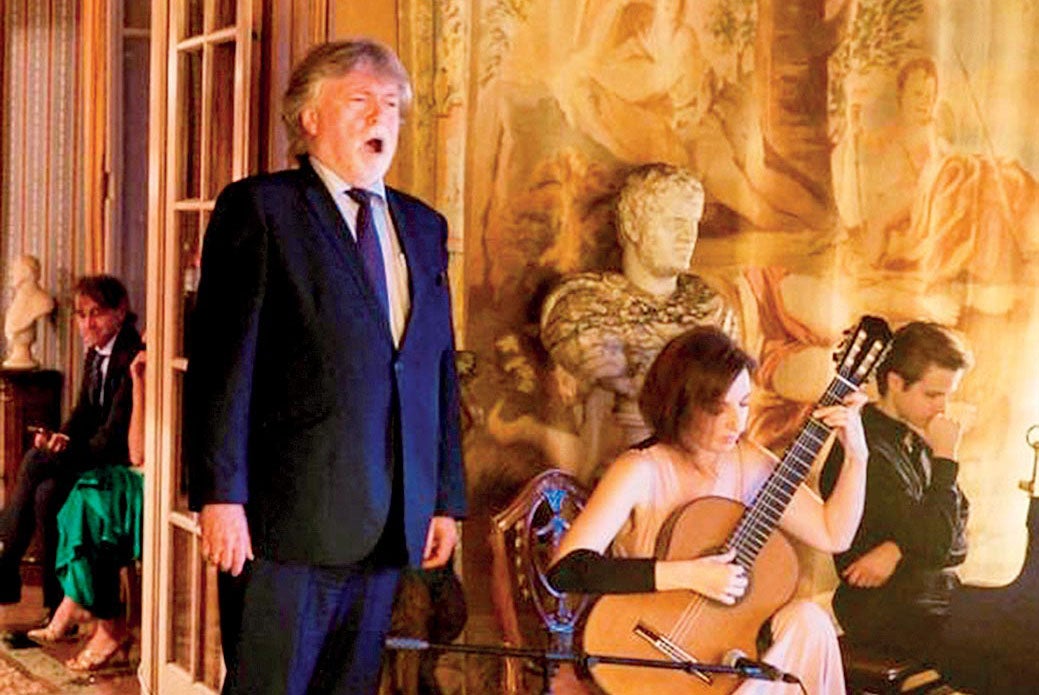
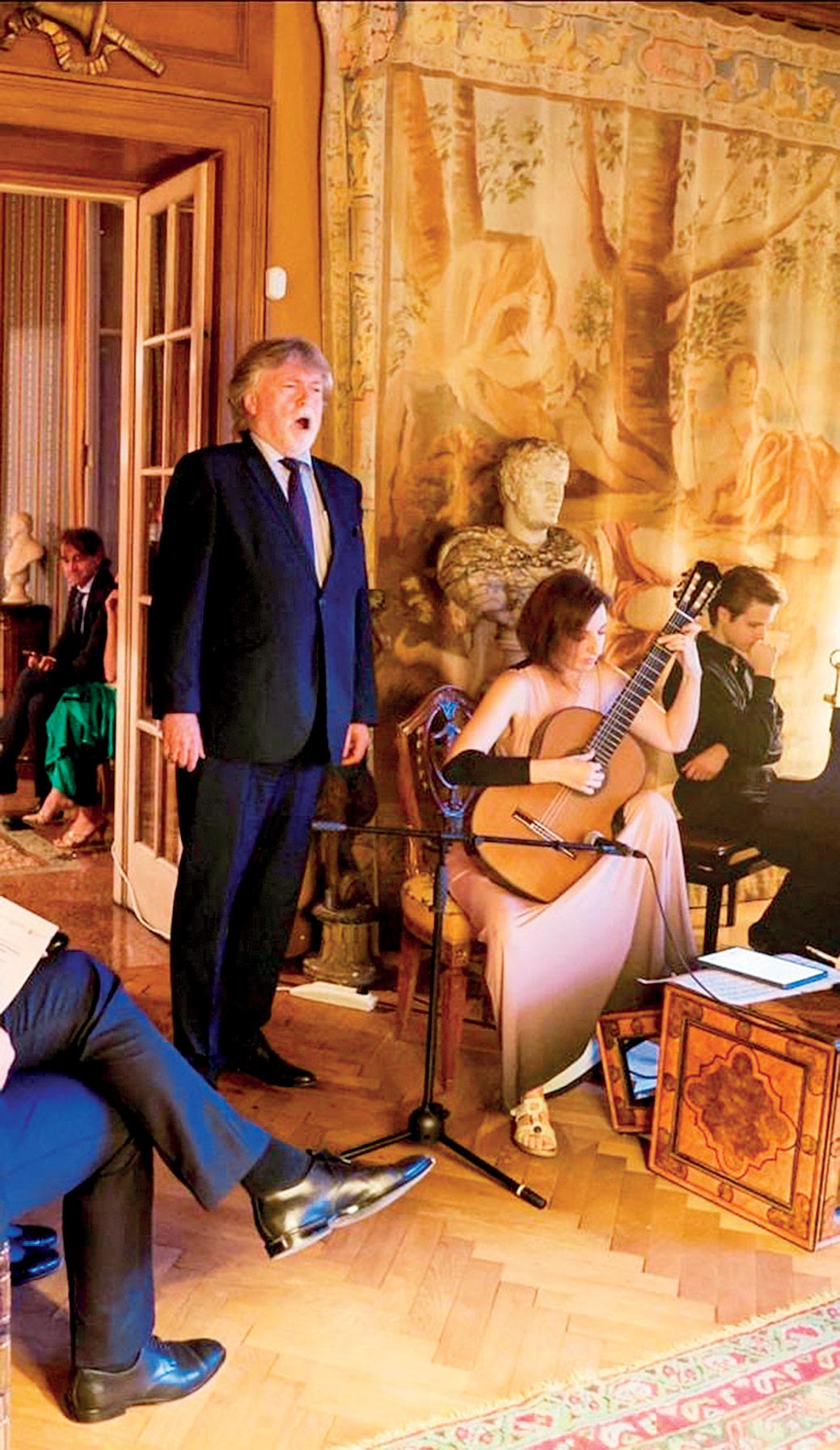
Do you still sing as well?
I haven’t lost my voice just yet. So yes, I’m still an active singer – I teach at an academy and do concerts at the same time. Recently, my repertoire has been focused more on oratory work and concerts abroad, there hasn't been much work at home. Unfortunately, I’ve had to give up theater altogether – either I’d be absent from rehearsals, which wouldn’t be fair to my actor colleagues, or from the National Council, which wouldn’t be fair to the voters. I’ve tried it several times, only to find out that combining theater and a parliamentary mandate is simply impossible.
You recently lamented that no government in the past thirty years considered culture a priority. Will things change with Robert Fico’s fourth government?
It’s like this when it comes to culture – it’s not that it’s been overlooked or not taken care of, but it’s always been on the sidelines, and not only financially speaking. The plans of this current government are ambitious, we’ll see what they manage to make a reality. Firstly, it’s absolutely necessary for the Ministry of Culture to get its priorities straight, and set up a structure of financial support accordingly. The way I see it, it’s necessary to support lively culture. Let’s look at art, for example. I don’t know about the situation over in Czechia, but here, there’s been no significant support for artists in these past thirty years, and art only survives because of people who exhibit it abroad. We might also mention the National Theater Opera, which has been struggling with great financial, operational, and human resources-related issues, and we could keep going. One of the projects that make sense to me and that I want to invest all of my energy into in the coming period is the construction of the National Amphitheatre in Děvín, or rather preparing the conditions for that construction. I consider it a very positive thing in this current state of social decay, and certain doubts aside, I believe that something like this could succeed at uniting Slovakia once more.
Is building another national institution meant to support the nation’s identity, the Slovak people’s confidence?
There are many challenges worth rising to, be it national identity, tradition, confidence, or statehood. The challenge of working on these symbols is all the more prominent for the increasing globalization pressure across Europe. It used to be that the topic of the day in the EU was a Europe of nation states, whereas nowadays you barely hear the words. On the contrary, nation states are being erased, as if national identity and uniqueness, things we all work on and are rightfully proud of, don’t exist. Each European nation has its own history, its own individual development, the time and circumstances of its conception. That’s why the idea of the “United States of Europe”, based on the USA’s example, is absolutely unrealistic. The question of Europe’s identity as a whole is another pressing matter. It feels as if Europe is, through some of its directives and procedures, committing assisted suicide.
You’ve often spoken critically about the media, what are some of the things you’re most displeased with?
Mainstream media outlets are staying the course of a certain kind of unilateral propaganda, which, to me, brings up the idea of different opinions not being accepted, and a simplified, black-and-white view of the world. The dual system that was once a requirement for post-communist countries to enter the EU is now being upheld by minority, alternative media outlets, which bring with them a diversity of information and opinions. This essentially erased the difference between private and public service media in Slovakia, and mainstream media outlets lost their credibility. And to call the RTVS (The Radio and TV of Slovakia) a public service media outlet is a bold move. Slovak TV is leagues behind private media in all aspects of public service, and even the production of original Slovak content. Its journalism is minimal, its newsworthy content is often no different from the one provided by private stations. Public service television is supposed to have a completely different broadcast philosophy.
Then what do you consider to be the primary role of public service media?
It’s not only a question of providing information, that’s just one of its many roles, but said information must differ in its characteristics from the kind provided by private media. And that’s not the case in Slovakia. I don’t just mean information regarding political affiliation, but also of the regional kind. There should be shows for different subsets of the population as well. You can’t really compare the viewership of a show on Slovak TV with an economic setting and message, and a movie on a private TV station. A public service mustn’t submit to commercial interests; rather, it must ensure a diversity of opinions. That’s what a public service is all about.
RTVS has been around for twelve years now, but its funding is still subject to change...
Yes, this year saw the cancellation of concession fees, the amount of which hadn’t changed in the past twenty years. Compared to Czechia, there’s about half the amount of concessionaires in Slovakia, which is why the RTVS service was funded in part by the state, based on a special contract. RTVS presented its programming plan, and the state used that to decide on a contribution that amounted to more than a third of RTVS’s overall budget. Now, RTVS will be funded only from the national budget, 0.17 percent of the GDP to be exact, with a ban on advertisements also in effect. There are expectations of a lessened influence of politicians on the structure of the broadcast, but I still think it’s a bit of a double-edged sword, and the actual functionality of this funding model will have to be confirmed.
You’re a vocal critic of the unification of Slovak Radio and Slovak TV into RTVS; is the new government planning any changes?
I’ve considered this unification utter nonsense since the beginning, with regards to the different roles these two types of media played in our history, and the historical context they both arose in. While the radio was a sort of companion in a household, in your car, on your walks, just simply always there, the TV served as a tool of propaganda for a very long time, with an emphasis on news and journalism. The radio didn’t play such a role, on the other hand, it provided “highbrow” entertainment. Connecting these two institutions really couldn’t be justified with regards to the evolution they’d both gone through. There’s still a certain amount of tension between the two, which is something we’ve had the opportunity to see in the RTVS leadership. If its director was someone with a radio background, they’d favor the radio and sit in the radio building, and if that someone came from a TV background, it was the complete opposite. The government’s new policy statement includes the effort to return to these two institutions their independence and split RTVS into Slovak Radio and Slovak TV once more.
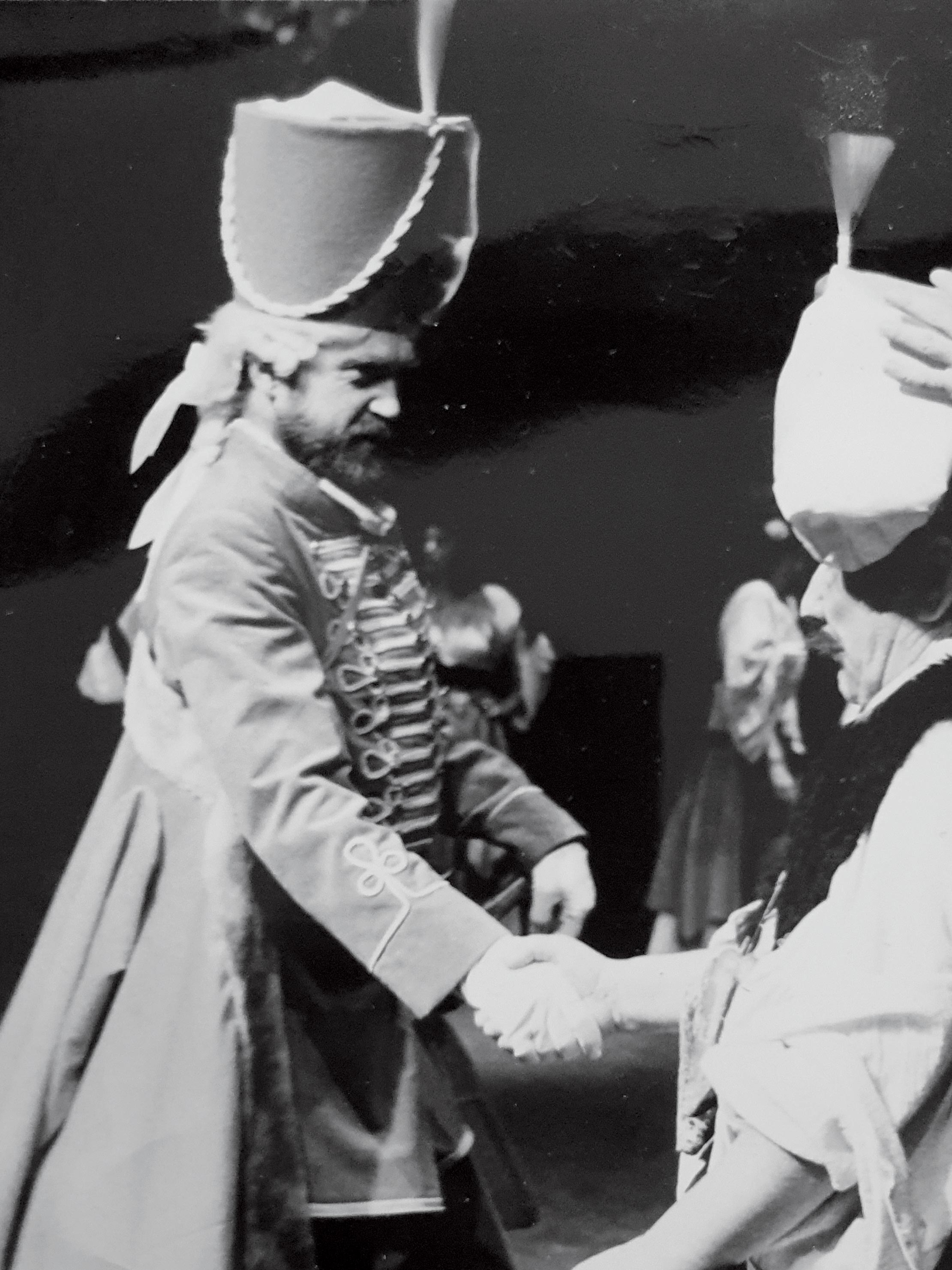
Performing the role of Count Homonay in The Gypsy Baron operetta in 1998
CV BOX
Dušan Jarjabek (born March 4, 1953, in Bratislava) is a Slovak opera and operetta singer, music teacher, and politician.
He graduated from the Academy of Performing Arts Faculty of Music (1976) and also spent a year studying abroad at the Teatro del Parco in Parma. He was a soloist for the Bratislava New Scene’s choir ensemble, as well as a soloist of the National Theater Opera.
Beginning in 1988, he taught singing at the Theater Faculty of the Academy of Performing Arts in Bratislava and was the director of the New Scene therein from 1996–98. Since July 2016, he’s been the vice-chancellor for social and public affairs at the Academy of Arts.
He’s one of the longest-serving members of Slovakia’s National Council, he has held a seat there continuously since 1998. He was first elected for HZDS, or rather ĽS-HZDS, and has been a member of SMER-SD since 2005. He is a member of the Slovak National Council’s Committee for Education, Science, Sport and Youth, Culture and Media.
Jarjabek is married and lives in Bratislava.
reklama