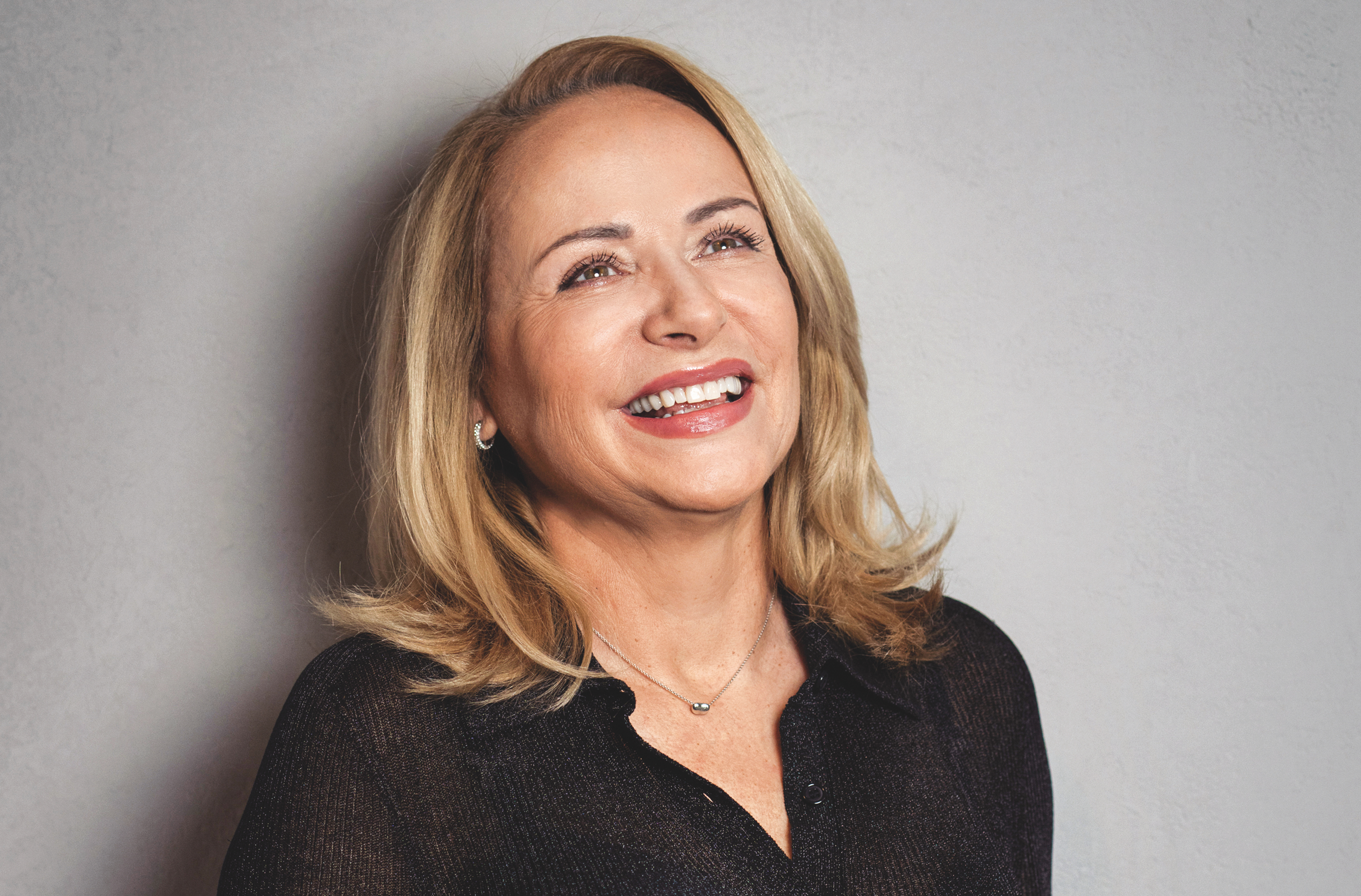
If there is one person who can provide a truly informed account of the tumultuous happenings in the Slovak economy following the split of the federation and its subsequent development, it is without a doubt Brigita Schmögnerová – the former Slovak minister of finance who, following her departure from politics, has worked at institutions such as the United Nations Economic Commission for Europe or the European Bank for Reconstruction and Development.
What was your motivation for entering politics in 1990?
It wasn't in 1990 but rather four years later. The truth of the matter is, however, that I already kept a close eye on the first transformative laws as a researcher at the Institute of Economic Research of the Slovak Academy of Sciences. As early as 1991, I offered my analyses to the chairman of the fledgling Party of the Democratic Left, Petr Weiss. In 1993, he put me forward for the position of director of economic policy in the office of the first Slovak president, Michal Kováč. But I only entered politics – as part of the government of Jozef Moravčík – in March 1994.
How did the dissolution of Czechoslovakia impact the economies of both countries?
In 1991, the transformation of a centrally planned economy to a market one began. A year before that, we had price liberalization and the implementation of an exchange rate for the Czechoslovak Crown. Both economies – the Czech one, and the Slovak one to an even greater extent – experienced a shock. The term shock therapy was not being thrown around without merit. The dissolution of the common state and a rapid currency separation constituted a plunge in mutual trade relations. The Slovak economy was more tied to the Czech one, which is why it experienced the reverberations of the federation's fall to a larger extent than the Czech economy.
Alongside Ivan Mikloš, you have been called one of the key heralds of change in the Slovak economy. How do you feel about this role, looking back?
I see the years 1998-2002 as a defining period in terms of the future heading of the Slovak Republic. We caught up to a multi-year lag in our integration efforts, became a member of the OECD, reformed public finance, restructured the financial sector, and so on. The Ministry of Finance played a major role in all of that. Despite being forced to resign in early 2002, I see this nearly four-year-long period at the Slovak MoF to be the most successful term in my professional career.
In the year 2000, you received the Crystal Wing award in the field of economy. What did that mean to you?
I also received the Euromoney Finance Minister of the Year award that year (Editor's note: As the very first woman). By coincidence, I received the award itself at an International Monetary Fund session that took place in Prague. The award is certainly valuable, but I found a much greater sense of achievement in the fact that the state budget was passed under difficult circumstances, that we managed to sell out an emission of short-term government bonds at more favorable conditions, or even the refinancing of the national debt.
Why did you leave politics?
The pretense for the new party chairman's displeasure with me was my backing of mandatory full financial disclosure for everyone. The law was formally in place but was never properly enforced in practice. If I am not mistaken, something rather similar also took place in Czechia. The chairman asked me to resign. The real reason was different, however – he was hoping to triage the party's plummetting preferences by ridding himself of the minister of finance. The fault for the numbers plummetting certainly lay partly at the feet of certain reforms which led to issues such as transitory price increases. And of course, these reforms were implemented by the Slovak MoF, embodied by the Minister of Finance herself. There was more than just one reason for this decline, however. The party was accused of corruption, which is an inexcusable offense for a left-wing party.
What about your journey to working for the UN Economic Commission for Europe and later the European Bank For Reconstruction and Development?
Both were closely tied to my professional work. As a representative of a UNECE member state, I participated in several events where I had the opportunity to meet and get to know the leaders of the organization at the time. And so, the offer to apply for a position in the ECE came directly from Geneva where it is headquartered. It was similar in the case of the EBRD. The Slovak MoF cooperated with this international bank when working on the restructuring of the banking sector. Besides that, I participated in EBRD shareholder meetings as a minister of finance. In other words – we had been in contact multiple times, and it went quite deep. The offer to apply for the position of vice president came directly from the EBRD.
What new things did you learn from these experiences? It isn't quite the same thing – being in domestic versus global politics.
A national politician, unless they become the minister of foreign affairs, mostly focuses on domestic issues. When it comes to an institution that is a part of the UN, there is an entirely new – global – field of view, despite the fact that the ECE is a regional organization. It was a new kind of university for me. The EBRD allowed me to take part in forming policies tied to the financing of its banking projects. I worked on environmental and social policy as well as anti-corruption policy to an extent, for instance. The international environment was also inspiring – there were people from all over the world.
How do you view the current economic situation in Slovakia in a nutshell?
The current economic situation has been heavily impacted by the crisis stemming from the epidemic and the subsequent war in Ukraine. The unstable political situation further complicates the issues of high inflation, which is slightly lower than in Czechia, and the energy crisis. The snap election, which the powers that be tried to put off for as long as they could, further exacerbates the whole situation. It is more than likely that the government will be more interested in the election campaign than in fulfilling its key economic mandates.
You've also written a book called The Book on Governance. What motivated that decision?
The rule of the big coalition during the 1998-2002 period has been analyzed in many publications, even in Czechia, but they all interpreted it through a right-wing lens. The same could be said for the majority of printed media. I wanted to provide a different point of view for any potential historians who might be interested in this period somewhere down the line. That was the main motivation for writing this book.
You also wrote a poetry collection...
The poetry collection called Light Is Born from Darkness was published while I was already a politician, but I wrote it earlier than that – some poems much earlier, in fact. The Slovak poet and translator Vojtěch Kondrót helped me put it together and the former minister of finance and a fellow cabinet member Ľubo Roman helped me bring it to life. I'd been trying my hand at poetry from a very early age; I had envisioned a different career path than the one I ended up going down.
CV BOX
Brigitta Schmögnerová (born November 17, 1947, in Bratislava) is a Slovak economist and politician.
She graduated from the University of Economics in Bratislava and subsequently earned a postgraduate degree in statistics from the Faculty of Science at Charles University. She earned a Candidate of Sciences degree from the UoE in Bratislava where she worked as an assistant professor at the Department of Economic-Mathematical Calculations until 1975.
Between 1975 and 1993, Schmögnerová worked at the Institute of Economic Research of the Slovak Academy of Sciences. Following the Velvet Revolution, she was an expert advisor at the Ministry of Industry and the Ministry of Strategy, director of the Office of the President's Department of Economic Policy, deputy prime minister for economic policy in 1994, and later a member of the Slovak National Council and a minister of finance (for the SDĽ).
After leaving politics, she worked as an executive secretary of the UN Economic Commission for Europe in Geneva and later as the vice president of the European Bank for Reconstruction and Development (EBRD).
Schmögnerová has authored multiple books focused on politics and economics as well as a collection of poetry.
She lives in Bratislava, is married, and has an adult son.

With Nobel Prize laureate, Joseph Stiglitz

reklama